

Self Loading Concrete Mixer Truck Cost
 2026-07-27
A self-loading concrete mixer combines aggregate loading, weighing, mixing, water dosing, and concrete transport in one mobile unit. It can reduce dependence on a batching plant, wheel loader, transit mixer, and extra labor on dispersed jobsites.
However, the purchase price is only one part of the decision. A low initial quotation can become expensive when freight, import charges, wear parts, commissioning, downtime, and fuel use are not included. Compare delivered ownership cost and verified production capability rather than drum capacity alone.
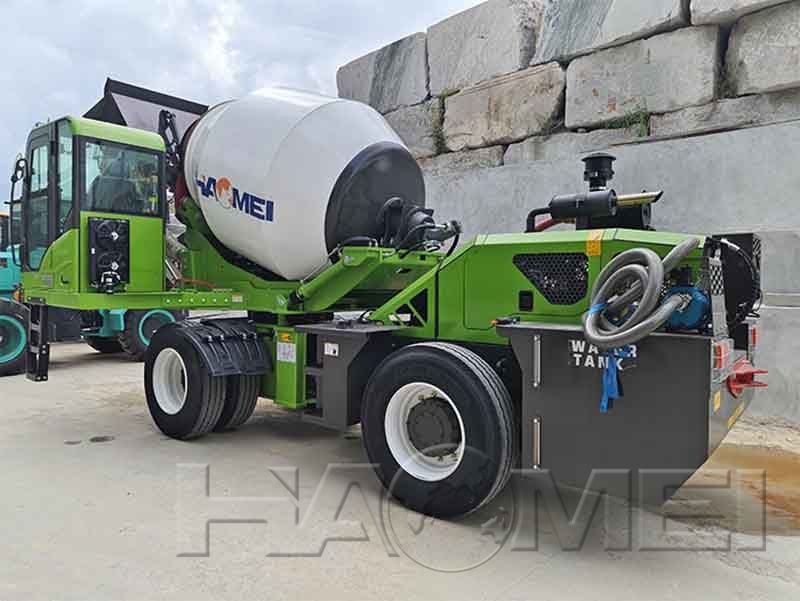
What Determines Self Loading Concrete Mixer Truck Cost
There is no single reliable global price because configuration, destination, exchange rates, freight, taxes, and local support vary substantially. Ask every supplier to quote the same Incoterms rule, specification, and delivery scope. A factory price is not comparable with a delivered-and-commissioned price unless all exclusions are stated.
Use this total landed cost calculation:
Total landed cost = Machine price + options + inland freight + ocean or cross-border freight + insurance + duty and tax + port charges + delivery + commissioning + operator training
Add financing interest, planned maintenance, tires, wear parts, fuel, and expected downtime to assess ownership cost over the period you expect to keep the machine.
| Cost driver | What to verify before comparing quotations | Why it changes investment cost |
|---|---|---|
| Drum capacity | Rated mixing output per batch, not only geometric drum volume | Larger models generally need a stronger chassis, engine, axles, and tires |
| Loading system | Bucket volume, hydraulic cycle time, aggregate loading height | A faster loading cycle can reduce labor and daily idle time |
| Weighing and water system | Load cells, water meter, printout or digital batch records | Required accuracy and traceability can add equipment cost |
| Engine and emissions | Engine model, rated power, emissions label, local fuel compatibility | Regional emissions rules and service availability affect price and risk |
| Drive layout | 4x2, 4x4, articulated steering, gradeability, tire specification | Rough terrain capability increases acquisition and tire costs |
| Delivery scope | Incoterms, spare-parts kit, startup service, warranty response | Prevents unplanned post-delivery charges |
Do not accept terms such as "standard configuration" without a detailed list. Request a signed specification covering the engine, drum output, bucket, water tank, weighing system, cab or canopy, tires, discharge chute, cameras, lighting, and included tools.
For smaller repair work, utility projects, and narrow-access sites, compare the stated batch output and dimensions of an HM1.2 Self Mixer. For higher-volume foundations, road works, and remote site production, a larger HM3.5 Self Mixer may reduce batches per day, provided access roads and unloading areas can carry its operating weight.
Match Capacity to the Actual Jobsite
Select capacity from required placed concrete, not from an assumed production rate. Start with the pour schedule:
- Calculate planned concrete volume per day.
- Identify net mixing hours after breaks, refueling, repositioning, cleaning, and quality checks.
- Divide daily volume by net mixing hours to establish required hourly output.
- Add a practical contingency for weather, material delivery delays, and site traffic.
- Confirm that aggregate stockpiles, cement supply, water supply, and loader travel paths can sustain that output.
A 3.5 m3 nominal mixer does not automatically deliver 3.5 m3 of placed concrete every cycle. Yield depends on the approved mix design, aggregate moisture, loading accuracy, mixing time, discharge losses, and whether the drum is filled to the supplier's stated rated capacity. Request a production demonstration using the aggregate gradation and mix proportions planned for the project whenever possible.
| Site condition | Better equipment priority | Cost issue to monitor |
|---|---|---|
| Remote projects without ready-mix access | Self-loading capability, water storage, reliable engine | Carrying idle labor and transport cost if production stops |
| Tight urban renovation sites | Compact dimensions, steering radius, low travel speed control | Permits, noise limits, and restricted delivery windows |
| Soft or uneven ground | 4x4 drive, tire selection, ground clearance, stability data | Higher tire wear and recovery equipment exposure |
| Repetitive concrete production | Batch weighing, water dosing, service access, parts support | Quality variation and downtime can exceed purchase savings |
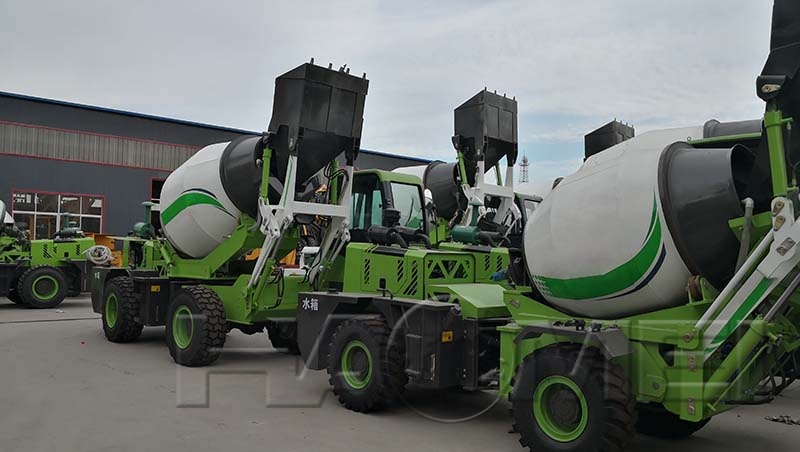
Build an Operating Cost and Risk Check
Use a site-specific cost-per-cubic-meter model before approving the investment:
Cost per m3 = (Annual ownership cost + annual labor + fuel + maintenance + wear parts + transport + insurance + downtime cost) / Annual placed concrete volume
Annual ownership cost should include depreciation or lease payments, financing cost, and insurance. For a used unit, increase the maintenance allowance until service records, hydraulic test results, drum condition, tire age, and parts availability have been independently checked.
Ask suppliers for maintenance intervals, filter numbers, hydraulic hose specifications, drum blade material, parts lead times, warranty exclusions, and the location of trained service personnel. A lower quotation has limited value if a failed hydraulic pump or unavailable drum blade stops a concrete pour for several days.
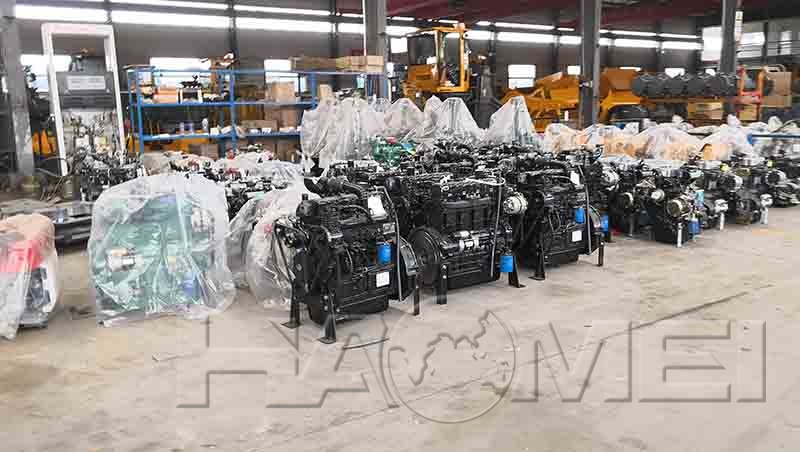
Compliance and Safety Checks Before Delivery
Compliance requirements depend on where the machine will operate. In the United States, employers must address construction-equipment safety under OSHA requirements, including 29 CFR 1926.602 for material-handling equipment and 29 CFR 1926.21(b)(2) for safety training. These rules place duties on employers and operators; they are not a substitute for confirming machine documentation.
For equipment placed on the European Economic Area market, verify the applicable conformity documentation. As of 2026, the Machinery Directive 2006/42/EC remains relevant before the transition to Regulation (EU) 2023/1230. Road travel also requires checking local axle-load, lighting, braking, registration, insurance, and operator licensing rules.
Use this pre-delivery checklist:
- Confirm the serial number, engine number, rated drum output, operating weight, and axle loads on the final documents.
- Obtain the operator manual, maintenance manual, parts book, declaration or certification documents applicable to the destination, and warranty terms.
- Inspect emergency stop devices, seat belt, reversing alarm, mirrors or camera, lights, guards, ladder condition, and drum discharge controls.
- Verify that the operator can see the loading bucket path and rear travel area, or provide a trained banksman where visibility is restricted.
- Plan a level washout area. Concrete wash water is highly alkaline and must be controlled under site environmental procedures.
- Stock filters, belts, hydraulic hoses, drum blades, and other high-turnover parts before the first major pour.
A disciplined quotation comparison, measured production requirement, and documented support plan will reveal whether a self-loading mixer is a cost-saving production asset or an avoidable source of site risk.
Original Source: https://www.self-loading-mixer.com/a/self-loading-concrete-mixer-truck-cost.html
Tags: Self Loading Concrete Mixer Truck Cost | Self Loading Mixer
Send us a Message
Category
| HM1.2 Self Mixer |
| HM1.8 Self Mixer |
| HM2.0 Self Mixer |
| HM 2.6 Self Mixer |
| HM3.5 Self Mixer |
| HM4.0 Self Mixer |
| HM 5.5 Self Mixer |
| HM6.5 Self Mixer |
Relate Blogs
| How to Choose Self Loading Mixer for Your Project |
| Self Loading Concrete Mixer |
| Self Loading Concrete Mixer Manufacturers |
| Self Loading Transit Concrete Mixer |
| How to Buy Self Loading Mixer |
Relate Products
CONTACT US
| Haomei Self Loading Mixer Co.,Ltd |
| Tel/Whatsapp: +86-15978414719 |
| Email: feedom@haomei-machinery.com |
| Website: https://www.self-loading-mixer.com |
| Office Add: 1103, No.14 Outer Ring Road, CBD, Zhengzhou, China |


