

2.6m3 Self Loading Concrete Mixer
 2026-07-20
A 2.6m3 self loading concrete mixer combines aggregate loading, batching, water dosing, mixing, and concrete discharge in one mobile machine. It is designed for projects that need fresh concrete in locations where a fixed batching plant, transit mixer, or large crew would be inefficient. Typical applications include rural roads, foundations, drainage channels, industrial yards, agricultural buildings, and small to medium infrastructure works.
The stated 2.6 m3 figure normally refers to the drum's rated mixing capacity. Actual concrete output depends on mix design, aggregate moisture, loading practice, drum condition, and operating cycle time. Before selecting equipment, project teams should confirm the manufacturer's rated output, travel speed, gradeability, engine configuration, drum rotation system, and local safety requirements.
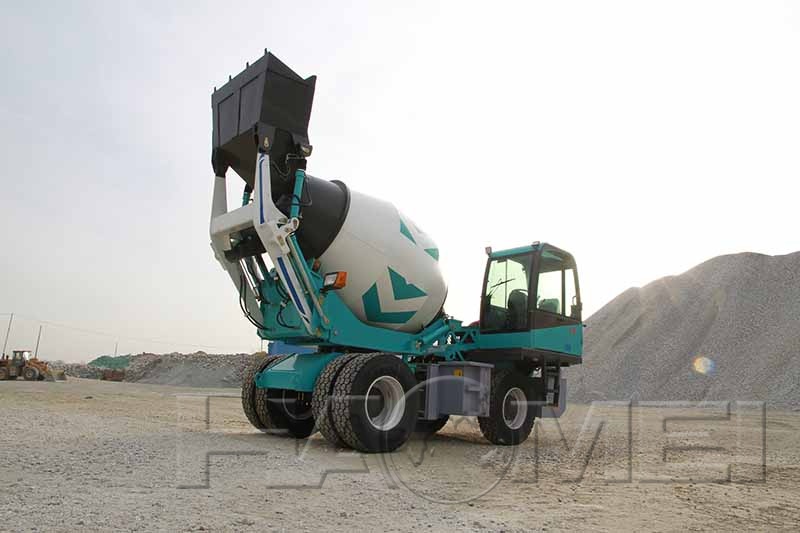
Integrated Design for Productive On-Site Mixing
The equipment is built around a four-wheel chassis, a hydraulic loading bucket, a rotating mixing drum, a water system, and an operator station. This arrangement allows one machine to collect materials, produce a controlled batch, travel around the site, and discharge concrete near the placement area.
A properly designed loading bucket has wear-resistant cutting edges and reinforced side plates to handle repeated contact with sand, stone, and stockpile surfaces. Its hydraulic cylinders should provide stable lifting and crowding force so the operator can fill the drum consistently. Accurate loading is important because excessive aggregate or water can reduce concrete quality and increase stress on the hydraulic system.
The mixing drum is usually fitted with internal mixing blades that lift and fold materials during rotation. Blade geometry affects mixing uniformity, discharge performance, and retained material after cleaning. A reversible drum function is valuable because it supports both mixing and discharge without requiring a separate conveyor or pump.
The operator station should provide a clear view of the loading bucket, drum, travel path, and discharge area. Controls are commonly arranged for steering, bucket movement, drum direction, water addition, and travel functions. A well-planned layout reduces unnecessary movement and helps operators maintain a repeatable batching sequence.
For projects requiring a similar capacity class, the HM 2.6 Self Mixer can be considered alongside site production needs, material availability, and travel conditions.
| Main System | Design Purpose | Practical Benefit |
|---|---|---|
| Hydraulic loading bucket | Loads sand, stone, and cement into the drum | Reduces manual loading labor and cycle time |
| Reversible mixing drum | Mixes materials and discharges finished concrete | Supports on-site production and controlled discharge |
| Water tank and dosing circuit | Stores and adds water to each batch | Helps maintain mix consistency when operated correctly |
| Articulated or steering chassis | Moves through restricted work areas | Improves maneuverability on distributed job sites |
| Operator station | Controls travel, loading, mixing, and discharge | Allows one trained operator to manage the main process |
Material Selection and Operating Advantages
Material quality has a direct effect on equipment service life. The drum shell, loading bucket, and contact areas around the discharge opening are exposed to abrasive aggregate and wet concrete. Manufacturers commonly reinforce these high-wear zones with thicker steel plate or wear-resistant materials. This helps slow abrasion, particularly where hard crushed stone is used.
Hydraulic hoses, fittings, and cylinders should be selected for the machine's working pressure and protected from rubbing, impact, and excessive heat. Hose routing matters as much as hose quality. Clamps, guards, and correct bend radius reduce the risk of premature leakage. On the chassis, protected brake lines, robust axle components, and corrosion-resistant electrical connectors are important for outdoor construction work.
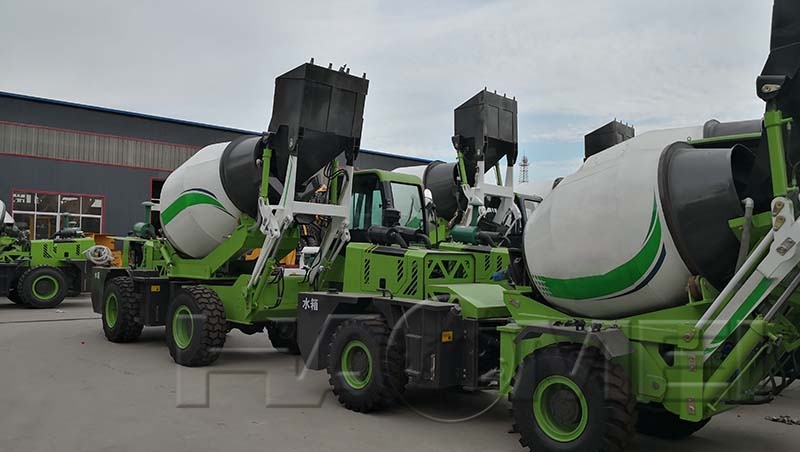
Using a self-loading unit can simplify concrete supply on sites with changing placement points. Instead of waiting for ready-mix deliveries, crews can prepare batches close to the work area, provided that materials, water, and qualified operators are available. This can reduce transport dependence and minimize the risk of concrete setting before placement.
The machine also supports flexible production. Operators can adjust the number of batches to suit the daily pour schedule rather than preparing a large quantity at once. This is useful for repairs, scattered foundations, culvert work, and projects with variable concrete demand. However, the machine is not a substitute for mix-control discipline. Aggregate proportions, cement quantity, water addition, mixing time, and slump checks must follow the approved concrete mix design.
A broader Self Loading Mixer range may be appropriate when the project requires a different drum capacity, roadability arrangement, or production rate.
Common Problems and Practical Troubleshooting
Daily inspections prevent many avoidable stoppages. Before starting work, check engine oil, coolant, hydraulic oil, tire condition, brake response, water level, drum rotation, bucket movement, lights, alarms, and visible leaks. After every shift, remove concrete residue from the drum mouth, chute, bucket, and discharge areas before it hardens.
| Problem | Likely Cause | Recommended Action |
|---|---|---|
| Drum rotates slowly or not at all | Low hydraulic oil, clogged filter, pump or motor fault, damaged coupling | Stop operation, inspect oil level and leaks, replace filters as scheduled, and have hydraulic pressure tested by trained service personnel |
| Bucket lifting is weak | Low oil level, air in hydraulic circuit, worn cylinder seals, overloaded bucket | Reduce load, inspect for leaks, check oil condition, and repair seals or valves as required |
| Concrete is too wet or too dry | Incorrect water dosing, variable aggregate moisture, inaccurate loading | Measure water added, account for wet aggregate, and follow the approved batch proportions |
| Drum discharge is incomplete | Hardened buildup, worn blades, incorrect drum direction or speed | Clean the drum promptly, inspect blade wear, and verify the discharge control function |
| Engine overheats | Low coolant, blocked radiator, loose belt, high ambient temperature | Stop safely, allow cooling, clean the radiator, check coolant and belts, and inspect the cooling system |
| Machine pulls to one side | Uneven tire pressure, brake drag, steering or axle issue | Check tire pressures first, then inspect brakes and steering components before continued travel |
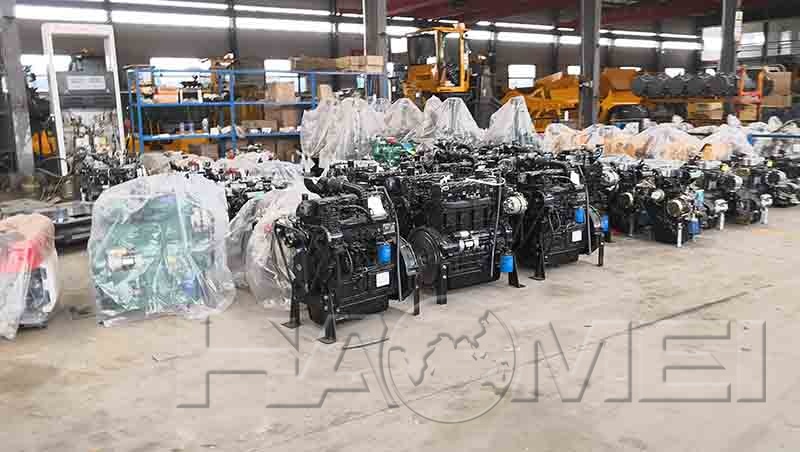
Do not continue operating when hydraulic oil becomes excessively hot, braking performance changes, the drum drive makes abnormal noise, or structural cracks appear around the bucket, drum supports, or chassis. These conditions require inspection before the machine returns to service. Keeping common service items such as filters, seals, hoses, drum blades, and electrical relays available can shorten repair downtime and protect the production schedule.
Original Source: https://www.self-loading-mixer.com/a/26m3-self-loading-concrete-mixer.html
Tags: 2.6m3 self loading concrete mixer | HM 2.6 Self Mixer
Send us a Message
Category
| HM1.2 Self Mixer |
| HM1.8 Self Mixer |
| HM2.0 Self Mixer |
| HM 2.6 Self Mixer |
| HM3.5 Self Mixer |
| HM4.0 Self Mixer |
| HM 5.5 Self Mixer |
| HM6.5 Self Mixer |
Relate Blogs
Relate Products
CONTACT US
| Haomei Self Loading Mixer Co.,Ltd |
| Tel/Whatsapp: +86-15978414719 |
| Email: feedom@haomei-machinery.com |
| Website: https://www.self-loading-mixer.com |
| Office Add: 1103, No.14 Outer Ring Road, CBD, Zhengzhou, China |


