

3.5m3 Self Loading Concrete Mixer
 2026-07-13
Recent English Q&A discussions on Quora, Google, Reddit-style forums, and construction equipment communities show steady interest in the 3.5m3 self loading concrete mixer. People are not only asking about price. They want to know whether this machine can replace a small batching plant, how much concrete it really produces per hour, what site conditions it suits, and what to check before ordering.
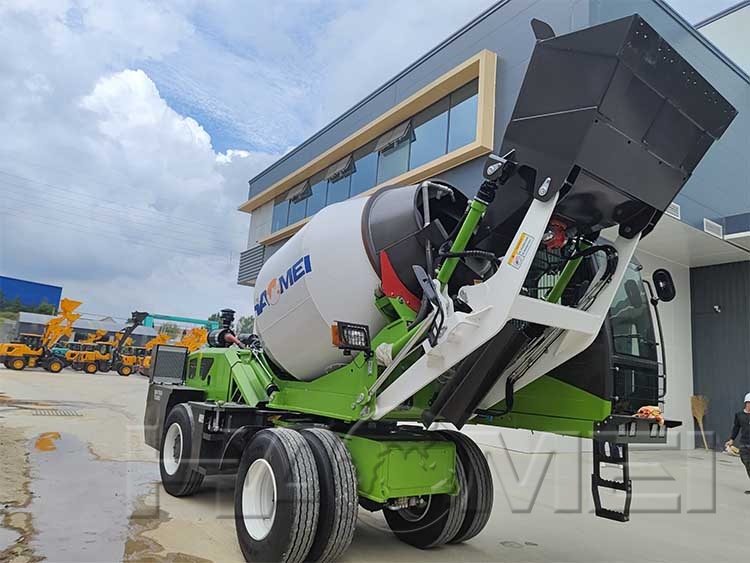
Below are 5 high-interest questions phrased in the way new equipment purchasers commonly ask them, followed by practical answers written for real jobsite decisions.
1. Is a 3.5m3 self loading concrete mixer enough for road, house, and foundation projects?
Yes, a 3.5m3 self loading concrete mixer is usually enough for small and medium construction work, especially when the site needs flexible concrete supply rather than continuous large-volume pouring. It combines loading, weighing, mixing, transport, and discharge in one machine, so it is often chosen for rural roads, villa foundations, drainage channels, sidewalks, small bridges, farm construction, and remote projects.
The 3.5m3 figure usually refers to drum output capacity per batch. In practical work, the usable output depends on material loading speed, mixing time, travel distance, discharge method, operator skill, and site organization.
| Project type | Suitability of 3.5m3 model | Practical note |
|---|---|---|
| Rural road paving | High | Good when batching plant access is limited |
| House foundation | High | Suitable for repeated moderate pours |
| Warehouse slab | Medium | Check total daily concrete demand first |
| Large bridge deck | Low to medium | Usually needs larger supply planning |
| Remote mountain site | High | Strong value where transit mixers struggle |
If your work often needs 20 to 80 cubic meters per day with changing locations, a HM3.5 Self Mixer is a practical size to evaluate. If your concrete demand is much lower, a smaller model may save fuel and purchase cost.
2. How many cubic meters per hour can a 3.5m3 self loading concrete mixer produce?
A common question is whether the machine can produce 14 cubic meters per hour because 3.5m3 multiplied by 4 batches equals 14m3. In reality, production is not only drum capacity. One complete cycle includes loading aggregates, adding cement and water, mixing, driving to the pour point, discharging, returning, and sometimes washing the chute.
For many sites, a realistic range is about 10 to 14m3 per hour under smooth working conditions. If the loading point and pouring point are far apart, output may fall to 7 to 10m3 per hour. If materials are well arranged and the operator is experienced, the higher end is more achievable.
| Condition | Likely hourly output |
|---|---|
| Materials close, short travel, trained operator | 12 to 14m3 |
| Normal site layout with moderate travel | 9 to 12m3 |
| Rough ground or long travel distance | 7 to 10m3 |
| Frequent slump adjustment or waiting time | Below 9m3 |
A smart way to estimate your output is to time one complete batch cycle, not just the mixing time. If one full cycle takes 20 minutes, the machine can complete about 3 cycles per hour. At 3.5m3 per cycle, that equals about 10.5m3 per hour.
3. What price range should I expect for a new 3.5m3 self loading concrete mixer?
Prices vary widely by engine brand, hydraulic system, weighing accuracy, transmission type, cabin design, drum rotation system, tire specification, export configuration, and after-sales support. In Q&A discussions, many people ask for a single number, but a reliable quote needs at least the destination country, emission requirement, preferred options, and shipping method.
Common price factors include:
| Price factor | Why it matters |
|---|---|
| Engine brand | Affects power, fuel use, maintenance, and parts access |
| Hydraulic components | Influences lifting, steering, drum rotation, and service life |
| Weighing system | Helps control mix consistency and material cost |
| 4-wheel drive | Important for muddy, sloped, or remote sites |
| Cabin and air conditioner | Improves operator comfort in hot regions |
| Spare parts package | Reduces downtime after delivery |
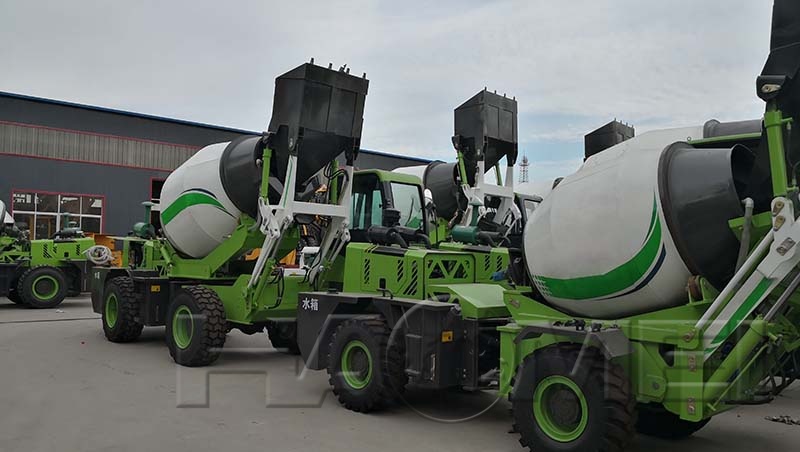
Instead of comparing only the lowest price, compare configuration sheets line by line. Two machines may look similar online, yet differ in axle strength, hydraulic pump quality, steel thickness, engine standard, and warranty response. A broader Self Loading Mixer range can also help you compare 3.5m3 against smaller and larger capacities before deciding.
4. Can a 3.5m3 self loading concrete mixer replace a concrete batching plant?
It can replace a small batching plant in some situations, but not all. The machine is strongest when mobility, quick setup, and independent operation are more important than mass production. It does not need a fixed foundation like a batching plant, and it can move with the project as work sections change.
However, for high-volume commercial concrete supply, a batching plant is still better. A plant gives stronger continuous output, more storage, and easier multi-truck dispatch. The self loading mixer is better for contractors who need to produce concrete directly at multiple points without relying on ready-mix delivery.
A 3.5m3 model makes sense when:
The project is far from a ready-mix plant.
Concrete demand changes by day.
Road access is narrow or poor.
Labor is limited.
You want one machine to load, mix, move, and pour.
The pour volume is moderate rather than massive.
It may not be the best match when the job requires continuous large pours above 100m3 per day, strict commercial batching records, or multiple grades of concrete supplied at the same time.
5. What maintenance should I plan before operating a 3.5m3 self loading concrete mixer?
Maintenance planning should start before the machine arrives. Many new owners focus on drum size and price, but downtime often comes from small parts, poor cleaning habits, and lack of operator training.
The most important daily habits are checking engine oil, hydraulic oil, coolant, tire pressure, water pump condition, grease points, brake function, and drum rotation. After each work shift, wash the drum, chute, and loading bucket before concrete hardens. Hardened concrete increases weight, damages mixing efficiency, and can reduce drum life.
| Maintenance item | Suggested routine | Risk if ignored |
|---|---|---|
| Drum cleaning | After every shift | Hardened concrete buildup |
| Hydraulic oil check | Daily visual check | Weak lifting or steering problems |
| Greasing | As specified by supplier | Faster pin and bearing wear |
| Tire inspection | Daily | Poor traction and unsafe travel |
| Water system check | Daily | Incorrect slump and delayed mixing |
| Spare parts stock | Before first project | Long downtime during repair |
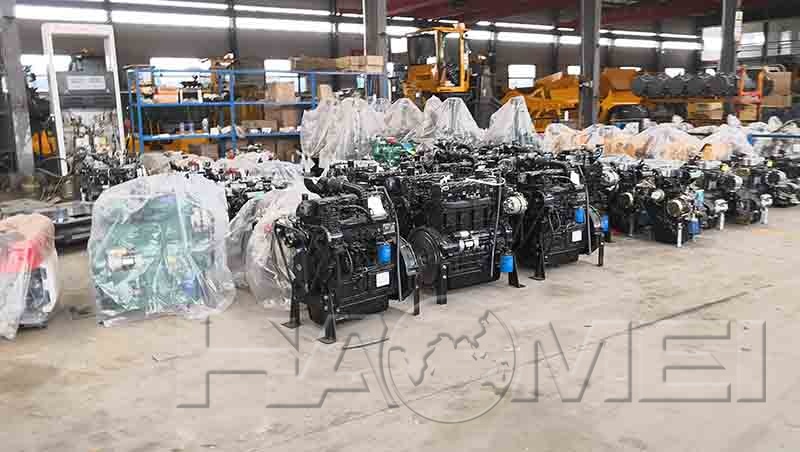
For a first order, ask the supplier for filters, seals, hydraulic hoses, wear parts, sensors, and vulnerable electrical parts. Also request operator training materials covering loading sequence, water measurement, mixing time, safe driving speed, slope limits, and emergency procedures.
A 3.5m3 self loading concrete mixer is most valuable when its capacity matches the job rhythm. Before ordering, calculate daily concrete demand, batch distance, road condition, fuel availability, local service support, and operator skill. These checks help the machine produce steady concrete instead of becoming an expensive vehicle parked on site.
Original Source: https://www.self-loading-mixer.com/a/35m3-self-loading-concrete-mixer.html
Tags: 3.5m3 self loading concrete mixer | self loading mixer | HM3.5 Self Mixer
Send us a Message
Category
| HM1.2 Self Mixer |
| HM1.8 Self Mixer |
| HM2.0 Self Mixer |
| HM 2.6 Self Mixer |
| HM3.5 Self Mixer |
| HM4.0 Self Mixer |
| HM 5.5 Self Mixer |
| HM6.5 Self Mixer |
Relate Blogs
Relate Products
CONTACT US
| Haomei Self Loading Mixer Co.,Ltd |
| Tel/Whatsapp: +86-15978414719 |
| Email: feedom@haomei-machinery.com |
| Website: https://www.self-loading-mixer.com |
| Office Add: 1103, No.14 Outer Ring Road, CBD, Zhengzhou, China |


