

Self Loading Transit Mixer
 2026-02-05
A self loading transit mixer is a compact concrete production and hauling unit that can scoop aggregates, batch, mix, and transport concrete with minimal support equipment. It is often selected for remote sites, small to mid volume pours, and projects where a batching plant or pump truck is not practical. The value is not only in mixing, but also in reducing idle time caused by waiting for ready mix deliveries or arranging separate loaders.
How the Equipment Works and What Makes It Different
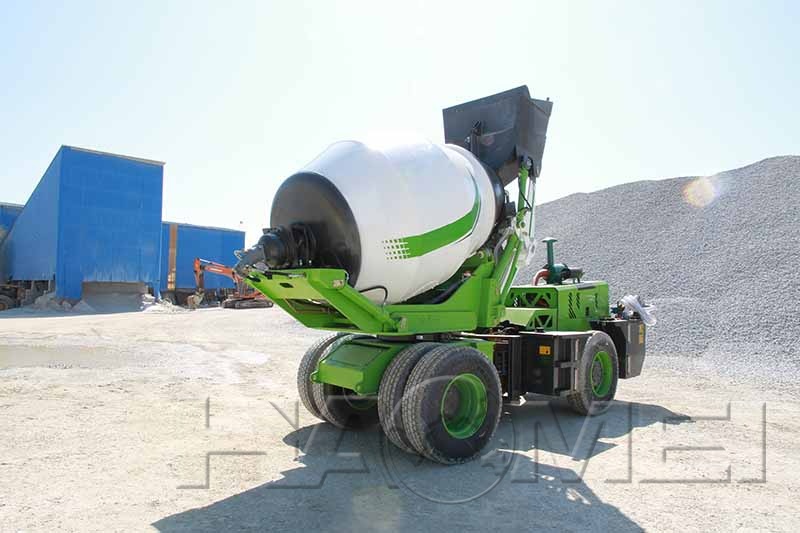
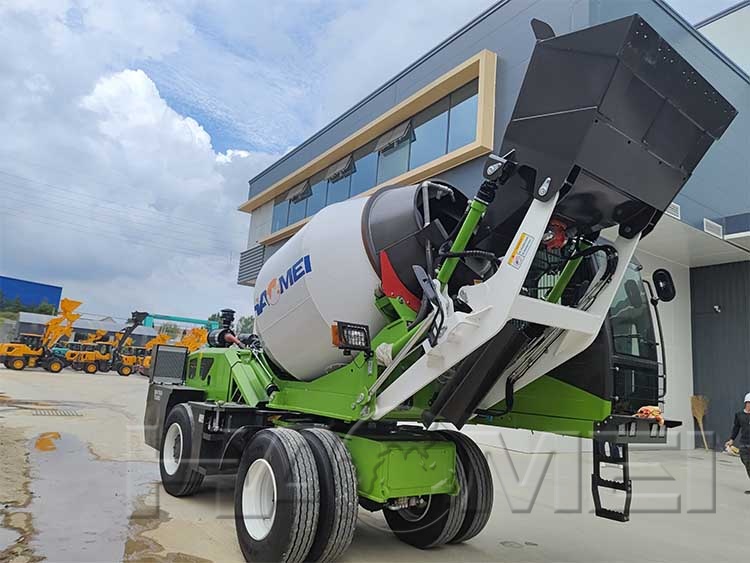
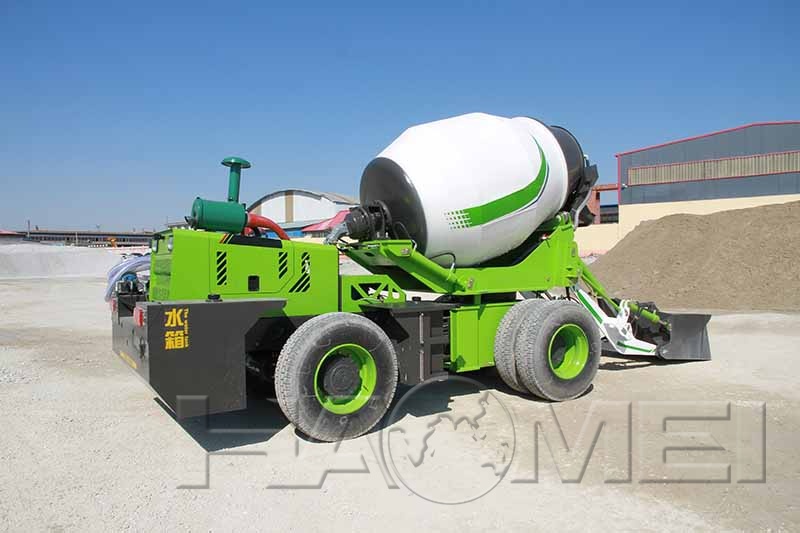
A typical unit combines a front loading bucket, a water system, a rotating mixing drum, and a 4x4 drive chassis. The bucket loads sand and stone into the drum. Cement is usually added from bags, a small hopper, or a site feeder depending on the setup. Water is metered through a tank and pump so the operator can control slump and compensate for aggregate moisture. The drum mixes while traveling, then discharges by reversing the drum and using a chute.
Compared with a standard transit truck, the difference is that loading and batching are on board. Compared with a site drum mixer, the difference is mobility and the ability to deliver fresh concrete directly to the pour location. In practice, contractors use these machines as a flexible middle option between manual mixing and full ready mix logistics.
When evaluating this category, look at these characteristics:
Loading system. Bucket capacity and dump angle affect how fast you can charge the drum and how cleanly materials enter.
Water dosing. A calibrated meter is important for repeatable mix quality, especially for structural elements.
Drum and mixing. Drum geometry, blade design, and mixing speed affect homogeneity, especially with low slump mixes.
Chassis and traction. Ground clearance, articulation, and differential locks matter on muddy or uneven access roads.
Discharge reach. Chute configuration determines whether you can place into forms, wheelbarrows, or small hoppers.
If you are comparing specific models, it helps to review a known reference configuration such as the HM6.5 Self Mixer to benchmark capacity class, loading workflow, and typical jobsite use.
Key Specifications That Influence Productivity and Concrete Quality
Selection should start from the pour plan rather than the nameplate rating. Many projects are limited by access, cycle time, and placement method, not just drum volume. The table below highlights the most decision relevant specs.
| Specification area | What to check | Why it matters on site |
|---|---|---|
| Rated output per batch | Usable mixed concrete volume, not only drum size | Drives number of cycles and labor coordination |
| Cycle time | Loading, mixing, travel, discharge, return | Determines daily production and crew waiting time |
| Water tank and metering | Tank capacity, meter accuracy, pump reliability | Consistent slump and reduced rework |
| Loading bucket | Capacity, wear protection, breakout force | Faster charging and better performance with wet sand |
| Powertrain | Engine power, torque, transmission type | Maintains speed on grades and under load |
| Mobility | 4x4, articulation, turning radius | Access to tight sites and rough terrain |
| Discharge setup | Chute length and swivel range | Placement flexibility without extra handling |
| Service access | Filter locations, greasing points, drum seal design | Lower downtime and easier daily checks |
A common mismatch is choosing too large a unit for a tight residential site, then losing time on maneuvering and cleanup. Another is choosing too small for a continuous slab pour, leading to cold joints because the cycle time cannot keep up.
Concrete quality depends on consistency. Even with a good machine, field batching needs discipline: keep aggregate stockpiles separated, control moisture, measure cement accurately, and standardize the mixing time. For applications with strict strength requirements, consult the project engineer for the approved mix design and testing plan, and ensure the on site batching method can meet it.
Typical Project Fits and How to Choose the Right Solution
This equipment is commonly used for:
Rural housing and small commercial slabs where access is limited.
Roadside works, drainage, and repair pours where a plant is far away.
Farm infrastructure, fence footings, and small retaining walls.
Precast yards or block making operations that need flexible batching near the work area.
Use the matrix below to decide whether a self loading mixer truck, ready mix supply, or a small stationary mixer is the best fit.
| Job condition | Best fit | Reason |
|---|---|---|
| Remote site, long distance to plant | Self loading mixer truck | On demand production reduces waiting and rejects |
| Tight access, small daily volume | Compact self loader mixer | Maneuverable and avoids over ordering |
| Large continuous pours, pump placement | Ready mix with pump | Highest throughput and controlled batching |
| Very small intermittent work | Small stationary mixer | Lowest capital cost, simple operation |
Operational considerations also matter as much as specs:
Operator skill. Productivity depends heavily on consistent loading, correct water dosing, and safe driving with a full drum.
Material logistics. You still need aggregates and cement delivered and stored correctly. If sand is far from the pour, cycle time increases.
Maintenance discipline. Daily washout, checking drum seals, and greasing articulation points prevent downtime.
Compliance and safety. Follow local rules for road travel, axle loads, and wash water disposal. These requirements vary by region and should be verified with local authorities.
A practical way to narrow options is to calculate required output per hour from the placement crew rate, then back into batch size and cycle time. If the crew can place 10 to 12 cubic meters per hour but your machine can only deliver 6 to 7 due to travel distance and loading time, you will either need a second unit or a different concrete supply method.
For many contractors, the best results come from selecting a machine that matches the site constraints first, then choosing the largest capacity that can still maneuver and discharge efficiently. This approach reduces wasted motion, improves pour continuity, and helps keep concrete quality stable from the first batch to the last.
Original Source: https://www.self-loading-mixer.com/a/self-loading-transit-mixer.html
Tags: self loading transit mixer | self loading concrete mixer
Prev: Self Loading Mixer Truck VS Small Concrete Plant VS Ready Mix Concrete
Send us a Message
Category
| HM1.2 Self Mixer |
| HM1.8 Self Mixer |
| HM2.0 Self Mixer |
| HM 2.6 Self Mixer |
| HM3.5 Self Mixer |
| HM4.0 Self Mixer |
| HM 5.5 Self Mixer |
| HM6.5 Self Mixer |
Relate Blogs
Relate Products
CONTACT US
| Haomei Self Loading Mixer Co.,Ltd |
| Tel/Whatsapp: +86-15978414719 |
| Email: feedom@haomei-machinery.com |
| Website: https://www.self-loading-mixer.com |
| Office Add: 1103, No.14 Outer Ring Road, CBD, Zhengzhou, China |


