

Self Loading Concrete Mixer For Sale
 2026-03-30
People searching for a self loading concrete mixer for sale usually want practical answers fast. Below are five of the hottest questions and answered in a clear way for people comparing new machines for real jobsite use.
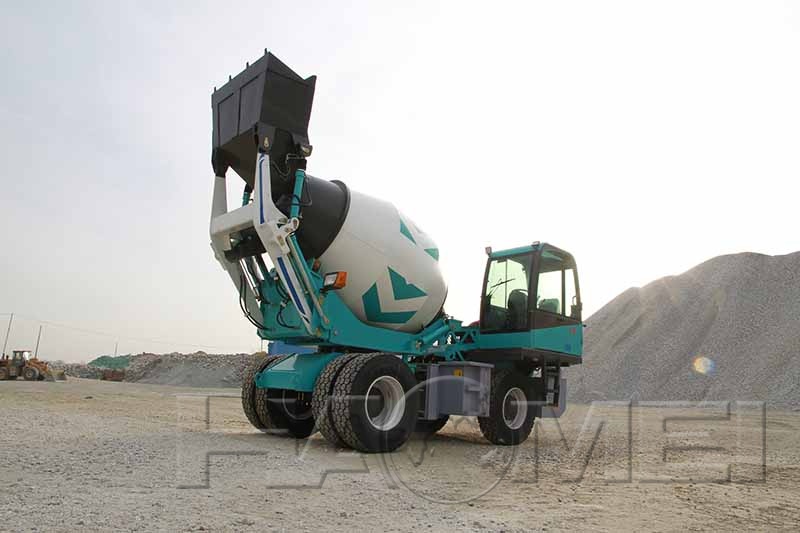
1. How much does a self loading concrete mixer for sale usually cost?
Price is still the first question most people ask, but the smarter question is what is included in that price. A new self loading concrete mixer can vary widely depending on drum capacity, engine brand, 4WD configuration, cabin options, weighing system, water system, and whether it is built for tropical, mountain, or mining conditions.
In general, smaller models cost less upfront but may raise your cost per cubic meter if your project needs continuous pouring. Larger models cost more, yet they can reduce labor, shorten batch cycles, and replace multiple pieces of equipment on smaller sites.
Here is a practical pricing view:
| Machine Type | Typical Drum Capacity | Best For | Price Trend |
|---|---|---|---|
| Compact model | 1.2 m3 to 1.8 m3 | Narrow roads, small housing jobs | Lower |
| Mid-size model | 2.0 m3 to 3.5 m3 | General contractors, rural projects | Medium |
| Large model | 4.0 m3 to 6.5 m3 | Heavy site demand, long daily output | Higher |
A low quote is not always a better deal. Check whether the offer includes spare parts, operator training, warranty scope, tire specification, shipping, and after-sales support. Many users discover too late that the cheapest machine is not the lowest total ownership cost.
If you are comparing capacities, a mid-range Self Loading Mixer is often the most flexible choice for mixed project types.
2. Is a self loading concrete mixer truck for sale really efficient enough to replace a batching setup?
For many smaller and medium projects, yes. That is why this question has become so popular recently. A self loading concrete mixer truck combines loading, weighing, mixing, transport, and discharge in one unit. This can dramatically cut dependency on separate loaders, transit mixers, and small batching equipment.
Its biggest advantage is mobility. On remote sites where ready-mix supply is unstable or too expensive, the machine can produce fresh concrete on demand. That means less waiting time and less risk of concrete setting before placement.
Still, it does not replace every batching setup. If your job requires extremely high hourly output, central quality control for large-volume pours, or nonstop multi-truck dispatching, a full batching plant remains more suitable.
For scattered foundations, rural roads, low-rise buildings, utility works, and agricultural construction, a self loading mixer is often efficient enough to become the main concrete supply unit.
Here is a quick comparison:
| Factor | Self Loading Mixer | Small Batching Setup |
|---|---|---|
| Mobility | Excellent | Limited |
| Labor demand | Lower | Higher |
| Setup time | Fast | Slower |
| Output stability | Good for distributed work | Better for fixed high-volume work |
| Remote site suitability | Very high | Moderate |
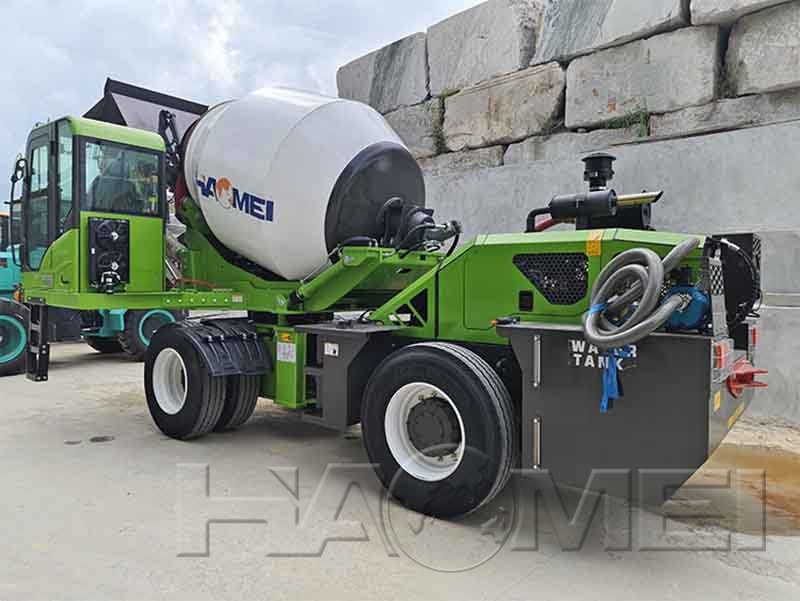
3. What size self loading mixer should I choose for my project?
This is one of the most common questions from first-time equipment shoppers, and it is where many mistakes happen. People often focus only on drum size, but real selection should match four things: daily concrete demand, road condition, loading space, and material supply speed.
If your site has tight access, soft ground, or many short pours, a smaller unit can outperform a larger one simply because it moves faster and turns more easily. On the other hand, if the project has repetitive concrete work and enough room to maneuver, stepping up to a larger model may improve output and fuel efficiency per cubic meter.
A simple way to think about it:
| Project Type | Recommended Capacity Range |
|---|---|
| Small house builds, landscaping, repair works | 1.2 m3 to 1.8 m3 |
| Villas, township works, farm buildings, local roads | 2.0 m3 to 3.5 m3 |
| Mid-size commercial works, wider road access, higher daily demand | 4.0 m3 and above |
Many new owners start by reviewing a compact machine such as the HM2.0 Self Mixer when they need a balance between mobility and practical output.
4. Can a self loading concrete mixer be driven on public roads?
This question has gained attention because many people want one machine that can travel between nearby jobs. The answer depends on local transport laws, dimensions, axle load, lighting, braking compliance, registration, and operator licensing requirements.
Some self loading concrete mixers are designed mainly for off-road and site use. Others can be configured more suitably for road transfer, but that does not automatically mean legal road use everywhere. Even when a machine is physically capable of road travel, local rules may limit speed, route access, or travel times.
Before ordering, ask the supplier these specific questions:
What are the transport dimensions and operating weight?
Is the braking system compliant with my market rules?
Are road lights, mirrors, alarms, and safety markings included?
What documents are available for registration or inspection?
Does the machine need trailer transport between projects?
This is especially important in markets with strict municipal enforcement or urban road restrictions.
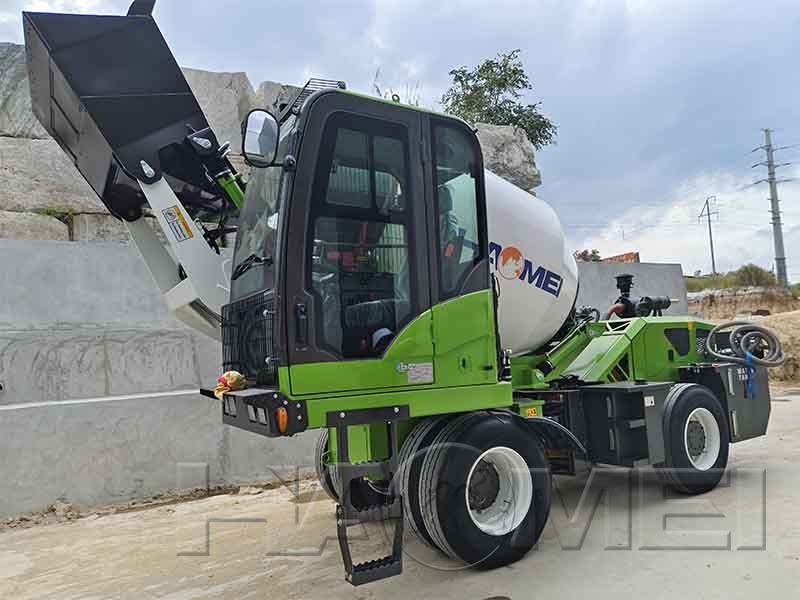
5. What maintenance issues should I expect with a new self loading concrete mixer?
This is a hot topic because many people assume a new machine will need almost no attention. In reality, strong daily performance depends on routine care from day one.
The most important maintenance points are drum cleaning, hydraulic system checks, engine service, tire inspection, water line cleaning, and lubrication of moving joints. Concrete residue is one of the main long-term problems. If operators skip washout at the end of the shift, buildup reduces effective drum volume and can eventually affect mixing quality.
Watch these areas closely during the first months:
| Maintenance Area | Why It Matters | Basic Check Frequency |
|---|---|---|
| Drum interior | Prevents hardened concrete buildup | Daily |
| Hydraulic oil and hoses | Protects steering, loading, and drum rotation | Daily to weekly |
| Engine and filters | Keeps fuel efficiency stable | Per service schedule |
| Tires and axle area | Supports safe travel on rough ground | Daily |
| Water tank and spray lines | Ensures proper mixing and cleaning | Daily |
It is also wise to train the operator before the machine enters full production. Poor loading habits, over-batching, and careless driving on uneven ground create more problems than factory defects in many cases.
A self loading concrete mixer for sale is not just a machine purchase. It is a productivity system. The right unit can save labor, shorten concrete delivery time, and keep remote projects moving, but only if its size, support package, and maintenance routine fit the actual work you plan to do.
Original Source: https://www.self-loading-mixer.com/a/self-loading-concrete-mixer-for-sale.html
Tags: self loading concrete mixer for sale | self loading concrete mixer truck for sale | self loading mixer
Send us a Message
Category
| HM1.2 Self Mixer |
| HM1.8 Self Mixer |
| HM2.0 Self Mixer |
| HM 2.6 Self Mixer |
| HM3.5 Self Mixer |
| HM4.0 Self Mixer |
| HM 5.5 Self Mixer |
| HM6.5 Self Mixer |
Relate Blogs
Relate Products
CONTACT US
| Haomei Self Loading Mixer Co.,Ltd |
| Tel/Whatsapp: +86-15978414719 |
| Email: feedom@haomei-machinery.com |
| Website: https://www.self-loading-mixer.com |
| Office Add: 1103, No.14 Outer Ring Road, CBD, Zhengzhou, China |


