

Self Loading Concrete Mixer for Sale in Nigeria
 2026-03-23
Nigeria's contractors often face the same concrete problem: road access is poor, ready-mix supply is inconsistent, and labor costs keep rising. A self-loading unit solves several of these issues at once because one machine can load aggregates, batch, mix, transport, and discharge concrete on site.
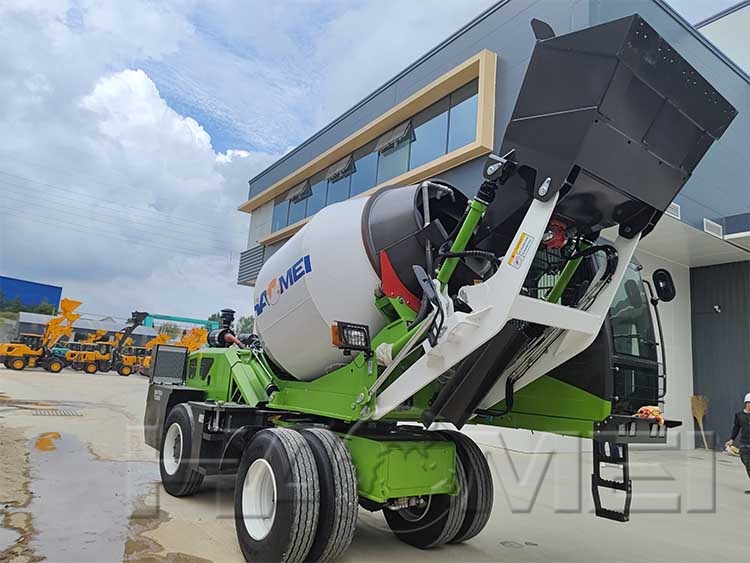
For projects in housing estates, drainage works, rural roads, telecom foundations, and municipal repairs, this equipment can reduce dependence on a separate loader, transit mixer, and large batching setup. That makes it attractive when evaluating a Self Loading Mixer for Nigerian job sites.
What to check before choosing a machine
Do not start with price alone. Start with production demand, road conditions, and service support.
Use this shortlist before requesting quotations:
- Required output per day, in cubic meters.
- Batch size, usually 1.2 m3 to 6.5 m3 by drum capacity class.
- Whether the machine needs 4x4 drive for muddy or unpaved access roads.
- Water system type, tank capacity, and flow accuracy.
- Weighing system availability for more consistent batching.
- Drum slewing angle and discharge height.
- Engine brand, fuel consumption, and emission documentation.
- Spare parts availability in Nigeria or West Africa.
- Operator training and after-sales response time.
- Import duties, freight, and inland transport to your site.
If your work involves estate roads, culverts, and small commercial slabs, a mid-size unit such as the HM3.5 Self Mixer is often considered because it balances output and maneuverability.
Capacity comparison for common projects
The right size depends on how many pours you must complete per shift and how far the machine must travel within the site.
| Machine class | Typical use case | Strength | Limitation |
|---|---|---|---|
| 1.2 m3 to 2.0 m3 | Block yards, small houses, fencing, farm structures | Lower acquisition cost, easier on tighter sites | Lower daily output |
| 2.6 m3 to 3.5 m3 | Estate roads, drainage, foundations, schools | Good balance of output and mobility | Needs disciplined maintenance |
| 4.0 m3 to 6.5 m3 | Larger roads, industrial yards, repeated pours | Higher productivity per cycle | Higher fuel use, transport and capital cost |
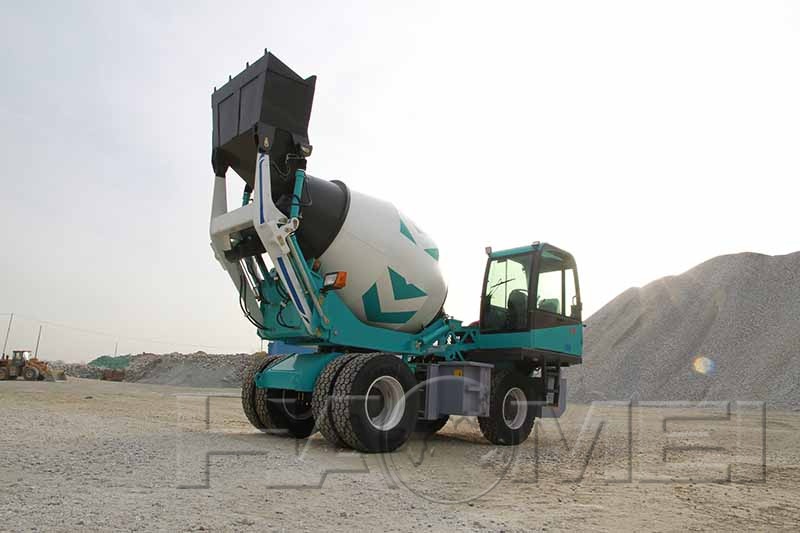
As a practical rule, short-haul internal movement and repeated pours favor self-loading mixers. If your project needs large, uninterrupted concrete placement with strict high-volume supply, a batching plant plus transit mixers may still be the better fit.
Price factors in Nigeria that affect total investment
Publicly advertised prices vary widely by capacity, configuration, origin, and exchange rate. In Nigeria, imported construction equipment is strongly affected by naira volatility, ocean freight, port charges, customs valuation, and inland haulage.
Instead of relying on a single number, compare total landed cost using this structure:
| Cost item | What to verify |
|---|---|
| Base machine price | Capacity, 4x4 option, cabin spec, weighing system |
| Freight | Port of loading, container or Ro-Ro method |
| Customs and taxes | HS code treatment, import duty, VAT, and processing fees through licensed clearing agents |
| Delivery to site | Port to Lagos, Abuja, Port Harcourt, Kano, or project location |
| Commissioning | Operator training, test run, calibration |
| Spares package | Filters, wear blades, hydraulic hoses, seals |
| Operating cost | Fuel burn, tire wear, service intervals |
For regulatory interpretation, importers should confirm current rates and documentation with the Nigeria Customs Service and the Federal Inland Revenue Service, because taxes and port charges can change. For road use and haulage compliance, project teams should also verify applicable requirements with the Federal Road Safety Corps and state-level transport authorities where relevant.
How to compare suppliers without guesswork
A weak supplier can turn a good machine into a bad investment. Ask for documents, not promises.
Use this supplier screening checklist:
- Engine model and rated power on official datasheet.
- Hydraulic pump and motor brands.
- Drum geometric volume and actual concrete output per batch.
- Water metering method.
- Chassis gradeability and turning radius.
- Warranty terms in writing.
- Spare parts list with prices.
- Delivery schedule and penalties for delay, if negotiated.
- Commissioning support and operator training plan.
- References for units already working in Africa.
Ask suppliers to separate rated drum volume from actual discharge output. These are not the same thing. A machine promoted as 3.5 m3 may have a larger geometric drum volume but a lower effective concrete yield per batch.
Site use: practical steps that prevent wasted concrete
Selection matters, but operating discipline matters just as much.
Follow these steps on site:
- Check moisture content of sand before batching.
- Confirm water tank level and pump function.
- Inspect tires, brakes, and steering before each shift.
- Load aggregates consistently rather than overfilling the bucket.
- Use measured cement input per batch, not rough estimates.
- Mix for the specified time before discharge.
- Wash the drum at the end of every shift.
- Grease moving points according to the maintenance schedule.
These steps reduce three common problems in Nigeria: inconsistent concrete strength, drum buildup, and unplanned downtime.
Compliance and safety points that should not be skipped
Concrete equipment on active sites must align with local project HSE rules. At minimum, check:
- Operator competence and documented induction.
- Seat belt, reversing alarm, lights, and horn.
- Safe access for refueling and washdown.
- Exclusion zone during reversing and discharge.
- PPE for cement handling and washout.
- Daily inspection records.
- Fire extinguisher and spill response materials.
Where work is tied to public projects, clients may also ask for equipment inspection records, insurance documents, and maintenance logs during prequalification or site audits.
Market trends shaping demand in Nigeria
Three trends are driving interest in this equipment.
First, road and housing projects increasingly need mobile concrete production where fixed plants are impractical.
Second, labor efficiency matters more. One machine with one trained operator and a small crew can replace a more fragmented setup.
Third, digital features are improving. Newer units may include weighing systems, camera support, and clearer instrument panels, helping operators control batching more accurately.
For contractors watching costs closely, the right machine is usually the one that matches daily output, has dependable service support, and can keep working through rough access and variable site conditions. That is a better investment standard than chasing the lowest initial quote.
Original Source: https://www.self-loading-mixer.com/a/self-loading-concrete-mixer-for-sale-in-nigeria-2026-03-23.html
Tags: self loading concrete mixer Nigeria | self loading mixer price Nigeria
Prev: Self Loading Concrete Mixer Truck for Island Infrastructure
Send us a Message
Category
| HM1.2 Self Mixer |
| HM1.8 Self Mixer |
| HM2.0 Self Mixer |
| HM 2.6 Self Mixer |
| HM3.5 Self Mixer |
| HM4.0 Self Mixer |
| HM 5.5 Self Mixer |
| HM6.5 Self Mixer |
Relate Blogs
Relate Products
CONTACT US
| Haomei Self Loading Mixer Co.,Ltd |
| Tel/Whatsapp: +86-15978414719 |
| Email: feedom@haomei-machinery.com |
| Website: https://www.self-loading-mixer.com |
| Office Add: 1103, No.14 Outer Ring Road, CBD, Zhengzhou, China |


