

1200DH 4x4self Loading Concrete Mixer Trucks
 2026-04-07
Construction teams working in remote roads, narrow urban sites, and uneven ground need equipment that can load, mix, transport, and discharge concrete without depending heavily on separate machines. The 1200DH 4x4 self loading concrete mixer truck is designed for that role. It combines a loading bucket, mixing drum, water system, operator station, and four-wheel drive chassis into one compact unit. For projects with frequent concrete demand and changing work areas, this machine helps improve mobility, reduce labor coordination, and maintain steady output.
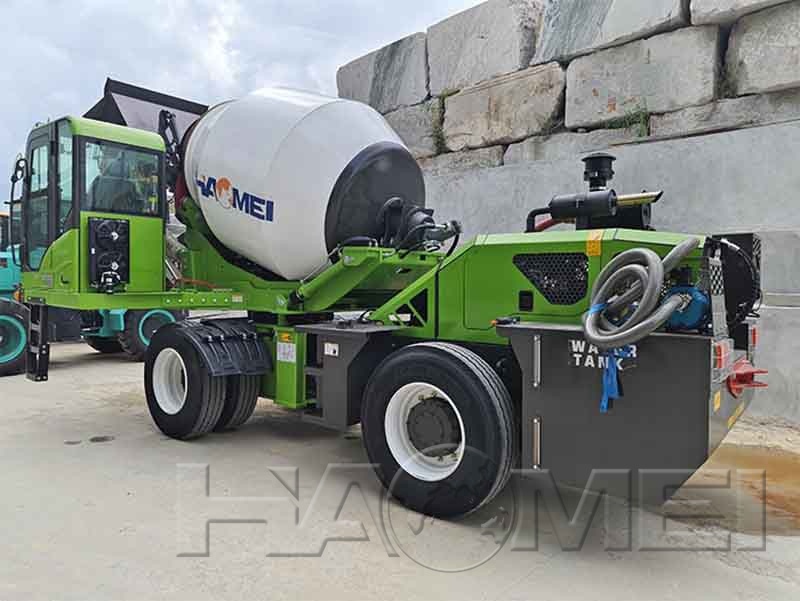
Design details that matter on real job sites
A well-designed self loading mixer is not only about drum capacity. It also depends on chassis strength, bucket geometry, hydraulic response, water metering accuracy, and operator visibility. The 1200DH model is typically valued for its compact dimensions and 4x4 drive layout, which support movement on muddy, sloped, or rough terrain where ordinary transit mixers may struggle.
The front loading bucket is built to scoop sand and aggregate directly from stockpiles. This reduces the need for a separate wheel loader on smaller projects. A wear-resistant bucket edge improves service life when handling abrasive materials. The mixing drum is engineered to rotate for both mixing and discharge, helping the operator produce fresh concrete on demand. In many applications, a reversible drum layout also supports cleaner unloading and better control of discharge direction.
The chassis structure is especially important. A rigid frame made from high-strength steel improves load-bearing reliability while resisting deformation during off-road travel. The articulation or steering arrangement, depending on the exact configuration, is chosen to keep the turning radius compact. This is useful on village roads, foundation works, drainage projects, and low-clearance construction areas.
The hydraulic system is another core design feature. Quality hoses, sealed cylinders, and stable hydraulic pumps help the bucket lift smoothly and keep drum rotation consistent. Reliable hydraulics directly affect batching speed and mixing uniformity. A properly matched powertrain also supports traction and gradeability when the machine is fully loaded.
For users comparing compact models, the Self Loading Mixer category is often preferred because it combines several job site functions into one machine while keeping transport and operating space requirements manageable.
Material selection and equipment advantages
Material quality has a direct effect on machine durability, maintenance frequency, and lifetime operating cost. In the 1200DH 4x4 concrete mixer truck, high-wear areas such as bucket cutting edges, drum interior contact surfaces, and discharge sections benefit from abrasion-resistant steel. This helps reduce premature wear caused by sand, stone, and repeated mixing cycles.
Corrosion resistance is also important. Water tanks, pipelines, and exposed metal surfaces work in wet and dusty conditions every day. Protective coatings and good paint treatment help preserve the structure, especially in coastal, humid, or hot climates. Sealed electrical components improve reliability by protecting the system from dust, splashing water, and vibration.
The table below shows how key components contribute to equipment performance.
| Component | Common Material or Feature | Practical Advantage |
|---|---|---|
| Chassis frame | High-strength structural steel | Better rigidity and off-road durability |
| Mixing drum | Wear-resistant steel plate | Longer service life in abrasive mixing work |
| Bucket edge | Hardened steel | Improved digging efficiency and reduced wear |
| Hydraulic lines | Reinforced hoses and sealed fittings | Lower risk of leakage and pressure loss |
| Water system | Corrosion-protected tank and pipes | More stable batching and easier cleaning |
| Tires and axles | Heavy-duty off-road configuration | Better traction on uneven ground |
From an operating perspective, this machine offers several clear benefits. It reduces dependence on separate loading equipment, shortens concrete preparation time, and supports production close to the pouring point. That means less waiting, less material handling, and less risk of slump loss during transport. For contractors handling house construction, road repair, small bridge work, agricultural infrastructure, and municipal maintenance, this can improve both productivity and cost control.
Another important advantage is operator control. A practical cabin layout with clear sightlines helps the driver monitor loading, drum rotation, and discharge. Some operators also compare compact units with models such as the HM1.2 Self Mixer when selecting output size for smaller concrete demand and limited site space.
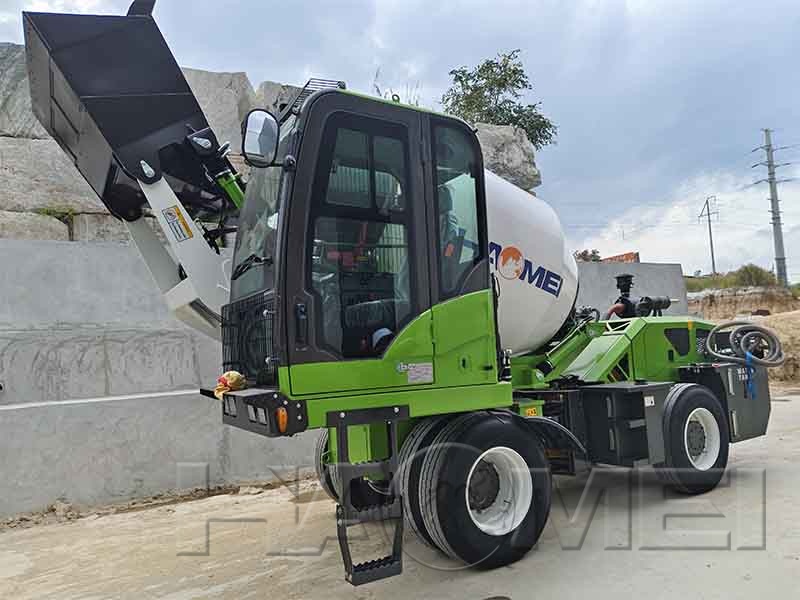
Common problems and how to solve them
Even a durable machine needs regular inspection and timely fault handling. Most operating issues come from maintenance gaps, contaminated materials, or incorrect working habits rather than major structural failure.
The table below lists common problems and practical responses.
| Problem | Likely Cause | Recommended Action |
|---|---|---|
| Drum does not rotate smoothly | Low hydraulic oil, worn pump, blocked line | Check oil level, inspect pump pressure, clean or replace blocked parts |
| Bucket lifts slowly | Hydraulic leakage, cylinder seal wear, overloaded bucket | Inspect hoses and seals, reduce overload, test hydraulic pressure |
| Concrete quality is inconsistent | Incorrect water ratio, poor feeding sequence, short mixing time | Calibrate water addition, load materials evenly, allow full mixing cycle |
| Machine struggles on slopes | Tire wear, low traction, overload, drivetrain issue | Check tire condition, reduce payload, inspect 4x4 transmission system |
| Water supply is unstable | Pump blockage, tank contamination, line leakage | Clean tank and filters, inspect pipes and connections |
| Excessive wear in drum or bucket | Highly abrasive aggregate, delayed maintenance | Replace wear parts on schedule and inspect liners regularly |
Preventive maintenance is the best way to avoid downtime. Operators should check engine oil, hydraulic oil, coolant, brakes, tire pressure, and fastener tightness before each shift. After concrete work, washing the drum and discharge area is essential. Hardened concrete buildup increases load on the drum, reduces mixing efficiency, and can eventually damage internal components.
Hydraulic troubleshooting should be done methodically. If the bucket or drum response becomes weak, first inspect oil quantity and contamination. Then check for hose damage, seal leakage, pump noise, and overheating. If unusual vibration appears during travel, inspect axle mounting points, tire wear, and wheel fasteners. Electrical faults such as non-responsive gauges or starting issues often come from loose terminals, damaged wiring, or poor battery condition.
For fleets operating in harsh environments, it is useful to keep critical spare parts in stock, including filters, seals, hydraulic hoses, bucket teeth, and electrical connectors. This shortens repair time and helps maintain project schedules.
A properly maintained 1200DH 4x4 unit gives contractors a compact and flexible way to produce concrete directly where it is needed. Its integrated loading, mixing, and transport functions make it especially suitable for projects that demand mobility, quick setup, and dependable output under changing site conditions.
Original Source: https://www.self-loading-mixer.com/a/1200dh-4x4self-loading-concrete-mixer-trucks.html
Tags: 1200DH 4x4 self loading concrete mixer truck | self loading concrete mixer
Send us a Message
Category
| HM1.2 Self Mixer |
| HM1.8 Self Mixer |
| HM2.0 Self Mixer |
| HM 2.6 Self Mixer |
| HM3.5 Self Mixer |
| HM4.0 Self Mixer |
| HM 5.5 Self Mixer |
| HM6.5 Self Mixer |
Relate Blogs
Relate Products
CONTACT US
| Haomei Self Loading Mixer Co.,Ltd |
| Tel/Whatsapp: +86-15978414719 |
| Email: feedom@haomei-machinery.com |
| Website: https://www.self-loading-mixer.com |
| Office Add: 1103, No.14 Outer Ring Road, CBD, Zhengzhou, China |


