

Self Loading Transit Concrete Mixer
 2026-05-25
A self loading transit concrete mixer combines four jobs in one machine: aggregate loading, water dosing, cement feeding, drum mixing, and short-distance concrete transport. It is most useful where a batching plant is too far away, truck access is limited, or daily concrete demand is intermittent.
The buying decision should not start with drum size alone. It should start with your concrete volume, road conditions, mix quality requirements, operator skill, and after-sales support. A low purchase price can become expensive if the unit cannot climb site roads, dose water accurately, or receive spare parts quickly.
What the Machine Solves and Where It Fits
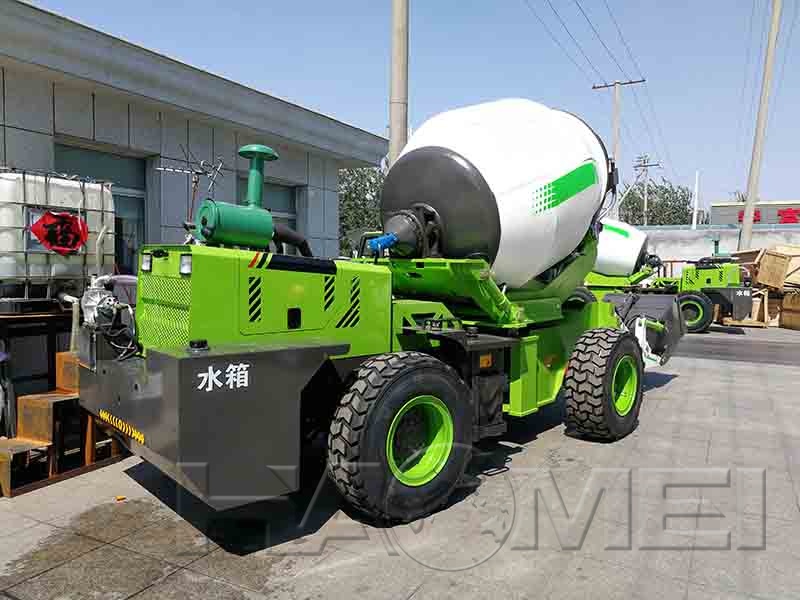
This equipment is not just a small truck mixer. A standard transit mixer normally receives concrete from a batching plant. A self-loading unit carries a loading bucket, weighing or metering system, water tank, rotating drum, and operator cab. It can produce concrete near the pour point.
It is practical for rural roads, drains, foundations, farm buildings, precast yards, repair works, solar farms, and small bridges. It is less suitable for high-volume continuous pours where a certified batching plant and pump fleet can deliver lower unit cost and tighter production control.
Concrete quality still matters. For ready-mixed concrete, ASTM C94/C94M is widely referenced in the United States, while EN 206 is widely used in Europe. These standards define requirements around materials, mixing, delivery, and conformity. If a project specification requires certified ready-mix, confirm whether site-produced concrete from this machine is accepted before purchase.
| Site problem | Better machine specification | What to verify before ordering |
|---|---|---|
| Remote worksite, no batching plant nearby | 2.0 to 4.0 m3 drum, onboard water tank | Cement storage, aggregate stockpile space, water source |
| Narrow village roads or tight urban work | Compact wheelbase, 4x4 drive, small turning radius | Overall width, height, tire type, steering mode |
| Steep or muddy access | Higher engine power, torque converter, off-road tires | Gradeability with loaded drum, brake type, axle rating |
| Repetitive small pours | Digital weighing, drum counter, water meter | Batch record export, calibration procedure |
| Government or commercial project | Documented calibration and mix records | Compliance with project concrete specification |
For small contractors, a Self Loading Mixer can reduce dependence on outside ready-mix deliveries. For mid-size daily output, a model such as the HM3.5 Self Mixer is often evaluated because 3.5 m3 class machines balance capacity, mobility, and manageable operating cost.
Selection Checklist and Cost Model
Start with daily concrete demand. A 1.2 m3 unit may suit repair teams, but it will struggle if the job needs 40 to 60 m3 per day. A 5.5 or 6.5 m3 unit has better output but needs wider roads, stronger ground, more fuel, and more disciplined loading.
Use the checklist below before comparing quotes.
| Selection item | Minimum question to ask | Why it affects cost |
|---|---|---|
| Real output per hour | How many complete batches per hour on my site route? | Travel, loading, and discharge time reduce theoretical capacity |
| Drum capacity | Is the rated capacity geometric or usable mixed concrete volume? | Overloading reduces mix quality and stresses drivetrain |
| Weighing system | Are cement, aggregate, and water measured or estimated? | Poor batching increases cement waste and rejection risk |
| Engine and emissions | Does it meet local emission rules? | Non-compliant units may be blocked from urban projects |
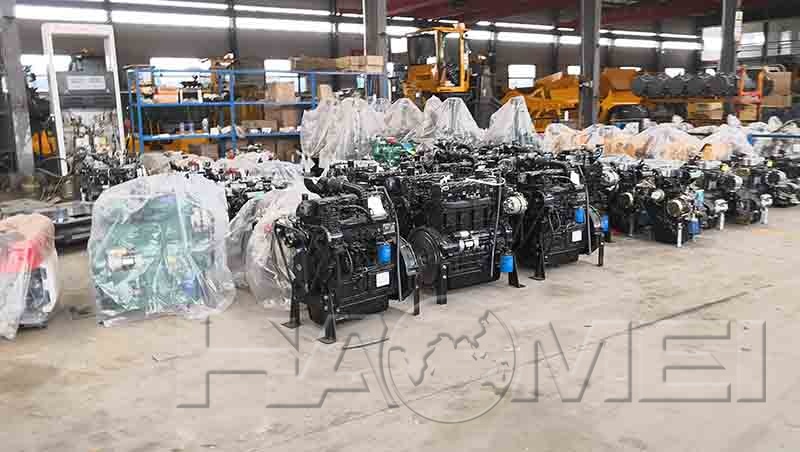
| Hydraulic system | Which pump, motor, and valve brands are used? | Affects maintenance cost and downtime |
| Brake and steering | Are brakes suitable for loaded downhill travel? | Safety and insurance exposure depend on it |
| Spare parts | Are filters, seals, sensors, tires, and wear plates stocked locally? | Downtime can exceed the saving from a cheap machine |
| Operator training | Is commissioning included? | Poor loading sequence causes segregation and drum damage |
Indicative export-market pricing for new self-loading concrete mixers commonly ranges from about USD 15,000 to USD 90,000, depending on capacity, engine, weighing system, cabin, hydraulic components, and country of origin. Treat this only as a starting budget. The actual landed cost should include ocean freight, insurance, import duty, value-added tax or GST, port charges, inland transport, spare parts package, operator training, and warranty terms.
A practical investment calculation should use cost per cubic meter, not only purchase price.
| Cost component | How to calculate it | Control action |
|---|---|---|
| Depreciation | Purchase price minus resale value, divided by expected output | Choose a size that will stay utilized |
| Fuel | Liters per hour divided by m3 per hour | Test on similar terrain if possible |
| Cement waste | Extra cement used due to inaccurate batching | Require calibrated weighing or metering |
| Labor | Operator plus loader assistant if needed | Check whether one operator can safely complete the cycle |
| Maintenance | Filters, oil, tires, bucket edges, drum rollers, hydraulic hoses | Buy a planned spare parts package |
| Downtime | Lost production plus standby labor | Confirm parts lead time in writing |
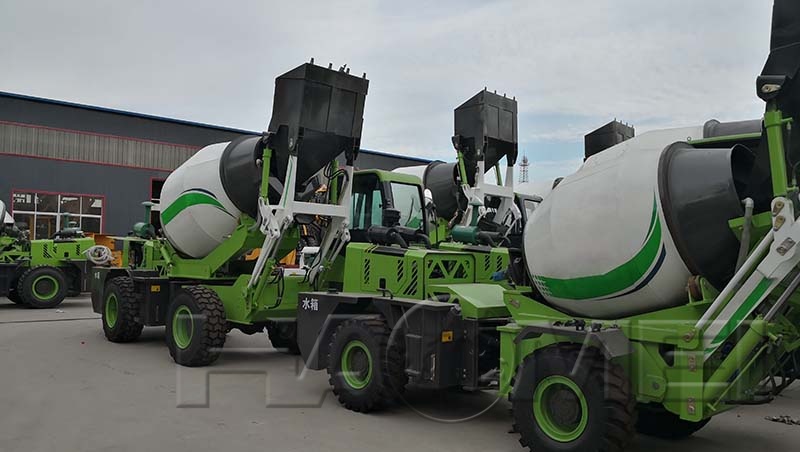
Do not compare machines only by drum capacity. Ask each supplier for a technical data sheet, hydraulic schematic, engine certificate, warranty policy, parts list, and commissioning plan. If the machine will be financed, match loan payments to conservative utilization, not peak-season demand.
Operation, Compliance, and Industry Trends
Safe operation starts before the first batch. The operator must understand loading sequence, drum speed, water addition, discharge control, travel limits, and cleaning. Concrete has a typical density of about 2,300 to 2,400 kg/m3, so even a small overload adds several tonnes to the chassis, axles, brakes, and tires.
Daily operating steps:
- Inspect tires, wheel nuts, lights, horn, reverse alarm, brakes, hydraulic leaks, drum rollers, bucket pins, and emergency stop.
- Check engine oil, coolant, hydraulic oil, water tank, fuel level, and air filter restriction indicator.
- Confirm the mix design, aggregate moisture condition, cement quantity, and water-cement ratio target.
- Load aggregates in the specified sequence to reduce segregation.
- Add cement and water according to the approved mix method, not by guesswork.
- Mix for the required drum revolutions or time stated by the project procedure.
- Discharge on stable ground, away from edges, excavations, and overhead hazards.
- Wash the drum, chute, bucket, and sensors before concrete hardens.
Compliance depends on jurisdiction, but several references are commonly relevant. OSHA 29 CFR 1926 covers construction safety requirements in the United States, including equipment operation hazards. ISO 3471 covers roll-over protective structures for earth-moving machinery. Local road rules may also apply if the unit travels on public roads. For lifting attachments, towing, or work near traffic, additional local rules may apply.
Concrete quality control should be documented. Keep batch sheets, water additions, cement usage, slump test results, cube or cylinder test records, and calibration logs. ACI and ASTM practices are often referenced for sampling and testing, but the project specification controls the acceptance method.
Digitalization is changing this equipment category. Better machines now offer load cells, water meters, camera systems, GPS, telematics, fault codes, and batch data export. These features help prove production, reduce material theft, and identify maintenance problems before failure.
Emission rules are also shaping purchases. Urban jobs increasingly prefer lower-emission engines, better noise control, and cleaner washout practices. Electric versions remain limited by battery cost, duty cycle, and charging access, but hybrid site fleets and telematics-based fuel monitoring are growing.
Use this final pre-purchase audit during supplier negotiation:
- Confirm rated output with a time study based on your haul distance.
- Request a written warranty with exclusions clearly stated.
- Order critical spares with the machine: filters, seals, sensors, hoses, bucket teeth, wear plates, fuses, belts, and drum roller parts.
- Require operator and mechanic training during commissioning.
- Verify whether the machine can legally travel on local roads.
- Check that the supplier can provide calibration support for weighing and water systems.
- Inspect weld quality, hose routing, access for maintenance, cab visibility, and guarding before final payment.
Original Source: https://www.self-loading-mixer.com/a/self-loading-transit-concrete-mixer.html
Tags: Self Loading Transit Concrete Mixer | Self Loading Mixer | Concrete Mixer Truck
Send us a Message
Category
| HM1.2 Self Mixer |
| HM1.8 Self Mixer |
| HM2.0 Self Mixer |
| HM 2.6 Self Mixer |
| HM3.5 Self Mixer |
| HM4.0 Self Mixer |
| HM 5.5 Self Mixer |
| HM6.5 Self Mixer |
Relate Blogs
| Self Batching Concrete Truck |
| Self Loading Concrete Mixer Machine |
| 1200DH 4x4self Loading Concrete Mixer Trucks |
| Self Loading Concrete Mixer for Sale in Nigeria |
| Self Loading Concrete Mixer Manufacturers |
Relate Products
CONTACT US
| Haomei Self Loading Mixer Co.,Ltd |
| Tel/Whatsapp: +86-15978414719 |
| Email: feedom@haomei-machinery.com |
| Website: https://www.self-loading-mixer.com |
| Office Add: 1103, No.14 Outer Ring Road, CBD, Zhengzhou, China |


