

Self Loading Concrete Mixer Machine Price
 2026-05-19
For construction companies, a self loading concrete mixer is not only a machine purchase; it is a change in how concrete is produced, transported, and discharged on site. The price is affected by capacity, chassis structure, hydraulic system, weighing accuracy, engine standard, drum design, and after-sales support. A low initial offer may look attractive, but the real value comes from stable output, lower labor demand, easy maintenance, and fewer site delays.
What Shapes the Price and Design Value
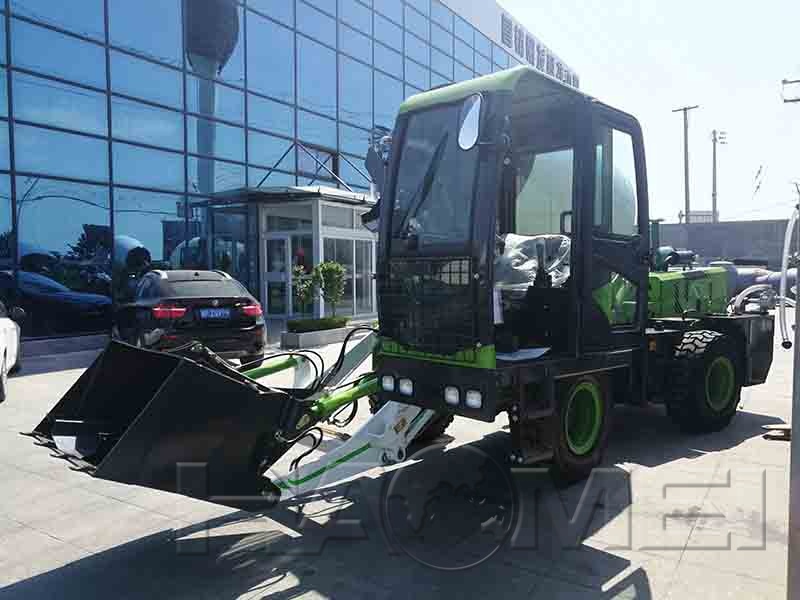
A modern self loading mixer combines a loader, batching unit, transit mixer, and discharge system into one mobile machine. Instead of depending on a fixed batching plant and separate concrete truck, the operator can load aggregates, add cement and water, mix while traveling, and discharge directly into formwork, trenches, road sections, or small foundations.
The price range changes because each technical choice affects production efficiency and service life. A compact model may suit village roads and housing work, while a larger unit supports bridge repair, industrial floors, and remote infrastructure projects. For users comparing models, a general Self Loading Mixer category is often the starting point because it helps match capacity, site access, and output requirements.
| Price factor | What it means in the machine | Why it affects value |
|---|---|---|
| Mixing capacity | Rated batch volume, commonly selected by daily concrete demand | Larger capacity reduces batch cycles but needs wider site access |
| Drive system | 4x4 drive, steering angle, tire size, axle strength | Better traction improves work on slopes, mud, and uneven ground |
| Hydraulic components | Pump, motor, valves, hoses, cylinders | Smooth loading, drum rotation, and discharge depend on hydraulic stability |
| Weighing system | Load cells, water meter, digital display | Helps control mix proportion and reduce material waste |
| Engine and emission level | Power output, fuel system, regional compliance | Impacts fuel use, legal use, and spare parts availability |
| Drum and blade design | Spiral blades, rotation speed, steel thickness | Influences mixing uniformity and wear resistance |
| Cab and controls | Joystick, camera, display, air conditioning options | Improves operator comfort, visibility, and productivity |
Cutting-edge designs focus on visibility and automation. A good loader arm geometry allows fast material scooping without stressing the frame. A wide-view cab helps the operator see the bucket, drum, and discharge area. Many machines use an electronic weighing display so the operator can manage cement, aggregate, and water more consistently. Some drums rotate through a wide discharge angle, reducing repositioning time when pouring on both sides of the machine.
For medium projects, the HM3.5 Self Mixer is a common capacity class because it balances batch volume, maneuverability, and daily output. It is often preferred where a full-size concrete truck is difficult to schedule or where a fixed plant is too far from the work front.
Materials and Operating Advantages
Material selection is one of the most important reasons similar-looking machines have different prices. The frame should use high-strength structural steel with proper welding procedure and stress distribution. A strong frame reduces deformation when the bucket is loaded, when the machine turns on uneven ground, and when the drum carries wet concrete.
The mixing drum usually uses wear-resistant steel in the areas exposed to aggregate friction. Inside the drum, spiral blades must have enough thickness and correct angle to lift and fold the concrete, not simply roll it. Poor blade design can cause segregation, slow mixing, or concrete build-up. Reliable manufacturers also pay attention to surface treatment, primer, paint adhesion, and anti-rust protection, especially for machines working in humid or coastal sites.
Hydraulic hoses, seals, pins, and bushings are smaller parts, but they strongly affect uptime. High-pressure hoses should match the system pressure and be routed away from sharp edges and heat. Bucket pins and articulation joints need grease channels and dust protection. A durable planetary reducer and drum support roller design help maintain stable rotation under load.
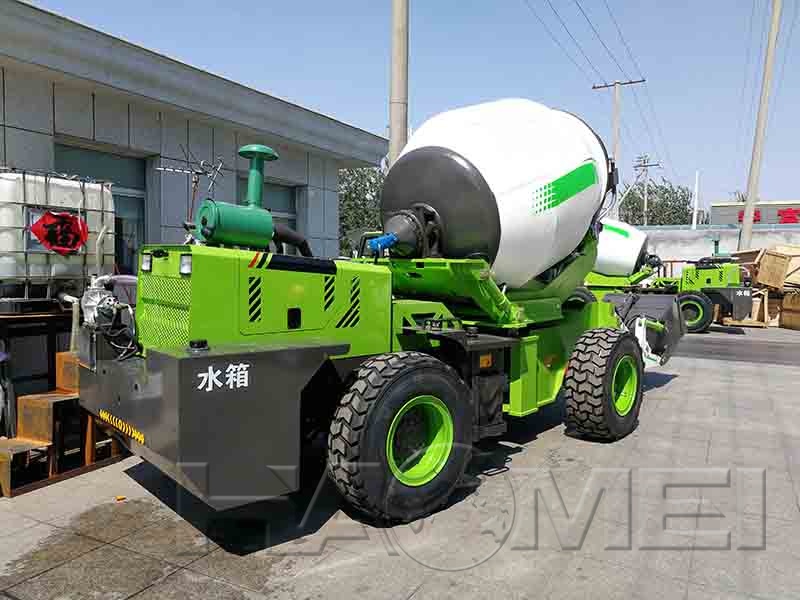
The main advantage of using this equipment is independence. A project team can produce concrete close to the pouring point, reducing waiting time and transport loss. This is especially useful for rural roads, drainage channels, slope protection, farms, small bridges, and repair work spread across several locations.
| Equipment advantage | Site benefit | Cost influence |
|---|---|---|
| Self loading bucket | Fewer auxiliary loaders needed | Lower labor and equipment rental cost |
| On-site mixing | Shorter distance from mixing to pouring | Less slump loss and less wasted concrete |
| Mobile discharge | Concrete can be placed in different positions | Less manual handling and faster cycle time |
| Digital weighing | More controlled material use | Reduced cement and aggregate waste |
| 4x4 mobility | Better movement on rough ground | Fewer delays caused by poor access |
| Single-operator workflow | Loading, mixing, driving, and discharge in one unit | Higher productivity with a smaller crew |
When evaluating price, procurement teams should calculate operating cost, not only the purchase cost. Fuel consumption, tire life, service intervals, availability of wear parts, and technician support all influence long-term spending. A machine with stronger steel, a dependable hydraulic system, and accessible service points may cost more at purchase, but it can reduce downtime and repair frequency.
Troubleshooting and Cost Control in Daily Use
A self loading concrete mixer works under dust, vibration, heavy load, and changing ground conditions. Most faults can be reduced through daily inspection and correct operation. Before starting, the operator should inspect engine oil, coolant, hydraulic oil level, tire pressure, drum rollers, water pump, bucket pins, and safety devices. After work, concrete residue should be washed from the drum, chute, bucket, and blades before it hardens.
| Symptom | Possible cause | Practical action |
|---|---|---|
| Drum rotates slowly | Low hydraulic oil, blocked filter, weak pump, overload | Check oil level, replace filter, reduce batch volume, test pressure |
| Concrete is not uniform | Wrong loading order, too little mixing time, worn blades | Load aggregate, cement, and water according to procedure, extend mixing, inspect blades |
| Bucket lifts weakly | Cylinder seal wear, relief valve issue, hose leakage | Inspect leakage points, test cylinder drift, adjust or service valve |
| Water dosing is inaccurate | Air in pipeline, clogged filter, faulty flow meter | Bleed line, clean filter, calibrate meter according to supplier procedure |
| Machine pulls to one side | Uneven tire pressure, brake drag, steering linkage wear | Adjust tire pressure, inspect brake temperature, check steering joints |
| Drum roller noise | Lack of grease, roller wear, misalignment | Grease bearings, inspect roller surface, adjust support position |
| Engine overheats | Radiator blockage, low coolant, fan belt issue | Clean radiator fins, refill coolant, inspect belt tension |
For hydraulic faults, cleanliness is critical. Dirt entering the oil can damage pumps, valves, and seals. Use the specified hydraulic oil grade, keep the tank cap clean, and replace filters at recommended intervals. If the hydraulic oil becomes milky, water contamination may be present and the system should be serviced promptly.
For concrete quality problems, operators should not guess the mix ratio. Cement, sand, stone, and water should follow the approved mix design for the project. The onboard weighing system helps, but it must be calibrated. If the project requires structural concrete, local engineering standards and laboratory testing should be followed.
Safe operation also protects the machine investment. Do not drive fast with a full drum on slopes. Avoid sudden steering on soft ground. Keep people away from the discharge area and articulation zone. When servicing under a raised bucket, use a mechanical safety support rather than relying only on hydraulic pressure.
A fair machine price should include technical configuration, documentation, spare parts plan, training, and service response. Ask for details about steel thickness in wear areas, hydraulic brand and pressure rating, engine model, drum reducer type, weighing accuracy, warranty scope, and recommended maintenance schedule. These details show whether the offer is built for short-term sale or long-term site performance.
Original Source: https://www.self-loading-mixer.com/a/self-loading-concrete-mixer-machine-price.html
Tags: self loading concrete mixer machine price | self loading mixer | concrete mixer truck | mobile batching
Send us a Message
Category
| HM1.2 Self Mixer |
| HM1.8 Self Mixer |
| HM2.0 Self Mixer |
| HM 2.6 Self Mixer |
| HM3.5 Self Mixer |
| HM4.0 Self Mixer |
| HM 5.5 Self Mixer |
| HM6.5 Self Mixer |
Relate Blogs
Relate Products
CONTACT US
| Haomei Self Loading Mixer Co.,Ltd |
| Tel/Whatsapp: +86-15978414719 |
| Email: feedom@haomei-machinery.com |
| Website: https://www.self-loading-mixer.com |
| Office Add: 1103, No.14 Outer Ring Road, CBD, Zhengzhou, China |


