

Is Self Loading Concrete Mixer Good to Use
 2026-05-12
In small and medium-sized infrastructure projects, rural road construction, courtyard renovations, and slope protection projects, self-loading concrete mixer trucks have become essential equipment.
Unlike the traditional construction model of a stationary mixing plant + transport tanker truck, it integrates automatic feeding, mixing, transportation, and pouring, eliminating the need for a mixing plant and multiple personnel, significantly lowering the construction threshold. However, many construction bosses have questions: This truck seems all-around capable, but how well does it perform in complex and harsh working conditions?
Regular Leveling Conditions
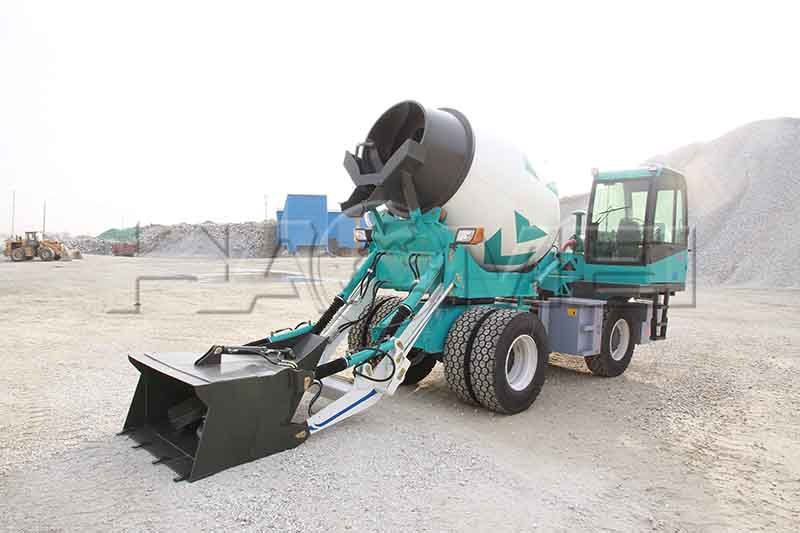
On leveled, hardened roads and open, flat construction sites, the usability of cheap self loading concrete mixer is undeniable. Traditional construction requires loaders for feeding, manual mixing, fixed-station mixing, and tanker truck transport—a time-consuming and labor-intensive process prone to concrete segregation and premature setting problems.
Self loading transit mixers, equipped with a hydraulic feeding bucket, can autonomously complete the mixing and feeding of sand, gravel, cement, and water. An intelligent metering system ensures accurate proportions, allowing for immediate use and completely avoiding concrete waste and inconsistent quality.
It only requires only 1-2 operators throughout the entire process. The daily output is sufficient for small projects, reducing labor costs by more than half compared to traditional methods and significantly shortening the construction cycle, making it a cost-effective solution for small to medium-sized construction projects.
Three Complex and Harsh Working Conditions
1. Rainy Weather
Outdoor construction is most vulnerable to rainy weather. Traditional mixing operations are prone to imbalances in proportions and work stoppages due to muddy sites when rain occurs. While self-loading mixer trucks are relatively adaptable to rain, they are not without shortcomings in all weather conditions.
In light rain or intermittent showers, the equipment can operate normally. The entire electrical system is waterproofed and sealed, preventing core components from short-circuiting due to moisture. Simultaneously, the water addition can be fine-tuned in real-time based on air humidity and rainfall conditions, precisely controlling the concrete slump and ensuring output quality.
Furthermore, integrated operation eliminates the need for large aggregate stockpiles on-site, avoiding the problems of sand and gravel being washed away by rainwater and imbalances in proportions.
However, in cases of heavy rain or continuous rain and water accumulation, the drawbacks become apparent. After a large amount of water accumulates on the road, ordinary wheeled vehicles are prone to slipping. Excessive rainwater also makes it difficult to control the concrete mix ratio, and forcing construction can lead to substandard concrete strength. Furthermore, the humid air in rainy weather means the chassis and connecting parts are constantly exposed to moisture, making them susceptible to minor corrosion if not properly maintained.
2. Muddy Ground Conditions
Rural construction sites, roadbeds in the wild, and farmland renovation projects often involve soft mud and muddy, potholed surfaces. Traditional large concrete mixer trucks are extremely heavy, resulting in high ground pressure, making them prone to getting stuck and requiring towing, delaying construction and increasing costs.
Self-loading concrete mixer machines are specifically optimized for muddy ground conditions, offering significant advantages. The entire vehicle uses a lightweight, high-strength body design, approximately 25% lighter than traditional mixing equipment, effectively reducing ground pressure.
Combined with large, deep-tread off-road engineering tires, some four-wheel drive versions can reduce ground pressure by up to 40%, significantly improving traction. They are less prone to getting stuck or slipping on soft mud and rough roads, and their traction is more than 50% higher than ordinary tires.
For muddy, soft-surface roads and potholed muddy roads after rain, vehicles can travel smoothly at low speeds, penetrating deep into the core areas of construction sites without relying on hardened surfaces. Even on unpaved, untouched muddy construction sites, continuous mixing and pouring can be achieved, perfectly solving the pain points of traditional equipment being "unable to enter or move."
The only drawback: Deep mud and marshy roads, even with optimized tires and chassis, still pose a risk of getting stuck; caution is required in these extreme scenarios.
3. Mountain Road Conditions
Mountain road construction, slope reinforcement, and rural infrastructure construction are the most challenging scenarios. Mountain roads are generally narrow, steep, with sharp bends and rugged terrain. Traditional large mixer trucks, with their large turning radius and heavy bodies, are simply unable to pass. This is the core advantage of self-loading mixer trucks.
Firstly, they have excellent climbing ability. Mainstream four-wheel-drive self-loading mixer trucks can easily handle steep slopes of around 30°, with stable power output. During climbing, the mixing tank operates normally, preventing concrete backflow and segregation, making them suitable for construction terrain with large elevation differences in mountainous areas.
Secondly, it boasts excellent maneuverability and adaptability to narrow roads. The equipment features an articulated chassis design, reducing the turning radius by 30% compared to ordinary vehicles. It can smoothly navigate even narrow mountain roads of about 1.5 meters, easily handling continuous sharp bends and winding mountain roads without encountering issues like scraping against the mountain or being unable to turn due to road obstruction. Simultaneously, it is equipped with an intelligent balancing system, ensuring strong vehicle stability during operation on rugged slopes and effectively avoiding the risk of rollover.
Furthermore, mountain construction sites are mostly far from urban areas. Fixed mixing plants involve long transportation distances and high costs, and concrete is prone to initial setting deterioration during long-distance transportation. The self-loading mixer truck's mobile mixing advantage perfectly suits the "scattered, remote, and poor road conditions" characteristics of mountain construction, allowing for on-the-spot mixing and pouring, significantly reducing transportation costs.
The shortcomings are also quite apparent: continuous operation on long distances and steep slopes on mountain roads increases wear and tear on the engine and transmission, resulting in faster equipment wear compared to operation on flat ground, and slightly increasing subsequent maintenance costs.
Simply speaking, self loading concrete mixers are good to us in most cases. If you like to buy a reliable equipment with limit budget, welcome to inquire Haomei Machinery, self loading concrete mixer supplier China, directly.
Original Source: https://www.self-loading-mixer.com/a/is-self-loading-concrete-mixer-good-to-use.html
Tags: self loading concrete mixer truck
Send us a Message
Category
| HM1.2 Self Mixer |
| HM1.8 Self Mixer |
| HM2.0 Self Mixer |
| HM 2.6 Self Mixer |
| HM3.5 Self Mixer |
| HM4.0 Self Mixer |
| HM 5.5 Self Mixer |
| HM6.5 Self Mixer |
Relate Blogs
Relate Products
CONTACT US
| Haomei Self Loading Mixer Co.,Ltd |
| Tel/Whatsapp: +86-15978414719 |
| Email: feedom@haomei-machinery.com |
| Website: https://www.self-loading-mixer.com |
| Office Add: 1103, No.14 Outer Ring Road, CBD, Zhengzhou, China |


