

Self Loading Concrete Mixer Truck for Fast On Site Mixing
 2026-03-02
Modern job sites often need concrete in smaller, frequent pours, far from a fixed batching plant, or in areas where space and labor are limited. A self loading concrete mixer truck combines aggregate loading, water dosing, mixing, and short distance transport in one compact machine, helping contractors keep pours moving without waiting on external supply.
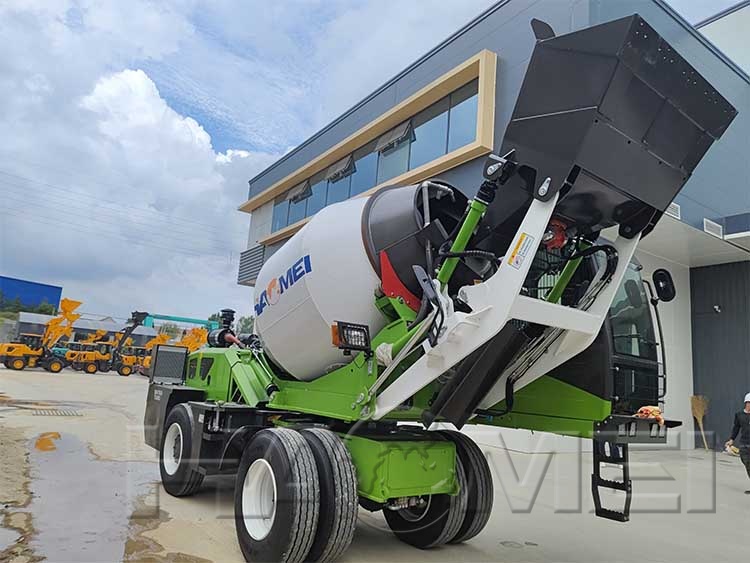
What it is and why it is used on job sites
A self loading mixer is essentially a mobile mini batching system. It uses a front mounted loading bucket to scoop sand and stone, then feeds the material into a rotating drum. Water is added through a tank and metering system, and mixing happens during travel and at the pour point. This integrated workflow is widely used for:
Rural roads and drainage works where ready mix delivery is slow or unreliable.
Small to medium building foundations, slabs, and columns requiring multiple batches per day.
Municipal maintenance, utility reinstatement, and remote infrastructure projects.
Sites with limited crane access, tight staging areas, or strict scheduling windows.
From an equipment selection perspective, the main advantage is control. Operators can adjust slump and batch size on site, and the crew is less dependent on external logistics. In markets with rising transport costs or inconsistent supply, this flexibility is a practical hedge against delays.
Core components and performance features to evaluate
Not all machines are configured the same. When comparing models, focus on the systems that directly affect batch accuracy, durability, and ease of operation.
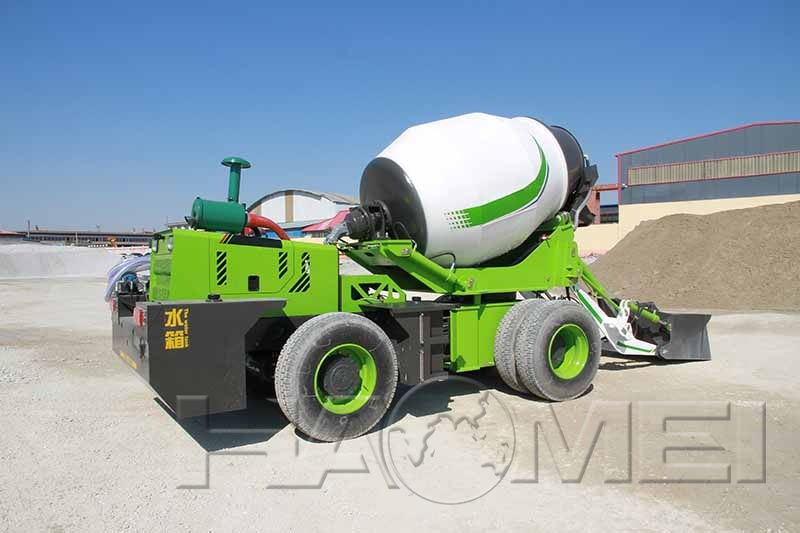
1. Loading and feeding system
Bucket capacity and geometry affect how quickly you can load consistent volumes.
Wear protection on the bucket lip and cutting edge matters in abrasive aggregates.
2. Mixing drum and blades
Drum volume sets the workable batch size, but blade design determines mixing quality.
Look for robust blade fastening and wear resistant liners if you run high output daily.
3. Water dosing and consistency control
A water tank with a metering setup supports repeatable mixes across batches.
For demanding pours, consistent water control is often the difference between rework and acceptance.
4. Chassis, drive, and site mobility
4x4 drive and appropriate tires help on soft ground and unfinished terrain.
Steering mode, turning radius, and ground clearance can be more important than top speed on constrained sites.
5. Operator environment and controls
Clear visibility, intuitive controls, and stable braking reduce operator fatigue and improve safety.
Some configurations include a rotating operator seat to improve sightlines during loading and discharge.
If you are matching machine size to common job volumes, a mid range unit is often the most versatile. For example, the HM3.5 Self Mixer is typically suited to routine structural and flatwork tasks where you want steady daily output without oversizing for every site.
Choosing capacity, options, and the right fit for your projects
Capacity is the headline spec, but real productivity depends on cycle time and site layout. Consider these selection points:
Typical pour size and frequency: If most jobs need frequent 0.5 to 2.0 m3 placements, smaller machines may cycle faster and maneuver better.
Haul distance on site: Longer internal travel favors stable chassis design and reliable drum drive.
Aggregate handling method: If your site stocks materials in low piles, bucket reach and breakout force matter.
Crew and workflow: One operator machines reduce labor, but ensure you can support material staging and finishing.
Below is a practical comparison table to align capacity classes with common applications.
| Capacity class | Typical use cases | Strengths | Watch outs |
|---|---|---|---|
| 1.2 to 2.0 m3 | Utility work, patching, small foundations | Easy transport, tight turning, fast setup | More trips for larger slabs |
| 2.6 to 3.5 m3 | Residential and light commercial pours | Balanced output and mobility | Ensure water dosing is accurate for repeatability |
| 4.0 to 6.5 m3 | High volume daily work, remote road projects | Fewer cycles per pour, better for sustained output | Requires more space for staging and turning |
Options can materially change uptime and operating cost. Common value add choices include:
Auxiliary hydraulic lines for easier maintenance and attachments.
Reinforced drum and blades for abrasive aggregate regions.
Cabin climate and dust protection in hot or high particulate environments.
Onboard weighing or calibrated batching marks when mix consistency is closely inspected.
If your work frequently spans mixed terrain and you need a flexible platform for multiple project types, the Self Loading Mixer category is often evaluated against small ready mix delivery plus onsite loader costs. Many contractors find the integrated approach reduces coordination risk while keeping concrete available exactly when finishing crews are ready.
Market trend note, manufacturers are putting more emphasis on fuel efficiency, simplified maintenance access, and operator comfort, because total cost of ownership is increasingly driven by uptime and labor stability rather than only purchase price. When requesting quotations, ask suppliers to clarify wear part life, drum and hydraulic service intervals, and availability of consumables in your region.
For procurement teams, the most effective way to shortlist is to map your top three job types to required batch size, daily output, and site mobility, then select a configuration that can handle the hardest terrain you regularly face without overspending on capacity you rarely use.
Original Source: https://www.self-loading-mixer.com/a/self-loading-concrete-mixer-truck.html
Tags: self loading concrete mixer truck | self loading mixer
Send us a Message
Category
| HM1.2 Self Mixer |
| HM1.8 Self Mixer |
| HM2.0 Self Mixer |
| HM 2.6 Self Mixer |
| HM3.5 Self Mixer |
| HM4.0 Self Mixer |
| HM 5.5 Self Mixer |
| HM6.5 Self Mixer |
Relate Blogs
Relate Products
CONTACT US
| Haomei Self Loading Mixer Co.,Ltd |
| Tel/Whatsapp: +86-15978414719 |
| Email: feedom@haomei-machinery.com |
| Website: https://www.self-loading-mixer.com |
| Office Add: 1103, No.14 Outer Ring Road, CBD, Zhengzhou, China |


