

Self Loading Concrete Mixer Manufacturers
 2026-05-06
Choosing among self loading concrete mixer manufacturers is not only a price exercise. The right machine can replace a small batching plant, loader, water tank, and transit mixer on remote or fast-moving jobs. The wrong one creates rejected concrete, idle crews, and expensive parts delays.
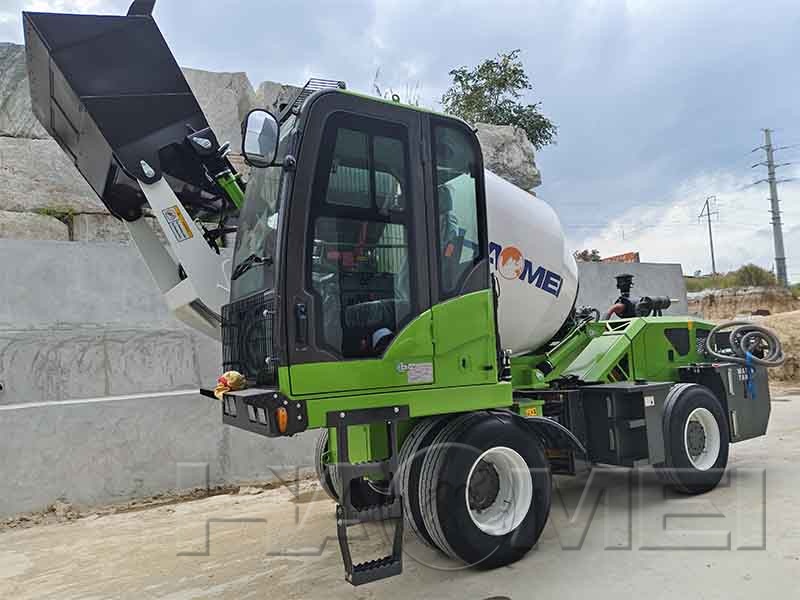
A self-loading mixer loads aggregate with its front bucket, weighs or meters materials, mixes in a rotating drum, and transports concrete across site. It is most useful where ready-mix supply is unreliable, access is tight, or daily concrete demand changes.
1. Match the Machine to the Job Before Comparing Factories
Start with output, not brand names. Most compact self-loading mixers are sold by drum yield, commonly from about 1.2 m3 to 6.5 m3 per batch. Actual hourly output depends on travel distance, loading efficiency, water control, operator skill, and mix design.
Use this first-screening table before requesting quotations.
| Job condition | Practical machine range | What to check before ordering |
|---|---|---|
| Narrow urban repair, farm work, small foundations | 1.2-2.0 m3 | Turning radius, total width, hydrostatic drive service access |
| Villas, drainage, rural roads, small bridges | 2.6-3.5 m3 | Bucket capacity, weighing system, water tank volume, drum discharge height |
| Road sections, industrial yards, remote sites | 4.0-5.5 m3 | Engine power, axle rating, tire specification, climbing ability under load |
| Larger site supply with fewer trips | 6.5 m3 class | Legal transport dimensions, braking system, site haul road strength |
For compact sites, an entry-size Self Loading Mixer can be easier to utilize than a larger unit that spends time maneuvering. For general civil work where one machine must serve footings, slabs, and road shoulders, the HM3.5 Self Mixer size is often worth evaluating because it balances output and mobility.
Do not size the unit only by drum volume. Ask for rated concrete yield per batch, not geometric drum capacity. A drum marked 4.0 m3 may not deliver 4.0 m3 of finished concrete in every mix.
Daily operating sequence:
- Confirm the approved mix design and moisture condition of aggregates.
- Calibrate water and admixture dosing before production.
- Load aggregates in the required order.
- Add cement through a controlled process to reduce dust and loss.
- Mix for the manufacturer-specified drum speed and time.
- Check slump or workability at discharge.
- Wash the drum, chute, bucket, and loading area before buildup hardens.
Concrete quality is still governed by recognized concrete standards. In the United States, ASTM C94/C94M covers ready-mixed concrete requirements. In Europe, EN 206 defines concrete specification, performance, production, and conformity. A self-loading mixer does not automatically satisfy these standards; the producer must control materials, batching accuracy, mixing, testing, and records.
2. Verify the Manufacturer, Not Just the Brochure
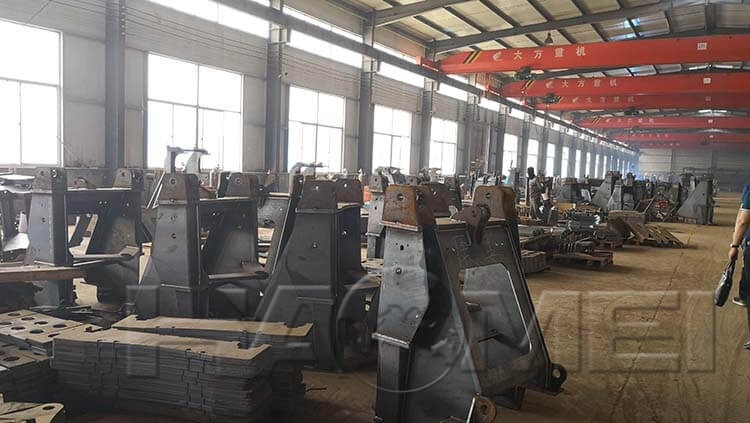
There is no universally accepted global ranking for self-loading mixer producers. Online top-10 lists are usually marketing content, not audited performance data. Treat every supplier as unverified until documents, factory capability, and after-sales structure are checked.
Use the following checklist during supplier evaluation.
| Verification item | Acceptable evidence | Risk if missing |
|---|---|---|
| Legal manufacturer identity | Business registration, export records, factory address, production photos or audit | Trading company may not control quality or parts |
| Quality management | ISO 9001 certificate from a recognized certification body, with scope matching machinery manufacture | Weak process control and inconsistent welds or hydraulics |
| Engine compliance | EPA Tier 4, EU Stage V under Regulation (EU) 2016/1628, or local emission approval as required | Customs delay, fines, or inability to register equipment |
| Machinery safety | CE documentation where applicable, risk assessment, operator manual, guarding, emergency stop | Higher accident exposure and insurance problems |
| Structural and hydraulic parts | Steel grade records, pump and motor brands, hose ratings, axle data | Premature frame cracking, leaks, overheating |
| Weighing and water control | Calibration method, load cell details, water meter accuracy | Concrete strength variation and rejected pours |
| Parts support | Wear-part list, hydraulic schematic, electrical diagram, parts price sheet | Long downtime after minor failures |
For EU markets, note that Regulation (EU) 2023/1230 on machinery will apply from January 20, 2027, replacing the current Machinery Directive 2006/42/EC framework. For U.S. construction sites, OSHA 29 CFR 1926.600 addresses motor vehicles, mechanized equipment, and marine operations. Local requirements may also cover lighting, reverse alarms, operator protection, and road travel.
Ask each factory for a pre-delivery inspection report with photos of the actual serial-numbered unit. The report should include drum rotation, braking, steering, hydraulic pressure, weighing test, water pump test, lights, horn, leaks, tire pressure, and paint condition.
A good acceptance test is simple: run one full batch with measured materials, record loading time, mixing time, discharge time, slump, fuel use, and any alarms. If a supplier refuses a documented trial or video inspection, treat that as a procurement risk.
3. Price, ROI, and Trends That Affect Your Purchase
As of 2025, public international marketplace listings commonly show new self-loading mixers in the approximate range of US$18,000 to US$95,000 for many 1.2-6.5 m3 models on FOB or ex-works terms. Premium European-built machines can exceed US$150,000 depending on specification. These are screening ranges only; freight, duties, taxes, warranty terms, engine rules, and attachments change the landed cost.
Compare total cost, not invoice price.
| Cost item | What to include | Control action |
|---|---|---|
| Purchase price | Machine, bucket, chute, camera, A/C cabin, spare parts | Request itemized quotation |
| Import and transport | Sea freight, port charges, inland haulage, customs duty, VAT/GST | Ask a forwarder for landed-cost estimate |
| Operating cost | Diesel, tires, hydraulic oil, filters, wear blades, water pump parts | Estimate cost per m3, not cost per hour only |
| Labor | Operator, helper, testing technician if required | Train one backup operator |
| Quality cost | Slump tests, cube or cylinder tests, rejected concrete | Keep batch records and calibration logs |
| Downtime | Waiting for sensors, hoses, seals, brake parts | Buy a 12-month wear-part kit with the machine |
A quick ROI model:
- Estimate monthly concrete volume in m3.
- Calculate delivered ready-mix price at the site, including waiting charges and rejected loads.
- Calculate self-produced concrete cost: cement, aggregate, sand, water, admixture, fuel, operator, maintenance, testing, depreciation, and finance.
- Subtract self-produced cost from delivered cost to get saving per m3.
- Divide total landed investment by monthly saving.
Example formula: Payback months = landed machine cost / monthly net saving. If the result depends on full utilization every day, the investment is fragile. If payback remains acceptable at 50-60 percent utilization, the machine is more resilient.
Current industry trends favor manufacturers that offer data and service transparency. Telematics, batch counting, engine-hour tracking, GPS location, fault codes, and maintenance reminders are becoming common. Digital batch records also help prove concrete production history when site disputes occur.
Electrification is emerging in compact construction equipment, but most self-loading mixers still rely on diesel engines because mixing, loading, climbing, and site travel require high continuous power. In regulated markets, emission-compliant engines and reliable after-treatment support are more important than the lowest purchase price.
Before signing a purchase order, require this document pack:
- Signed technical specification with rated yield, engine model, axle type, hydraulic pump model, and tire size.
- Warranty terms stating coverage period, excluded wear parts, and response process.
- Operator manual and maintenance schedule in a language your team can use.
- Electrical and hydraulic schematics.
- Spare-parts catalog with part numbers.
- Emission and conformity documents required in the destination country.
- Factory test video showing the actual unit serial number.
- Training plan for operation, cleaning, calibration, and emergency shutdown.
A self-loading mixer is profitable when the site can control materials, operators follow batching discipline, and the manufacturer can support the machine after delivery. Select the supplier that proves compliance, production capacity, parts availability, and concrete quality control before discussing cosmetic options.
Original Source: https://www.self-loading-mixer.com/a/self-loading-concrete-mixer-manufacturers.html
Tags: Self Loading Concrete Mixer Manufacturers | self loading mixer | concrete mixer truck | construction equipment
Send us a Message
Category
| HM1.2 Self Mixer |
| HM1.8 Self Mixer |
| HM2.0 Self Mixer |
| HM 2.6 Self Mixer |
| HM3.5 Self Mixer |
| HM4.0 Self Mixer |
| HM 5.5 Self Mixer |
| HM6.5 Self Mixer |
Relate Blogs
Relate Products
CONTACT US
| Haomei Self Loading Mixer Co.,Ltd |
| Tel/Whatsapp: +86-15978414719 |
| Email: feedom@haomei-machinery.com |
| Website: https://www.self-loading-mixer.com |
| Office Add: 1103, No.14 Outer Ring Road, CBD, Zhengzhou, China |


