

Self Loading Cement Mixer for Sale
 2026-04-27
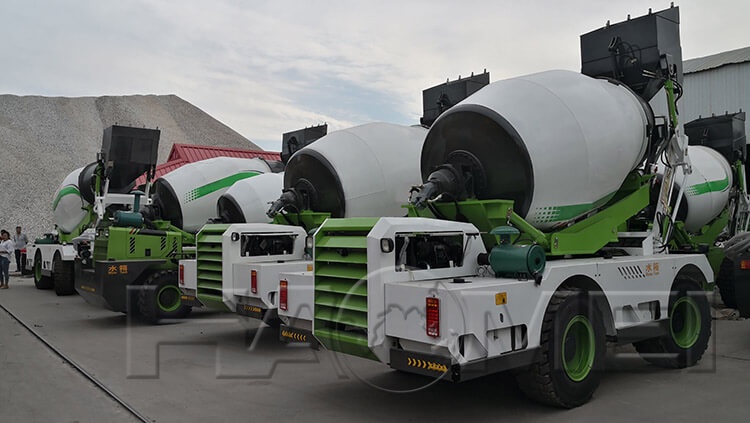
A self loading cement mixer for sale is not just a rotating drum on wheels. It is a compact batching, loading, mixing, transporting, and discharging system built for construction sites where speed, labor saving, and flexible concrete supply matter. For contractors working on roads, rural buildings, foundations, drainage channels, industrial floors, and remote projects, this machine can replace several separate pieces of equipment while keeping concrete production closer to the pouring point.
Cutting-Edge Design Details That Improve Daily Work
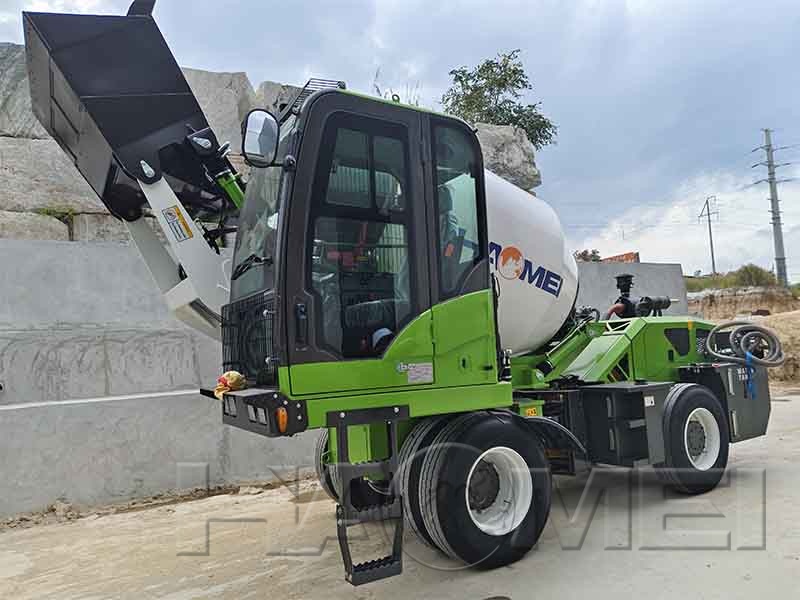
Modern self loading mixers are designed around one simple idea: let one operator complete the full concrete cycle from raw material loading to final discharge. The front loading bucket scoops sand, aggregate, or cement and feeds them into the mixing drum through a hydraulic lifting structure. This reduces the need for a loader, a separate mixer, and extra transfer work.
The rotating drum is usually mounted on a slewing frame, allowing wide-angle discharge. On many models, the drum can rotate for mixing in one direction and discharge in the other direction. This makes the machine suitable for narrow sites, roadside pours, and areas where a conventional transit mixer cannot turn easily.
A well-designed cab gives the operator clear visibility of the bucket, drum, water inlet, and discharge area. Many machines use articulated steering, which helps the front and rear frames bend around tight corners. Four-wheel drive and heavy-duty tires improve traction on mud, gravel, and uneven ground.
For sites that need a balanced output and compact maneuverability, a model such as the HM3.5 Self Mixer is often selected for medium daily concrete demand, especially where access space is limited but productivity still matters.
| Design Area | Practical Function | Site Benefit |
|---|---|---|
| Hydraulic loading bucket | Loads aggregate and cement into the drum | Reduces manual feeding and support equipment |
| Reversible mixing drum | Mixes and discharges through drum rotation | Speeds up unloading and improves control |
| Articulated steering | Shortens turning radius | Easier movement in compact job areas |
| Electronic weighing system | Measures material input by weight | Helps maintain mix consistency |
| 4x4 drive system | Improves traction | Better movement on rough or soft ground |
Water metering is another important feature. A properly installed water pump and flow meter help operators control the water-cement ratio more accurately. While the machine does not replace formal laboratory mix design, stable water dosing supports more consistent concrete quality on site.
Material Advantages and Equipment Benefits
The service life of a cement mixer depends heavily on material selection. The mixing drum is exposed to abrasion from aggregate, chemical attack from cement slurry, and repeated impact during loading and mixing. For this reason, many reliable machines use high-strength steel plate for the drum and wear-resistant materials for liners, blades, and high-friction zones.
The bucket edge and loading arms should be reinforced because they contact hard aggregate every day. High-strength pins, protected hydraulic hoses, and reliable seals reduce downtime. In the transmission system, a strong axle, stable hydraulic pump, and durable reduction system help the machine handle frequent start-stop operation under load.
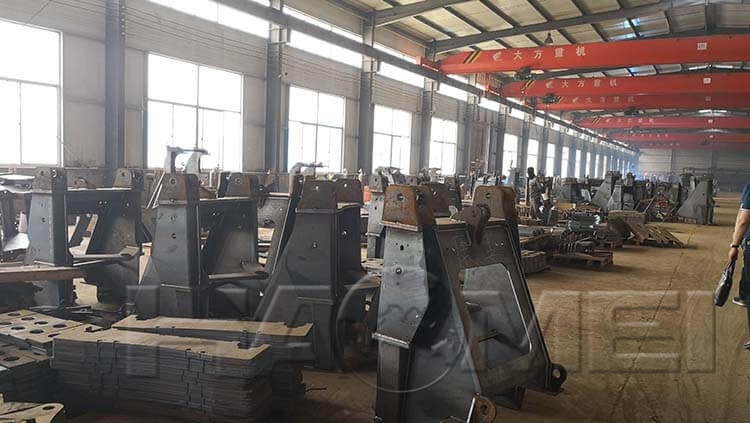
The advantage of this equipment is not only durability. Its biggest value is integrated operation. A site can receive raw materials in bulk, mix concrete as needed, and place it without waiting for external delivery trucks. This is useful when the job location is far from a batching plant or when small and repeated pours are required throughout the day.
The equipment can also reduce waste. Instead of ordering too much ready-mix concrete, the operator can produce smaller batches based on actual demand. For construction teams managing scattered work points, this flexibility helps reduce idle time and improves project rhythm.
| Selected Material or Part | Why It Matters | Expected Advantage |
|---|---|---|
| High-strength drum steel | Resists impact and mixing stress | Longer drum service life |
| Wear-resistant mixing blades | Contact aggregate continuously | Better mixing performance over time |
| Reinforced bucket cutting edge | Handles sand and stone loading | Less deformation and easier loading |
| Protected hydraulic lines | Reduces damage from site debris | Fewer leakage risks |
| Heavy-duty tires | Carry loaded machine on rough ground | Safer movement and better traction |
For large pours or high daily production, contractors may prefer a larger-capacity option such as the HM6.5 Self Mixer, especially when the project has wider access roads and stronger output requirements.
Operationally, the main benefits include fewer machines on site, lower dependence on external concrete delivery, fast relocation between work zones, and improved control over small-batch production. The machine is also suitable for staged pouring, where concrete must be supplied at intervals rather than all at once.
Common Problems and Practical Troubleshooting
Even a well-built self loading mixer needs correct operation and regular maintenance. Most failures come from hydraulic contamination, insufficient lubrication, overload, incorrect water dosage, or poor cleaning after work. A simple daily inspection habit can prevent many expensive repairs.
Before starting work, check engine oil, hydraulic oil, coolant, tire pressure, drum condition, water tank level, and visible hose connections. After work, wash the drum, chute, bucket, and discharge area before concrete hardens. Hardened concrete inside the drum increases load, reduces mixing volume, and can damage blades.
| Problem | Possible Cause | Recommended Action |
|---|---|---|
| Drum rotates slowly | Low hydraulic oil, clogged filter, pump wear, overload | Check oil level, clean or replace filter, reduce batch load, inspect pump pressure |
| Concrete mix is too dry or too wet | Incorrect water measurement or uneven material loading | Calibrate water meter, follow approved mix ratio, load materials in consistent order |
| Bucket lifting is weak | Hydraulic leakage, air in system, worn cylinder seal | Inspect hoses, tighten joints, bleed system if required, replace damaged seals |
| Machine pulls to one side | Uneven tire pressure, steering cylinder issue, axle problem | Adjust tire pressure, inspect steering linkage and cylinder |
| Abnormal noise during mixing | Foreign object in drum, worn blades, loose fasteners | Stop machine safely, inspect drum, tighten bolts, replace worn parts |
| Engine overheating | Dirty radiator, low coolant, overloaded operation | Clean radiator, refill coolant, reduce continuous overload work |
If the drum does not discharge smoothly, do not increase engine speed blindly. First check whether the mix is too stiff, whether the chute angle is blocked, or whether hardened concrete has built up near the outlet. If concrete is already setting, wash immediately and remove buildup with proper tools after the machine is safely stopped.
Hydraulic oil cleanliness is essential. Use the oil grade recommended by the manufacturer, keep the oil tank sealed, and change filters according to the maintenance schedule. Contaminated oil can damage pumps, valves, and cylinders. When a hose bursts, replace it with the correct pressure-rated hose instead of using an unsuitable substitute.
Operators should avoid overloading the drum. A larger batch than the rated capacity may look efficient at first, but it increases wear, causes poor mixing, stresses the hydraulic system, and may reduce braking and steering stability during travel. Rated capacity is set for a reason: it balances mixing quality, machine safety, and component life.
When evaluating a self loading cement mixer for sale, pay attention to drum capacity, engine power, hydraulic system brand, steering structure, weighing accuracy, after-sales parts supply, and the ease of cleaning. A good machine should feel practical from the operator seat, strong in the frame, simple to maintain, and stable when fully loaded on real construction ground.
Original Source: https://www.self-loading-mixer.com/a/self-loading-cement-mixer-for-sale.html
Tags: self loading cement mixer for sale | self loading concrete mixer | mobile cement mixer
Send us a Message
Category
| HM1.2 Self Mixer |
| HM1.8 Self Mixer |
| HM2.0 Self Mixer |
| HM 2.6 Self Mixer |
| HM3.5 Self Mixer |
| HM4.0 Self Mixer |
| HM 5.5 Self Mixer |
| HM6.5 Self Mixer |
Relate Blogs
Relate Products
CONTACT US
| Haomei Self Loading Mixer Co.,Ltd |
| Tel/Whatsapp: +86-15978414719 |
| Email: feedom@haomei-machinery.com |
| Website: https://www.self-loading-mixer.com |
| Office Add: 1103, No.14 Outer Ring Road, CBD, Zhengzhou, China |


