

Self Loading Mobile Concrete Mixer
 2026-10-12
A self loading mobile concrete mixer combines aggregate loading, weighing, water dosing, mixing, transport, and concrete discharge in one compact machine. For projects with changing work locations or limited access to ready-mix supply, this equipment can produce fresh concrete close to the placement point. It is commonly used for rural roads, housing foundations, drainage works, precast yards, and small to medium infrastructure projects.
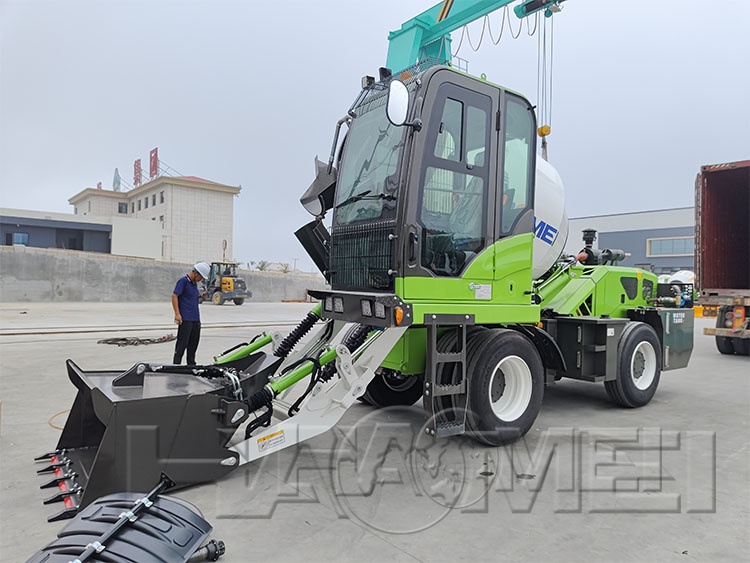
The value of this machine depends on more than drum capacity. Frame strength, hydraulic layout, weighing accuracy, drivetrain configuration, operator visibility, and the quality of wear components all affect output, operating cost, and service life. Understanding these details helps equipment owners match a mixer to actual site conditions rather than selecting only by nominal volume.
Design Details That Affect Productivity
A typical unit uses a front-mounted hydraulic loading bucket to collect sand, stone, and cement. The bucket lifts materials into a reversible mixing drum, while an onboard water tank and metering system add the required water. The drum rotates in one direction for mixing and reverses for discharge. This arrangement reduces dependence on a wheel loader, stationary batching plant, and separate transit truck.
The chassis should be designed for repeated travel with a full drum. A reinforced articulated frame can improve maneuverability on confined sites, while a rigid-frame configuration may suit applications needing straightforward road travel and stability. Four-wheel drive, large-tread tires, and adequate ground clearance are especially useful where surfaces are loose, wet, or uneven.
The drum is normally made from abrasion-resistant steel because sand and aggregate continuously wear the internal surfaces. Mixing blades also need robust construction and secure welds. Their angle and spacing are important because they lift and fold the material during rotation. Poor blade condition can lead to incomplete mixing, excessive residue, and reduced usable drum volume.
| Component | Important Design Feature | Practical Benefit |
|---|---|---|
| Mixing drum | Wear-resistant steel and replaceable or heavy-duty blades | Longer service life under abrasive aggregate loading |
| Loading bucket | Reinforced cutting edge and hydraulic lift cylinders | Faster material charging and better resistance to impact |
| Hydraulic system | Protected hoses, quality seals, filtration, and pressure control | More stable operation and lower risk of contamination damage |
| Water system | Calibrated tank, pump, flow meter, or dosing arrangement | Better control of water-cement ratio |
| Cab and controls | Clear sightlines, ergonomic levers or joystick controls, safety devices | Improved operating comfort and safer machine positioning |
For operations requiring a compact footprint, the HM2.0 Self Mixer format can be suitable where access roads and placement areas are restricted. Larger projects should evaluate not only drum capacity, but also engine power, loading cycle time, water tank volume, and the available space for turning and discharging.
Material Advantages and On-Site Operating Benefits
The most durable machines use high-strength structural steel in load-bearing areas and abrasion-resistant plate in the drum, hopper, bucket edge, and discharge chute. These materials are selected because concrete ingredients create two different types of stress. Aggregate causes abrasive wear, while full-drum travel creates dynamic loads on the chassis, pins, axles, and hydraulic components.
High-quality hydraulic hoses with abrasion protection help reduce external damage from debris and contact with site obstacles. Properly specified cylinder rods, seals, and filtration are equally important. Hydraulic contamination is a common cause of premature pump and valve wear, so a clean, well-protected system has a direct effect on uptime.
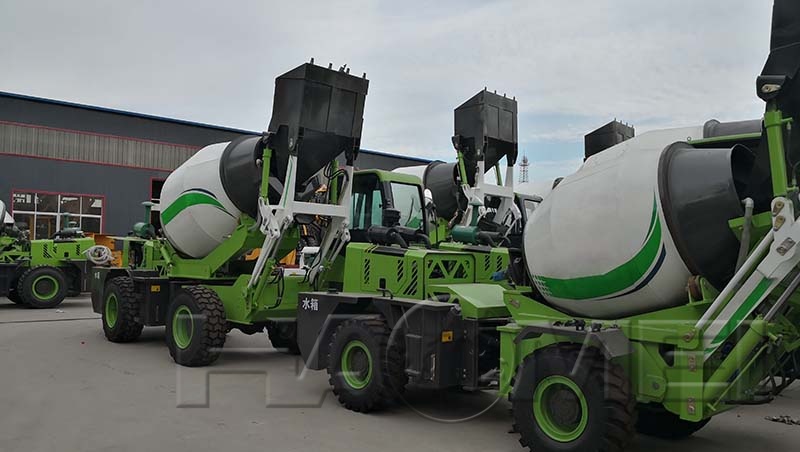
Using one mobile batching and mixing unit can simplify site logistics. Materials can be loaded near stockpiles, mixed during travel where permitted by the operating procedure, and discharged near the work area. This can reduce internal hauling movements and support flexible pour scheduling. The equipment is particularly useful where concrete demand comes in multiple small batches rather than one continuous, high-volume pour.
Other operating advantages include:
Reduced reliance on several separate machines for loading, mixing, and short-distance transport.
Fresh batch production near the point of use, helping crews manage delivery timing.
Better mobility on projects where the work front moves frequently.
Controlled water addition when the dosing system is maintained and calibrated.
Easier deployment than a fixed batching installation for temporary projects.
Concrete quality still depends on correct mix design, accurate batching, moisture adjustments for sand and aggregate, adequate mixing time, and testing under applicable project specifications. An onboard system supports consistency, but it does not replace quality control procedures.
For heavier daily demand, an HM3.5 Self Mixer may offer a practical balance between batch output and jobsite maneuverability. The appropriate size should be based on required hourly production, travel distance, available materials handling, road gradients, and local transport limits.
Common Problems and Practical Troubleshooting
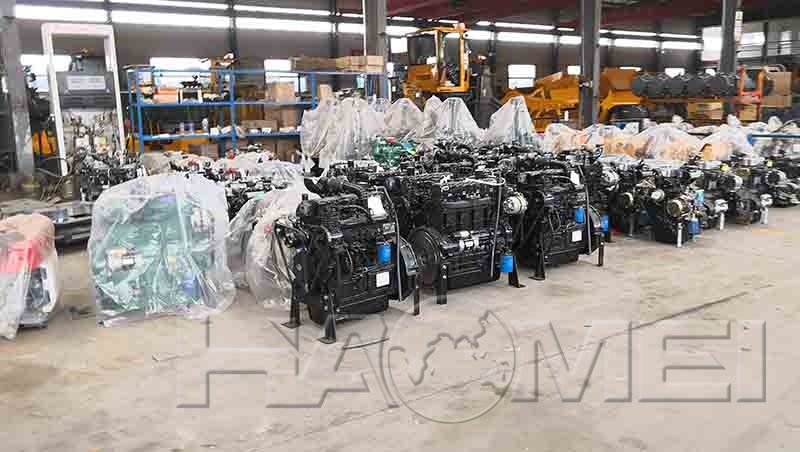
Routine inspection prevents many interruptions. Before each shift, inspect engine oil, coolant, hydraulic oil level, tire condition, brakes, steering response, drum rotation, water supply, and visible hose leaks. Remove hardened concrete from the drum mouth, chute, bucket, and discharge area before buildup restricts movement.
| Symptom | Likely Causes | Recommended Action |
|---|---|---|
| Drum rotates slowly or will not rotate | Low hydraulic oil, clogged filter, incorrect relief pressure, pump or motor wear | Stop work safely, check oil level and leaks, inspect filter condition, and have hydraulic pressure tested by a qualified technician |
| Bucket lifts weakly | Low engine speed, hydraulic leak, worn cylinder seals, contaminated oil | Check engine operating speed, inspect hoses and cylinder rods, then service the hydraulic system as required |
| Concrete discharges poorly | Hardened buildup, worn blades, incorrect drum direction, overly stiff mix | Confirm reverse rotation, clean hardened material, inspect blades, and verify mix water against the approved design |
| Water quantity is inconsistent | Blocked strainer, damaged pump, leaking line, uncalibrated meter | Clean the strainer, inspect pipes and fittings, test the pump, and calibrate the dosing system using measured water |
| Engine overheats | Low coolant, blocked radiator, loose belt, heavy load, poor airflow | Allow the engine to cool, check coolant and belt condition, clean radiator fins, and investigate persistent overheating promptly |
| Machine wanders or steers poorly | Low tire pressure, worn steering joints, hydraulic steering fault | Check tire pressures first, inspect mechanical joints, and arrange professional diagnosis for hydraulic steering faults |
Do not attempt to repair pressurized hydraulic lines, brake systems, or electrical circuits without correct training and isolation procedures. Use manufacturer-approved fluids and filters, follow the service intervals in the equipment manual, and keep essential wear parts such as filters, seals, hoses, bucket edges, and drum blades available for planned maintenance.
Original Source: https://www.self-loading-mixer.com/a/self-loading-mobile-concrete-mixer.html
Tags: self loading mobile concrete mixer | self loading mixer
Prev: 4x4 Self Loading Concrete Mixer Trucks
Next: Null
Send us a Message
Category
| HM1.2 Self Mixer |
| HM1.8 Self Mixer |
| HM2.0 Self Mixer |
| HM 2.6 Self Mixer |
| HM3.5 Self Mixer |
| HM4.0 Self Mixer |
| HM 5.5 Self Mixer |
| HM6.5 Self Mixer |
Relate Blogs
| Self Concrete Mixer Machine Price |
| 2.6m3 Self Loading Concrete Mixer |
| Self Concrete Mixer Truck |
| Self Loading Transit Mixer |
| Self Loading Concrete Mixer Manufacturers |
Relate Products
CONTACT US
| Haomei Self Loading Mixer Co.,Ltd |
| Tel/Whatsapp: +86-15978414719 |
| Email: feedom@haomei-machinery.com |
| Website: https://www.self-loading-mixer.com |
| Office Add: 1103, No.14 Outer Ring Road, CBD, Zhengzhou, China |


