

Self Concrete Mixer Truck
 2026-09-07
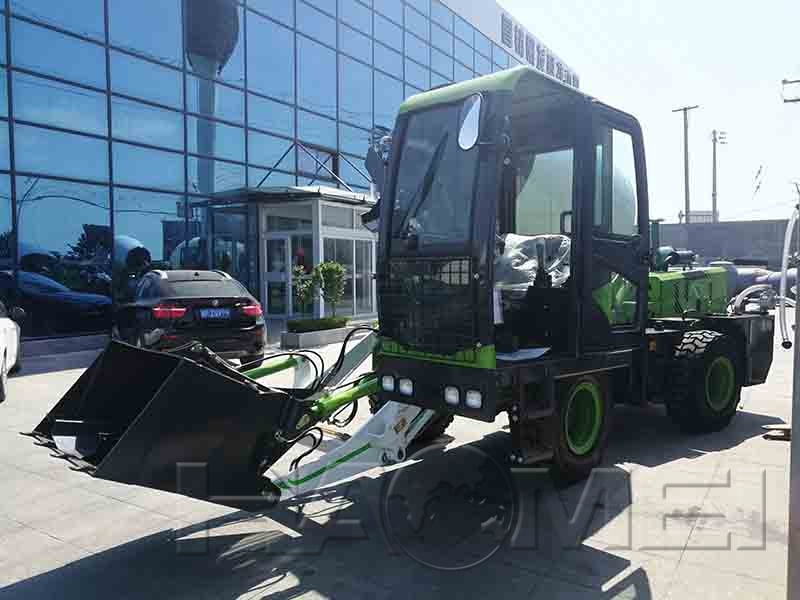
A self concrete mixer truck, often called a self-loading concrete mixer, combines aggregate loading, weighing or batching, water dosing, mixing, and short-distance concrete transport in one mobile machine. It is designed for projects where a stationary batching plant or regular ready-mix deliveries are impractical.
It can reduce dependence on separate loaders, small mixers, and internal haul vehicles. However, it is not automatically the lowest-cost option. Production volume, road conditions, concrete specifications, operator capability, and service access determine whether this machine is a sound investment.
Match Machine Capacity to the Actual Pour Plan
Start with the required placed concrete volume per shift, not the drum size printed in a brochure. Drum capacity, rated output, and usable batch volume are different figures. The usable volume can be lower because material loading, mix design, slope, and safe operating limits affect each batch.
Use this planning calculation:
Required hourly output = planned daily concrete volume / productive operating hours
For example, a project needing 24 m3 in a six-hour productive window needs an average of 4 m3 per hour. Then allow time for loading, mixing, travel, discharge, washout, refueling, and unplanned delays. A machine that meets the theoretical rate but has no operating margin can disrupt the pour.
| Project condition | Suitable machine characteristics | Selection concern |
|---|---|---|
| Remote housing foundations | Compact unit, good turning radius, onboard water tank | Verify aggregate and cement supply logistics |
| Narrow urban renovation site | Small dimensions, low transport weight, limited noise exposure | Check local road access and permitted travel routes |
| Rural roads and uneven terrain | Four-wheel drive, adequate ground clearance, robust tires | Confirm grade limits in the manufacturer manual |
| Repeated medium-volume pours | Larger drum, fast loading cycle, reliable service support | Compare real cycle time, not drum volume alone |
| Specified structural concrete | Accurate water dosing, documented batching process | Confirm test and quality-control responsibilities |
Do not use rated drum capacity as proof of concrete quality or production rate. Ask the supplier for a cycle-time demonstration with the proposed aggregate size and mix consistency. Record loading time, mixing time, travel distance, discharge time, and cleaning time.
For smaller jobs with restricted access, an HM1.2 Self Mixer may fit site constraints better than a larger unit. For sustained pours, a higher-capacity HM3.5 Self Mixer should be assessed against daily volume, loader cycle time, and available service support.
Check Concrete Quality, Safety, and Compliance Before Ordering
A self-loading unit is a mobile mixer, not a substitute for a concrete quality system. Structural work may require project-specific mix designs, fresh-concrete sampling, slump testing, cylinder or cube specimens, and strength records. In the United States, ASTM C94/C94M is commonly referenced by project specifications for ready-mixed concrete. Confirm with the engineer of record whether the proposed site-batching method and delivery records meet the contract requirements.
Water control deserves special attention. Adding unmeasured water changes the water-cementitious materials ratio and can reduce strength and durability. The operator should follow the approved mix design, use the machine's measured water system where applicable, and document all additions. Calibrate weighing and water-metering equipment according to the manufacturer instructions and the project quality plan.
For equipment safety, OSHA construction requirements in the United States include training obligations under 29 CFR 1926.21 and equipment requirements under 29 CFR 1926.602. Exact obligations depend on the work activity and jurisdiction. Outside the United States, verify national machinery, road-traffic, emissions, and operator-certification rules before import or site deployment.
Use this pre-purchase compliance checklist:
Obtain the operator manual, maintenance manual, load chart or capacity data, and declaration of conformity where relevant.
Confirm ROPS and FOPS requirements for the operating environment. These protective structures must not be modified without manufacturer approval.
Check whether the machine needs road registration, lighting, mirrors, brakes, and insurance for travel between work areas.
Specify emergency-stop locations, reversing alarm, camera coverage, work lights, and drum-area guarding.
Ensure the supplier can provide parts lists, serial-number identification, service intervals, and operator familiarization.
Establish a washout area that prevents cement slurry from entering drains, waterways, or soil.
Daily inspections should cover tires, wheel fasteners, steering, brakes, hydraulic hoses, water tank, drum drive, discharge chute, guards, warning devices, and fluid leaks. Lock out the machine and follow the manufacturer procedure before clearing a blocked drum, chute, or loading bucket. Never place hands or tools into moving equipment.
Evaluate Investment Cost and Lifecycle Risk
Purchase price is only one part of the decision. A lower initial quote can become expensive if it excludes commissioning, spare parts, freight, operator training, warranty labor, or local technical support. Obtain written quotations with the same technical scope.
| Cost category | What to request from suppliers | Why it matters |
|---|---|---|
| Machine supply | Exact model, engine, drum capacity, drivetrain, attachments | Prevents comparison of unlike configurations |
| Delivery and setup | Freight, unloading, commissioning, inspection | These costs can materially affect landed cost |
| Warranty | Duration, hour limits, exclusions, labor coverage | Defines exposure during early operation |
| Parts support | Wear-part prices, lead times, local inventory | Downtime can stop an entire concrete crew |
| Operating cost | Fuel use data, service intervals, tire specification | Supports realistic cost-per-m3 estimates |
| Residual value | Regional resale demand and documentation quality | Affects total ownership cost |
Calculate cost per cubic meter using projected annual volume:
Cost per m3 = annual ownership cost + annual operating cost + labor cost, divided by annual placed volume
Ownership cost should include depreciation, financing or capital cost, insurance, registration, and planned repairs. Operating cost should include fuel, lubricants, filters, tires, wear parts, water, cleaning, and operator time. Add a downtime allowance if the project has no backup mixer or ready-mix supplier.
Ask for machine telemetry options if the fleet has multiple sites. Useful records include engine hours, fuel consumption, fault codes, service due dates, location, and operating time. These data points help identify excessive idling, missed maintenance, and low utilization. They do not replace the operator's daily inspection or concrete quality records.
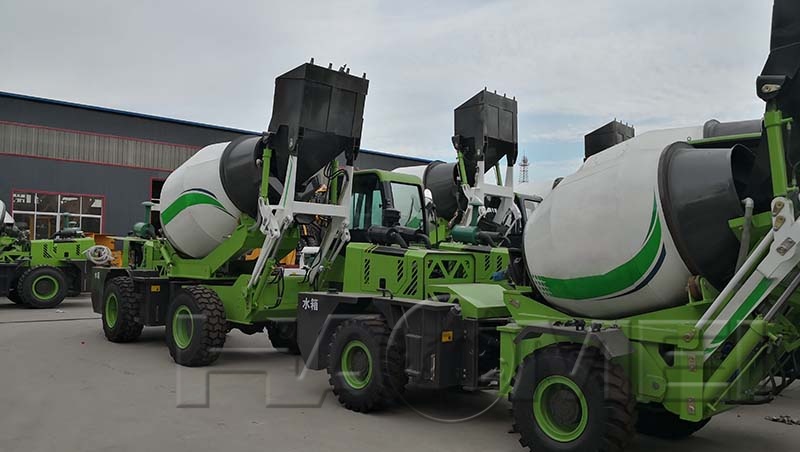
Before signing, arrange an acceptance test. Confirm drum rotation, loading bucket operation, water system function, steering, braking, lighting, emergency controls, discharge performance, and fault-code display. Compare the delivered serial number and configuration with the purchase order. Retain inspection records, commissioning forms, warranty documents, and preventive-maintenance schedules with the machine file.
Original Source: https://www.self-loading-mixer.com/a/self-concrete-mixer-truck.html
Tags: Self Concrete Mixer Truck | Self Loading Mixer
Prev: Self Propelled Concrete Truck
Next: Why Construction Rental Companies in Mexico Are Adding Self-Loading Mixers
Send us a Message
Category
| HM1.2 Self Mixer |
| HM1.8 Self Mixer |
| HM2.0 Self Mixer |
| HM 2.6 Self Mixer |
| HM3.5 Self Mixer |
| HM4.0 Self Mixer |
| HM 5.5 Self Mixer |
| HM6.5 Self Mixer |
Relate Blogs
| 2.6m3 Self Loading Concrete Mixer |
| Rough Terrain Concrete Mixer |
| Self Loading Concrete Mixer Truck for Sale |
| Self Loading Concrete Mixer Truck Price |
| Self Loading Transit Mixer |
Relate Products
CONTACT US
| Haomei Self Loading Mixer Co.,Ltd |
| Tel/Whatsapp: +86-15978414719 |
| Email: feedom@haomei-machinery.com |
| Website: https://www.self-loading-mixer.com |
| Office Add: 1103, No.14 Outer Ring Road, CBD, Zhengzhou, China |


