

Rough Terrain Concrete Mixer
 2026-06-09
For projects in rural roads, bridges, housing sites, farms, mines, and mountainous areas, a rough terrain concrete mixer helps teams produce and deliver fresh concrete where standard transit mixers may struggle. The machine combines batching, mixing, transporting, and discharging functions in one mobile platform, reducing dependence on external batching plants and improving schedule control on sites with poor access.
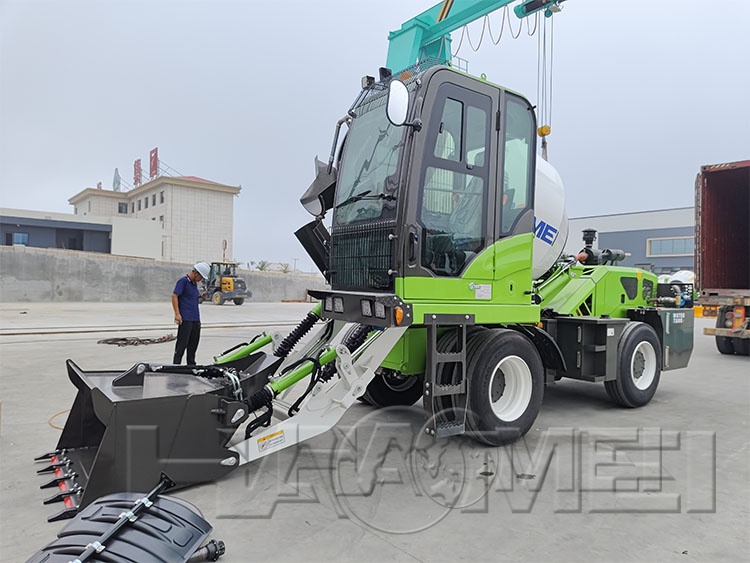
Design Details Built for Uneven Ground
The most important design feature is mobility. A robust chassis, large off-road tires, articulated steering, and high ground clearance allow the equipment to move over mud, gravel, slopes, and partially prepared roads. Many machines use four-wheel drive or hydraulic drive systems to improve traction when the drum is loaded. This helps the operator maintain stable movement while carrying heavy wet concrete.
A rotating drum is commonly mounted at an angle to support efficient mixing and controlled discharge. Drum rotation is powered by a hydraulic motor, allowing the operator to adjust speed based on loading, mixing, and unloading needs. The internal mixing blades are shaped to lift and fold the material repeatedly, helping cement, sand, aggregate, and water become evenly distributed.
Modern self-loading models often include a front loading bucket, electronic weighing system, water metering device, and operator cab with wide visibility. The bucket can load aggregate and sand directly, while weighing sensors help control mix proportions. This is especially useful when the site has no fixed batching station. For contractors comparing compact mobile solutions, a Self Loading Mixer can support small to medium pours with fewer auxiliary machines.
The operator station is also a major part of the design. A clear dashboard, joystick control, camera assistance on some models, and ergonomic seating reduce fatigue during long shifts. Simple access to the engine, hydraulic filters, grease points, and drum rollers makes routine maintenance easier for mechanics.
| Design Area | Practical Function | Value on Rough Sites |
|---|---|---|
| Articulated steering | Short turning radius | Easier movement in narrow roads and crowded jobsites |
| Off-road tires | Better grip and load support | More stable travel on mud, gravel, and uneven ground |
| Hydraulic drum drive | Adjustable mixing speed | Better control during mixing and discharge |
| Front loading bucket | Loads raw materials directly | Less need for loaders and manual feeding |
| Water metering system | Controls added water | More consistent concrete workability |
Materials, Components, and Productivity Advantages
Material selection affects service life. The drum body is usually made from wear-resistant steel plate because the inner surface is exposed to repeated friction from aggregate. Mixing blades should also use thick, abrasion-resistant steel, since worn blades reduce mixing efficiency and increase cycle time.
The chassis and frame need high-strength structural steel with reliable welding quality. A rough worksite creates twisting forces, vibration, and impact loads, so the frame must resist deformation. Reinforced axle seats, protected hydraulic lines, and strong drum support rollers help the machine perform under continuous load.
Hydraulic hoses should have proper pressure ratings, abrasion protection, and quality fittings. Leaks are not only a maintenance concern; they can also reduce lifting power, steering response, and drum rotation performance. Electrical parts should be protected against dust and water spray, especially on rainy sites or quarry roads.
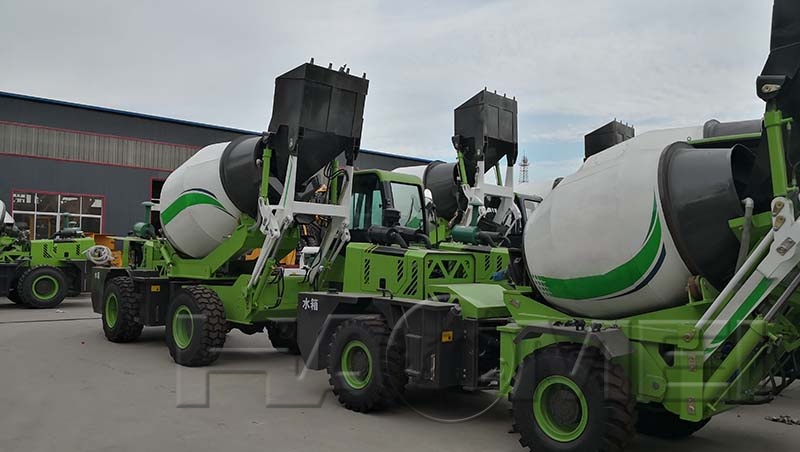
For construction equipment purchasers, the operating advantages are easy to see. The machine can batch concrete near the pour point, reducing haul distance and waiting time. It can serve scattered work areas during the same day, such as road shoulders, drainage channels, foundations, and remote slabs. When labor is limited, one trained operator can complete loading, mixing, transport, and discharge tasks.
| Material or Component | Preferred Feature | Benefit |
|---|---|---|
| Drum steel | Wear-resistant plate | Longer service life under aggregate abrasion |
| Mixing blades | Thick replaceable sections | Maintains mixing quality and reduces downtime |
| Frame | Reinforced structural steel | Better resistance to impact and twisting |
| Hydraulic system | Sealed hoses and quality valves | Smoother motion and lower leakage risk |
| Cab and panels | Corrosion-resistant treatment | Better durability in wet or dusty conditions |
Different capacities suit different site demands. A compact model works well in villages, small buildings, and tight areas, while larger units suit road and industrial projects. For users who need a balanced capacity for regular construction pours, the HM4.0 Self Mixer is often considered for its practical size and site flexibility.
Practical Troubleshooting for Daily Operation
Good troubleshooting starts with safe habits. Before checking any rotating part, stop the machine, lower the bucket, release hydraulic pressure where required, and follow the manufacturer maintenance manual. Concrete equipment works with heavy loads, so small faults should be handled early.
If the drum rotates slowly, first check whether the engine speed is normal and whether the hydraulic oil level is within the specified range. Low oil, blocked filters, or worn hydraulic pumps can reduce drum torque. If the problem appears only when the drum is full, inspect the mix ratio. Too much dry aggregate or insufficient water can overload the drum drive.
If the concrete is not uniform, inspect the loading sequence, drum speed, and mixing time. A common practical method is to load part of the water first, then aggregate, sand, cement, and remaining water according to the approved mix procedure. Worn mixing blades or heavy concrete buildup inside the drum can also cause poor mixing. Cleaning the drum after each shift prevents hardened material from reducing volume and mixing action.
If the loading bucket lifts slowly, inspect hydraulic oil, cylinders, hose connections, and control valves. Air in the hydraulic system may cause jerky motion. If the bucket cannot hold position, cylinder seals or valve leakage may be involved. A trained technician should test pressure rather than replacing parts by guesswork.
If steering becomes heavy, check tire pressure, hydraulic steering oil supply, and linkage condition. Uneven tire pressure can make handling unstable, especially on slopes. For machines using articulated steering, inspect pivot pins and bushings regularly and keep grease points serviced.
| Symptom | Likely Cause | Practical Action |
|---|---|---|
| Drum turns slowly | Low hydraulic oil, blocked filter, overloaded mix | Check oil level, replace filter, correct mix proportion |
| Uneven concrete | Short mixing time, worn blades, wrong loading sequence | Extend mixing, inspect blades, follow approved sequence |
| Bucket lifts weakly | Hydraulic leakage, low pressure, air in system | Inspect hoses, test pressure, bleed system if required |
| Engine overheats | Dirty radiator, low coolant, heavy overload | Clean radiator, check coolant, reduce overload operation |
| Abnormal noise | Loose bolts, worn rollers, dry bearings | Tighten fasteners, inspect rollers, lubricate moving points |
A planned maintenance routine keeps the mixer ready for demanding work. At the start of each shift, inspect tires, lights, brakes, hydraulic hoses, oil levels, water system, and drum cleanliness. During operation, watch for unusual vibration, weak lifting, delayed steering, or changes in drum sound. After work, wash the drum, bucket, chute, and tires before concrete hardens. Keep wear parts, filters, seals, and grease available on site so repairs do not stop production for long periods.
Original Source: https://www.self-loading-mixer.com/a/rough-terrain-concrete-mixer.html
Tags: rough terrain concrete mixer | self loading concrete mixer | jobsite concrete equipment
Send us a Message
Category
| HM1.2 Self Mixer |
| HM1.8 Self Mixer |
| HM2.0 Self Mixer |
| HM 2.6 Self Mixer |
| HM3.5 Self Mixer |
| HM4.0 Self Mixer |
| HM 5.5 Self Mixer |
| HM6.5 Self Mixer |
Relate Blogs
| Self Loading Transit Mixer |
| Self Batching Concrete Truck |
| Self Loading Transit Concrete Mixer |
| Self Loading Concrete Mixer |
| Self Loading Concrete Mixer for Sale in Nigeria |
Relate Products
CONTACT US
| Haomei Self Loading Mixer Co.,Ltd |
| Tel/Whatsapp: +86-15978414719 |
| Email: feedom@haomei-machinery.com |
| Website: https://www.self-loading-mixer.com |
| Office Add: 1103, No.14 Outer Ring Road, CBD, Zhengzhou, China |


