

Self Contained Concrete Mixer Truck
 2026-06-15
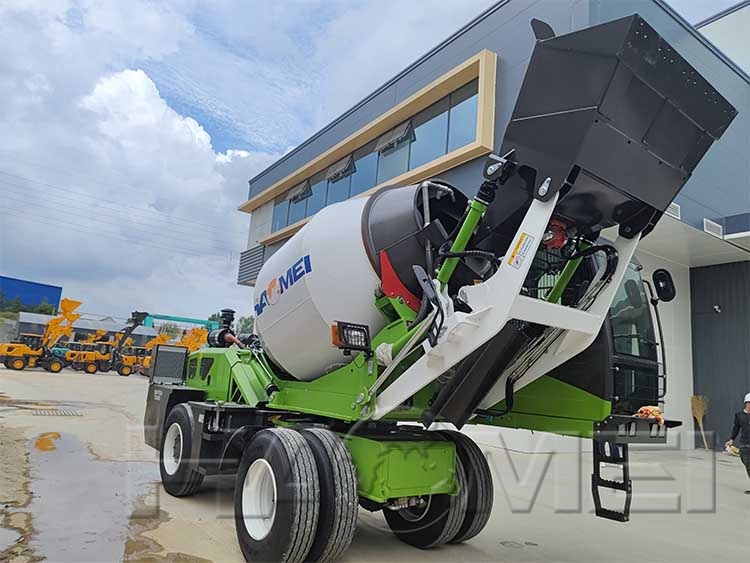
A self contained concrete mixer truck combines loading, weighing or metering, water dosing, mixing, transport, and discharge in one mobile machine. It is different from a conventional ready-mix transit mixer, which mainly transports concrete batched at a plant. For remote roads, farm projects, municipal repairs, precast yards, and small foundations, the business case is simple: reduce waiting time, cut rejected loads, and produce only what the crew can place.
1. Match the Machine to the Work, Not the Brochure
Start with daily output, site access, and concrete quality requirements. A 1.2 m3 unit may suit narrow village roads or repair crews. A 3.5 m3 to 4.0 m3 unit often fits small contractors pouring footings, slabs, drains, and rural pavements. Larger 5.5 m3 to 6.5 m3 units need stronger haul routes, better operator discipline, and higher utilization to pay back.
Fleets that need a compact on-site batching platform can compare the Self Loading Mixer range before deciding whether a small or mid-capacity drum is enough.
| Job condition | Recommended specification | Reason to check |
|---|---|---|
| Narrow roads, repair works, small slabs | 1.2 m3 to 2.0 m3 drum | Easier turning and lower ground pressure |
| Rural roads, drains, footings, utility work | 3.5 m3 to 4.0 m3 drum | Good balance of output and mobility |
| Higher daily pours with stable access | 5.5 m3 to 6.5 m3 drum | Better volume per cycle, but higher capex and weight |
| Soft ground or unfinished sites | 4x4 drive, wide tires, articulated steering | Reduces site recovery and towing risk |
| Quality-sensitive concrete | Load cells, digital water meter, printable batch record | Helps control water-cement ratio and traceability |
Do not select only by nominal drum volume. Ask for actual concrete output per batch, water tank capacity, loading bucket volume, turning radius, gradeability, tire size, engine emission rating, and hydraulic component brands. If the supplier cannot provide these items in writing, treat the quotation as incomplete.
2. Compare Cost, Compliance, and Resale Before Signing
Public 2024-2025 equipment listings from dealer marketplaces, auction platforms, and manufacturer quotation portals show wide pricing differences by country, engine tier, capacity, and options. As a budgeting screen, small 1.2 m3 to 2.0 m3 imported machines are often quoted in the tens of thousands of US dollars, while 3.5 m3 to 6.5 m3 machines commonly move into higher five-figure or low six-figure ranges. Final landed cost must include sea freight, import duty, local VAT or GST, inland transport, commissioning, spare parts, and warranty labor.
For a mid-size crew pouring rural roads or foundations, the HM4.0 Self Mixer can be used as a benchmark when comparing cycle time, engine power, water dosing, and service access.
| Option | Strength | Limitation | Investment check |
|---|---|---|---|
| Ready-mix delivery | Certified plant control, high volume | Waiting time, minimum loads, remote delivery cost | Compare delivered price per m3 and rejected-load risk |
| Conventional mixer truck | Good for plant-to-site transport | Needs batching plant | Works only if a plant is nearby |
| Self-contained mixer | Batches near the pour, flexible volume | Requires trained operator and mix control | Best when utilization and remote access justify ownership |
| Small towable mixer | Low purchase cost | Low output, more manual handling | Suitable for repairs, not production pours |
Compliance is not optional. In the United States, check OSHA 29 CFR 1926 requirements for construction equipment operation, guarding, backing, and site traffic control. Diesel engines should meet the applicable EPA nonroad engine tier when sold or imported for the intended market. In the European Union, machinery placed on the market is governed by the Machinery Directive 2006/42/EC until the Machinery Regulation (EU) 2023/1230 becomes applicable from January 20, 2027. Engine emissions should align with EU Stage V where required.
For concrete quality, ASTM C94/C94M is the main reference for ready-mixed concrete in many specifications. It includes limits such as completion of discharge within 1.5 hours or before 300 drum revolutions after water is added, unless the purchaser approves otherwise. For an on-site batching mixer, the practical lesson is clear: control the time from water addition to placement, record drum revolutions where available, and never add water casually at discharge.
3. Run It With Controls That Protect Margin
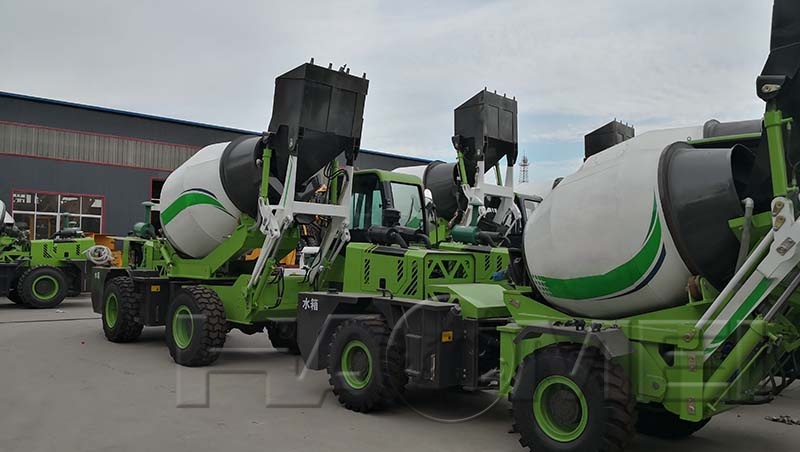
A self-contained mixer saves money only when it is managed like a production asset, not a casual site vehicle. Build a pre-start checklist and require signed records. The highest-cost failures usually come from contaminated hydraulic oil, poor washout, overloading, inaccurate water dosing, and operators driving with unsafe drum positions.
| Daily control | What to do | Cost risk if ignored |
|---|---|---|
| Water calibration | Check meter accuracy against a known container | Weak concrete or rejected work |
| Aggregate moisture | Adjust water for wet sand and stone | Uncontrolled slump and strength variation |
| Drum washout | Wash before buildup hardens | Lost capacity, imbalance, bearing stress |
| Hydraulic inspection | Check hoses, leaks, oil level, oil temperature | Pump and motor failure |
| Tire and brake check | Inspect pressure, cuts, parking brake | Rollover, downtime, site injury |
| Batch record | Log cement, aggregate, water, admixture, time | Dispute risk and poor traceability |
A simple ROI model should be prepared before purchase:
| Input | Example item to enter |
|---|---|
| Annual concrete volume | m3 per year that the machine can realistically produce |
| Avoided ready-mix premium | Difference between delivered ready-mix cost and on-site material cost |
| Labor effect | Operator cost minus reduced waiting or loader labor |
| Ownership cost | Depreciation, finance, insurance, registration, storage |
| Operating cost | Fuel, tires, wear parts, hydraulic oil, filters, washout water |
| Downtime allowance | Lost production plus rental replacement if needed |
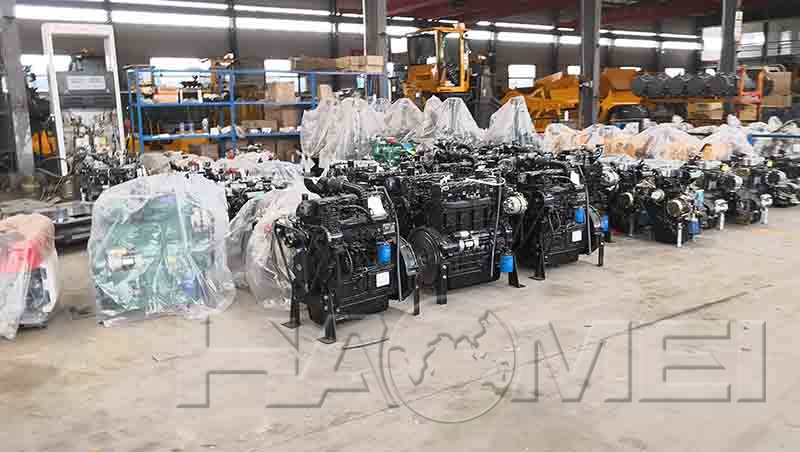
Use written local prices for cement, aggregate, admixture, diesel, filters, tires, and hydraulic parts. A machine that looks cheap can become expensive if the nearest parts source is overseas and the contractor loses a week waiting for a sensor, seal kit, brake part, or water pump.
Current industry trends favor machines with digital weighing, telematics, camera systems, better operator cabins, and cleaner engines. Low-carbon concrete is also changing equipment selection. Mixes with supplementary cementitious materials, such as fly ash, slag, or calcined clay, may need tighter moisture control and longer mixing discipline. If future contracts require environmental product declarations or project-level carbon reporting, batch data export becomes more valuable.
Before placing an order, require this procurement file: signed technical specification, engine emission certificate for the destination market, warranty terms, spare parts list with prices, hydraulic and electrical schematics, operator manual, maintenance schedule, training plan, and proof of local service capability. Then inspect welds, drum wear plates, loader arm pins, brake system, steering articulation, water meter, weighing display, and emergency stop functions before final acceptance.
Original Source: https://www.self-loading-mixer.com/a/self-contained-concrete-mixer-truck.html
Tags: self contained concrete mixer truck | self loading concrete mixer | mobile concrete mixer truck
Send us a Message
Category
| HM1.2 Self Mixer |
| HM1.8 Self Mixer |
| HM2.0 Self Mixer |
| HM 2.6 Self Mixer |
| HM3.5 Self Mixer |
| HM4.0 Self Mixer |
| HM 5.5 Self Mixer |
| HM6.5 Self Mixer |
Relate Blogs
| Self Loading Transit Mixer |
| Self Loading Concrete Mixer Machine |
| Self Loading Concrete Mixer |
| Self Batching Concrete Truck |
| Self Loading Concrete Mixer Rent |
Relate Products
CONTACT US
| Haomei Self Loading Mixer Co.,Ltd |
| Tel/Whatsapp: +86-15978414719 |
| Email: feedom@haomei-machinery.com |
| Website: https://www.self-loading-mixer.com |
| Office Add: 1103, No.14 Outer Ring Road, CBD, Zhengzhou, China |


