

Self Loading Concrete Mixer Truck for Sale
 2026-08-10
A self loading concrete mixer truck for sale is designed for projects that need fresh concrete without depending on a separate batching plant, transit mixer, or wheel loader. It combines aggregate loading, weighing, water dosing, mixing, transport, and discharge in one mobile machine. This arrangement is especially practical for rural roads, housing foundations, utility works, agricultural buildings, and small to medium construction sites where access is limited.
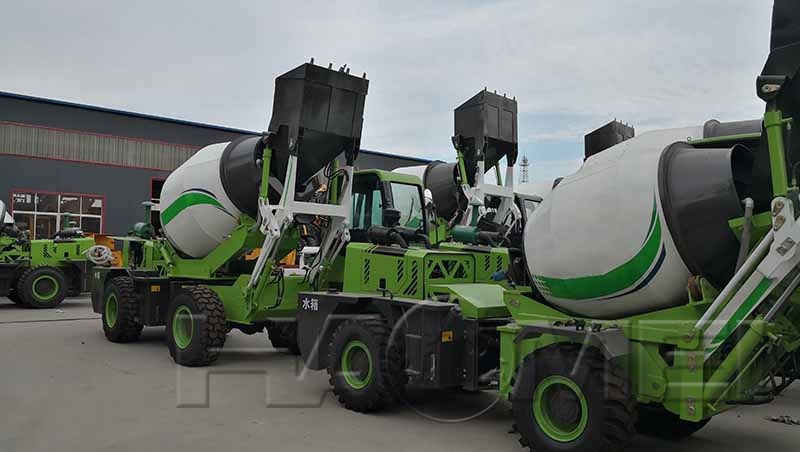
The most suitable model depends on required concrete volume per day, aggregate size, site gradients, travel distance, and available service support. Rated drum capacity should not be treated as the same as usable concrete output. Material density, mix design, and safe operating limits affect each batch volume. Always confirm the manufacturer's rated output and load chart before selecting equipment.
Design Details That Improve On-Site Performance
A modern self-loading mixer is built around a chassis, diesel engine, hydraulic transmission, loading bucket, rotating drum, water system, operator station, and discharge chute. The loader bucket collects sand, stone, and cement, then transfers material into the drum. A hydraulic system drives the drum rotation and machine functions, helping the operator control loading, mixing, travel, and discharge from one machine.
The drum is commonly fitted with internal mixing blades. Their angle and arrangement lift and fold materials as the drum rotates, supporting more uniform mixing. Reversible rotation allows the same drum to mix in one direction and discharge in the other. A slewing drum structure on some configurations can rotate through a wide angle, allowing concrete to be placed where access for a fixed discharge chute would be difficult.
| Component | Design Purpose | Practical Advantage |
|---|---|---|
| Loading bucket | Scoops and lifts raw materials | Reduces dependence on a separate loader |
| Hydraulic drum drive | Controls mixing and discharge rotation | Provides smooth speed control and reversible operation |
| Water tank and pump | Adds measured water to the batch | Helps maintain repeatable water-cement ratios |
| Articulated or compact chassis | Improves steering in restricted areas | Supports maneuvering on narrow jobsites |
| Discharge chute | Directs concrete to forms or wheelbarrows | Reduces rehandling and concrete loss |
| Operator cabin or control station | Groups driving and mixing controls | Improves operating visibility and efficiency |
For contractors producing regular batches around 3.5 cubic meters, an HM3.5 Self Mixer can provide a practical balance between output and jobsite mobility. Smaller sites with limited room may benefit from a compact configuration such as the HM1.8 Self Mixer, provided its batch capacity matches the daily pouring schedule.
Material Selection and Equipment Advantages
Material quality has a direct effect on machine service life. Mixing drums, blades, and loading buckets are exposed to abrasive sand, gravel, and hardened concrete residue. Wear-resistant steel in these high-contact areas helps reduce premature thinning. Reinforced bucket cutting edges and replaceable wear parts are useful because they protect the main structure during repeated loading cycles.
The chassis should use a robust welded frame designed for the machine's rated payload and travel conditions. On uneven sites, a stable frame, suitable tire specification, and properly maintained steering and brake systems are essential. Hydraulic hoses, seals, and fittings should be selected for the working pressure of the system and protected from rubbing, heat, and impact where possible.
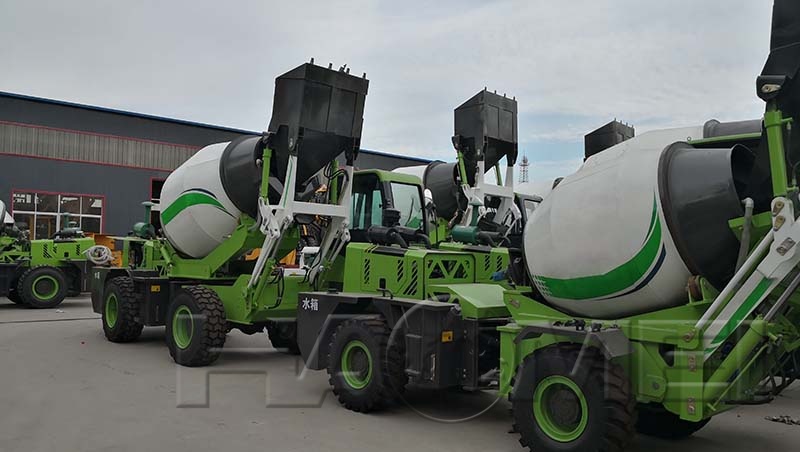
Compared with a conventional arrangement using separate batching, loading, hauling, and placing equipment, this type of mixer can offer several operational benefits:
- One operator can manage material loading, mixing, transport, and discharge after receiving proper training.
- Concrete can be mixed close to the pour location, reducing the risk of long-haul slump loss.
- The machine can move between scattered work areas without installing a fixed batching plant.
- Batch quantities can be adjusted for repair work, small pours, or changing daily demand.
- Labor coordination and equipment mobilization can be reduced on remote projects.
These advantages do not remove the need for quality control. Operators should follow the approved mix design, measure water consistently, avoid overloading the drum, and allow adequate mixing time. Excess water may improve workability temporarily but can reduce concrete strength and durability. A calibrated water system and controlled loading procedure are important for repeatable results.
Common Problems and Practical Troubleshooting
Daily inspection prevents many avoidable stoppages. Check engine oil, coolant, hydraulic oil, tire condition, brakes, fasteners, water supply, drum operation, and visible hose leaks before starting work. Remove concrete residue from the bucket, drum mouth, chute, and discharge areas before it hardens.
| Symptom | Likely Cause | Recommended Action |
|---|---|---|
| Drum rotates slowly or stops | Low hydraulic oil, blocked filter, worn pump, relief valve issue | Check oil level and temperature, inspect filters, and have hydraulic pressure tested by a qualified technician |
| Concrete discharges poorly | Hardened buildup, incorrect drum direction, damaged blades | Clean the discharge area, confirm control direction, and inspect blade wear |
| Bucket lifts weakly | Low hydraulic pressure, leaking cylinder seal, damaged hose | Inspect for leaks and damaged hoses, then test the pump and cylinder condition |
| Engine overheats | Low coolant, blocked radiator, loose belt, high load | Stop safely, allow cooling, clean the radiator, and inspect coolant and belt tension |
| Water dosing is inconsistent | Clogged filter, pump wear, leaking pipe, faulty meter | Clean filters, inspect connections, and calibrate the water-delivery system |
| Excessive tire wear or unstable travel | Incorrect tire pressure, overloaded machine, steering alignment issue | Adjust pressure to specification, reduce load, and inspect steering components |
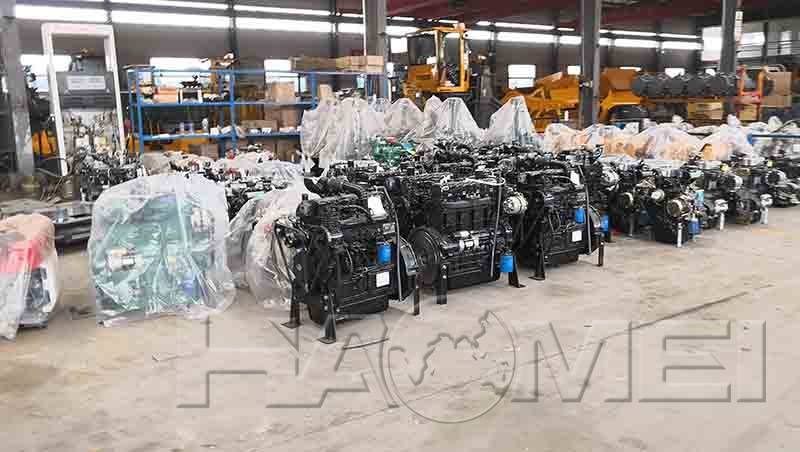
Do not enter the drum or attempt to remove hardened concrete while the engine is running. Lock out the machine, isolate hydraulic power, and follow the manufacturer's maintenance procedure before servicing moving components. Keep routine spare parts available, including hydraulic filters, engine filters, hose fittings, seals, bucket-edge wear parts, and drum blade hardware. For hydraulic faults, brake issues, structural cracks, or abnormal engine noise, stop operation and arrange inspection by trained service personnel.
Original Source: https://www.self-loading-mixer.com/a/self-loading-concrete-mixer-truck-for-sale.html
Tags: Self Loading Concrete Mixer Truck for Sale | Self Loading Mixer
Send us a Message
Category
| HM1.2 Self Mixer |
| HM1.8 Self Mixer |
| HM2.0 Self Mixer |
| HM 2.6 Self Mixer |
| HM3.5 Self Mixer |
| HM4.0 Self Mixer |
| HM 5.5 Self Mixer |
| HM6.5 Self Mixer |
Relate Blogs
| The Braking Skills of Self Loading Concrete Mixer Factory |
| Self Loading Transit Mixer Price |
| Self Loading Transit Concrete Mixer |
| Self Loading Concrete Mixer Machine |
| Self Propelled Concrete Mixer |
Relate Products
CONTACT US
| Haomei Self Loading Mixer Co.,Ltd |
| Tel/Whatsapp: +86-15978414719 |
| Email: feedom@haomei-machinery.com |
| Website: https://www.self-loading-mixer.com |
| Office Add: 1103, No.14 Outer Ring Road, CBD, Zhengzhou, China |


