

4x4 Self Loading Concrete Mixer Trucks
 2026-10-08
4x4 self loading concrete mixer trucks are attracting attention in public Q&A discussions because they combine aggregate loading, water dosing, mixing, transport, and concrete discharge in one mobile machine. They are especially relevant for projects with changing pour locations, restricted access, or limited batching infrastructure.
The following questions reflect recurring English-language search and Q&A topics around self loading concrete mixers. The answers focus on practical equipment evaluation for contractors, rental fleets, farms, municipal work, and remote construction sites.
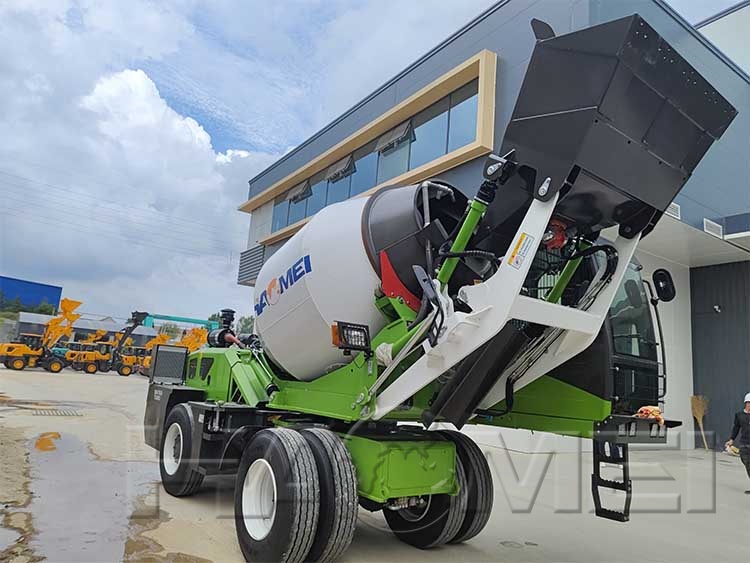
1. Is a 4x4 self loading concrete mixer truck suitable for rough or muddy jobsites?
Usually, yes, but 4x4 alone does not guarantee good jobsite performance. A capable machine needs suitable tire tread, adequate ground clearance, strong axle construction, and enough engine torque at low speed. The practical test is whether the unit can travel with a fully loaded drum over the same slopes, ruts, and soft areas present during the actual pour.
A 4x4 self loading mixer is often more adaptable than a conventional transit mixer on narrow rural roads, unpaved developments, drainage projects, and agricultural sites. Its articulated steering or compact turning radius can also reduce repeated reversing near forms and trenches.
However, operators should not treat it as a substitute for site preparation. Deep mud can pack around tires, wet clay can reduce steering response, and steep side slopes create instability when the drum is loaded. Establishing compacted travel lanes and a stable loading zone remains important.
| Jobsite condition | What to check before selecting a 4x4 mixer |
|---|---|
| Loose gravel | Tire type, traction, braking control, and loaded climbing ability |
| Mud or wet clay | Ground clearance, tire self-cleaning pattern, and recovery access |
| Narrow access roads | Overall width, turning radius, steering design, and mirror visibility |
| Sloped terrain | Rated gradeability, drum position, parking brake, and rollover precautions |
| Remote sites | Fuel capacity, water tank volume, and local service support |
For smaller pours where access is extremely tight, an HM1.2 Self Mixer may be easier to position than a larger truck-style unit, provided its batch output matches the daily concrete requirement.
2. How much concrete can a self loading mixer actually produce in a day?
The drum capacity is not the same as daily production. A machine rated for a 3.5 m3 batch may produce much less than its theoretical maximum when aggregate piles are distant, water must be refilled, operators are inexperienced, or the site has slow discharge cycles.
A more realistic calculation considers usable batch volume, mixing time, travel time, loading time, discharge time, cleaning, and operator breaks. For example, a machine completing six 3 m3 batches in a shift produces about 18 m3, but this depends on an organized material layout and consistent aggregate supply.
Ask suppliers for the rated concrete output per batch rather than only drum volume. Wet concrete density, mix design, aggregate size, and drum loading limits all affect usable output. Overfilling the drum can reduce mixing uniformity and increase wear on hydraulic and drivetrain components.
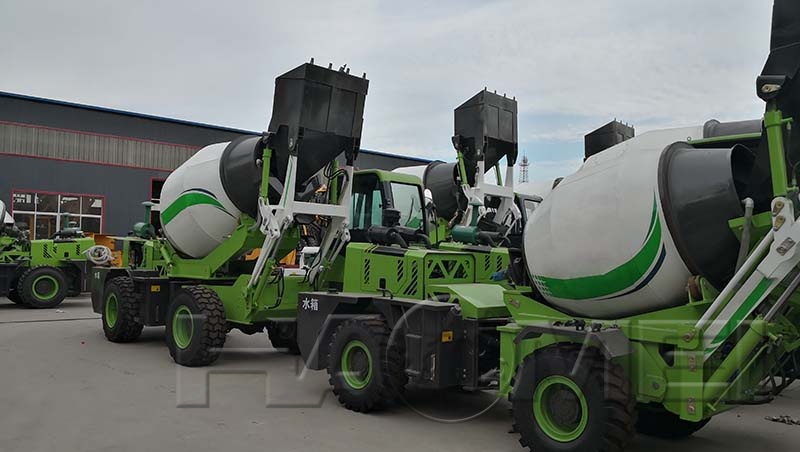
3. Can 4x4 self loading concrete mixer trucks make concrete as consistent as a batching plant?
They can produce reliable site-mixed concrete when the loading sequence and water control are disciplined. The strongest advantage is that concrete can be mixed near the point of placement, reducing delays that may occur when ready-mix trucks travel long distances.
Consistency depends on measurement. Cement should be loaded by known bag count or weight, aggregate buckets should be filled consistently, and water should be measured rather than added by visual judgment. A water meter, calibrated tank, or repeatable dosing system helps prevent excessive water-cement ratios.
For structural work, use trial batches to verify slump, workability, and strength requirements before regular production begins. Record each batch recipe, including cement quantity, sand, stone, water, admixture, and mixing duration. This creates a repeatable process even when crews change.
A larger HM3.5 Self Mixer can suit medium-scale foundations, road repairs, and building projects where steady batch volume is needed without relying on a fixed plant.
4. What operating costs should be considered besides the purchase price?
Fuel is only one part of the cost. Potential owners should evaluate routine servicing, tire replacement, wear parts, hydraulic oil, filters, battery condition, operator training, and transport between projects. The loading bucket and drum blades are wear items because they repeatedly contact abrasive sand and stone.
Spare-parts availability can have a greater financial effect than a small difference in initial machine price. A low-cost unit becomes expensive if a failed hose, sensor, bearing, or hydraulic component stops a project for several days. Before selecting a model, ask which parts are held locally, normal lead times, and whether service technicians can support field repairs.
| Cost area | Questions to ask |
|---|---|
| Fuel | What is consumption per operating hour and per cubic meter? |
| Wear parts | How often are drum blades, bucket edges, and tires replaced? |
| Service | Are filters, belts, hoses, and seals readily available? |
| Labor | Can one trained operator handle loading, mixing, and discharge safely? |
| Downtime | Is there technical support and a practical parts supply plan? |
5. What maintenance matters most on a self loading concrete mixer truck?
Cleaning after every shift is essential. Hardened concrete inside the drum, discharge chute, bucket, and water lines adds weight, reduces capacity, and accelerates corrosion. Do not allow concrete residue to build up because removal later may require mechanical chipping that can damage painted or welded surfaces.
Daily inspections should include engine oil, coolant, hydraulic oil, tire pressure, brake response, lights, water system operation, drum rotation, and visible hose leaks. Grease points need attention according to the manufacturer schedule, especially around steering joints, loader pivots, and articulated chassis sections.
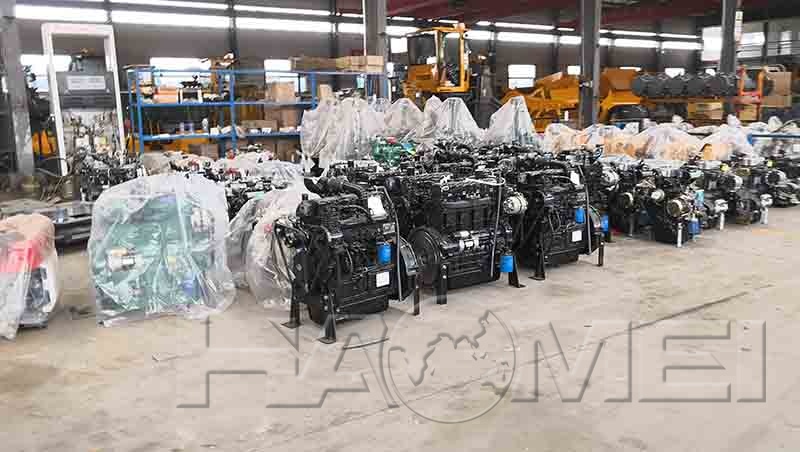
Before the first pour of each day, run the mixer empty and listen for unusual vibration, delayed drum response, or hydraulic noise. These early signs can indicate loose fasteners, low fluid levels, worn bearings, or contamination in the hydraulic system. A documented inspection routine helps keep a 4x4 self loading concrete mixer truck productive during demanding site work.
Original Source: https://www.self-loading-mixer.com/a/4x4self-loading-concrete-mixer-trucks.html
Tags: 4x4 self loading concrete mixer trucks | self loading concrete mixer
Prev: Self-Loading Mixer vs. Ready-Mix Concrete Delivery: Which Saves More Money
Next: Null
Send us a Message
Category
| HM1.2 Self Mixer |
| HM1.8 Self Mixer |
| HM2.0 Self Mixer |
| HM 2.6 Self Mixer |
| HM3.5 Self Mixer |
| HM4.0 Self Mixer |
| HM 5.5 Self Mixer |
| HM6.5 Self Mixer |
Relate Blogs
Relate Products
CONTACT US
| Haomei Self Loading Mixer Co.,Ltd |
| Tel/Whatsapp: +86-15978414719 |
| Email: feedom@haomei-machinery.com |
| Website: https://www.self-loading-mixer.com |
| Office Add: 1103, No.14 Outer Ring Road, CBD, Zhengzhou, China |


