

4WD Self-Loading Concrete Mixer Truck
 2026-11-11
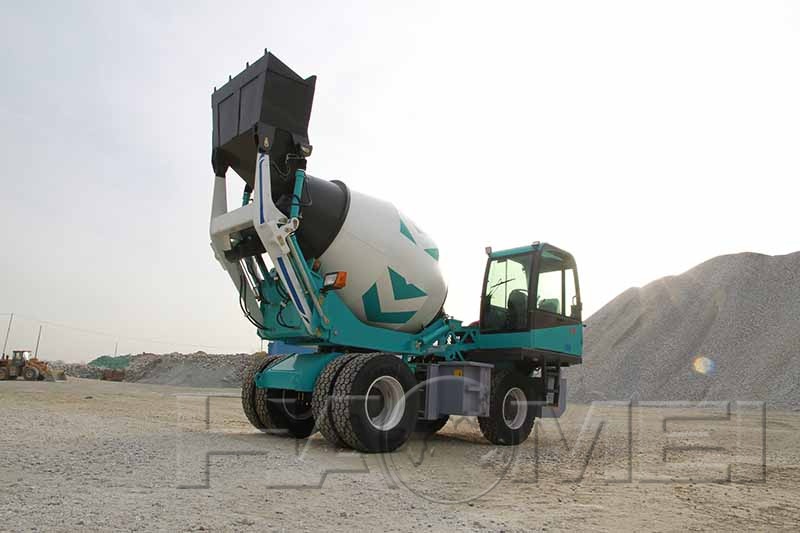
A 4WD self-loading concrete mixer truck combines aggregate loading, weighing or batching, water dosing, mixing, and site travel in one machine. It can reduce dependence on a batching plant and transit mixer where roads are poor, work zones are dispersed, or daily concrete demand is too small for economical ready-mix deliveries.
However, this equipment is not automatically the lowest-cost choice. Output claims, drum volume, road legality, maintenance support, and concrete quality control must be checked before ordering.
Select the Machine From the Job Requirement
Start with the required concrete volume per shift, largest individual pour, haul distance inside the project, and ground condition. A 4WD configuration is useful on loose fill, wet ground, slopes, and undeveloped access routes, but traction does not remove rollover risk or replace proper haul-road design.
Do not select by nominal drum volume alone. Ask the manufacturer for the rated concrete output per batch, maximum payload, operating weight, gradeability, turning radius, discharge height, and cycle time under the specified material condition. Wet aggregate, oversized stone, long travel, and waiting time can materially reduce output.
Use this planning calculation:
Shift output = rated batch yield x achievable cycles per hour x productive hours
Use achievable cycles, not brochure cycles. Time a representative loading, weighing, mixing, travel, discharge, and washout cycle on site. Include operator breaks, refueling, traffic conflicts, and material replenishment.
| Job condition | Equipment specification to prioritize | Verification before purchase |
|---|---|---|
| Remote rural concrete work | 4WD, ground clearance, robust tires, service access | Demonstration on comparable gradients and surface conditions |
| Small repeated pours | Accurate aggregate and water batching, reversible drum | Batch records and water-meter calibration procedure |
| Reinforced foundations | Discharge height, chute reach, drum rotation control | Confirm clearance above forms and rebar |
| Narrow projects | Compact dimensions, steering mode, turning radius | Measure gates, ramps, stockpile lanes, and pour access |
| High daily output | Fast loading cycle, reliable material supply, second-machine plan | Compare complete cycle time, not only drum capacity |
For compact work zones, compare an Self Loading Mixer against a skid steer plus conventional mixer. The integrated unit may reduce equipment moves and labor interfaces, while the separate-machine arrangement can offer redundancy where loaders are already available.
Ask for the machine's data sheet, serial-number format, parts manual, warranty scope, hydraulic schematic, and local service response commitment. A low purchase quotation is not comparable if it excludes commissioning, operator training, spare filters, freight, or commissioning support.
Control Concrete Quality, Safety, and Compliance
A self-loading mixer is a mobile batching process. Concrete quality depends on controlled inputs, not only on mixing time. Establish a batch card for each mix showing cement mass, aggregate masses, target water, admixture dosage, moisture correction, mixing time, and target slump.
For projects using U.S. testing practice, ASTM C143/C143M covers slump testing of hydraulic-cement concrete. ASTM C31/C31M covers making and curing field-cured and standard-cured test specimens, while ASTM C39/C39M covers compressive strength testing of cylindrical concrete specimens. These standards should be applied by qualified project personnel and aligned with the project specification. Where EN specifications govern, EN 206 establishes requirements for concrete specification, performance, production, and conformity.
Water control deserves special attention. Never add water by visual judgment after loading wet sand or gravel. Measure aggregate moisture, adjust batch water, and record every addition. Uncontrolled water can change workability and reduce strength performance.
| Daily control point | Practical action | Record to retain |
|---|---|---|
| Aggregate moisture | Test or obtain supplier moisture data before batching | Moisture result and water correction |
| Water meter | Check dosing against a known measured volume | Calibration date and deviation |
| Mix consistency | Test slump at the required sampling point | Test result, time, and batch ID |
| Drum condition | Remove hardened buildup and inspect blades | Cleaning and inspection log |
| Fuel and hydraulics | Check leaks, oil level, hose damage, and temperature | Pre-start inspection sheet |
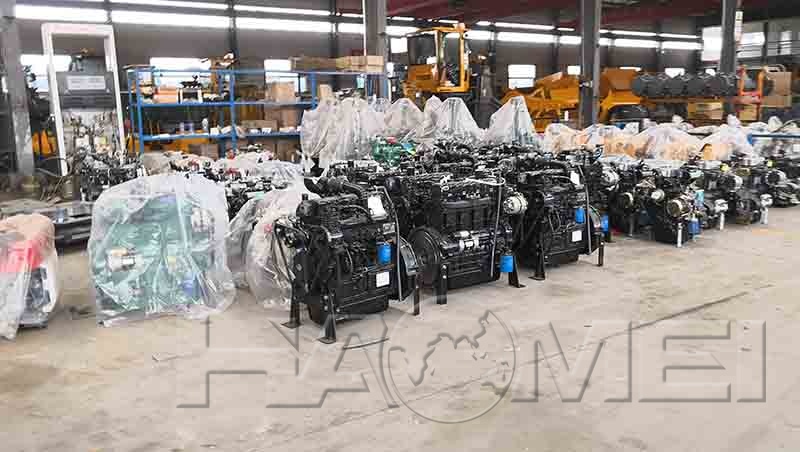
Safety selection should include a documented rollover and falling-object protection review. ISO 3471 specifies laboratory tests and performance requirements for rollover protective structures, and ISO 3449 addresses falling-object protective structures for earth-moving machinery. Confirm the delivered configuration, not merely the product family, has the protection and certification applicable to the intended work.
In the United States, assess applicable requirements under OSHA 29 CFR 1926.602 for construction equipment, plus site-specific traffic, excavation-edge, and lockout procedures. Local road rules also matter. A machine designed for site operation may not be approved for public-road travel without required lighting, braking, registration, licensing, axle-load compliance, and insurance.
Before each shift, inspect steering, brakes, tires, lights, reverse alarm, cameras or mirrors, hydraulic hoses, drum guards, emergency stop functions, and seat belt condition. Keep people out of the articulation area and away from the rotating drum, discharge chute, and raised bucket.
Build an Investment Case and Protect Uptime
Request itemized quotations from at least three qualified suppliers using the same requirement sheet. Include rated yield, drivetrain, engine emissions stage, cab and ROPS/FOPS configuration, weighing system, water system, delivery terms, commissioning, warranty, scheduled service, and recommended initial spare parts.
Do not rely on published online prices as a procurement benchmark. Configuration, engine compliance level, shipping, import duties, attachments, and regional dealer support can change the delivered cost substantially.
Calculate ownership cost using the following structure:
Hourly ownership cost = (purchase price + finance cost + taxes + delivery + commissioning - expected resale value) / planned operating hours
Then add hourly operating cost:
Fuel + operator + maintenance + wear parts + tires + repairs + insurance + downtime allowance
Downtime is often the largest hidden cost. If the machine is the only concrete source for a pour, require local availability of filters, hydraulic hoses, drum rollers, wear blades, sensors, starter components, and tires. Confirm parts lead times in writing.
For medium-capacity site production, an HM3.5 Self Mixer can be assessed against the actual pour schedule rather than a stated drum size. Match its documented output and site access envelope to the largest pour and the required daily volume.
Use this pre-order checklist with the supplier:
- Provide a witnessed demonstration using the specified aggregate size and target concrete mix.
- Confirm rated batch yield, payload, operating weight, and machine dimensions in the quotation.
- Obtain batch-system calibration instructions and operator training content.
- Confirm applicable ROPS/FOPS documentation, guarding, emergency stops, and seat belt provision.
- Define warranty exclusions, labor coverage, service intervals, and parts lead times.
- Price a two-year preventive-maintenance and wear-parts package separately.
- Verify whether the unit is intended only for private-site travel or can meet local road requirements.
Original Source: https://www.self-loading-mixer.com/a/4wd-self-loading-concrete-mixer-truck.html
Tags: 4WD Self-Loading Concrete Mixer Truck | Self Loading Mixer
Prev: Self Loading Concrete Mixer for Hire
Next: Null
Send us a Message
Category
| HM1.2 Self Mixer |
| HM1.8 Self Mixer |
| HM2.0 Self Mixer |
| HM 2.6 Self Mixer |
| HM3.5 Self Mixer |
| HM4.0 Self Mixer |
| HM 5.5 Self Mixer |
| HM6.5 Self Mixer |
Relate Blogs
Relate Products
CONTACT US
| Haomei Self Loading Mixer Co.,Ltd |
| Tel/Whatsapp: +86-15978414719 |
| Email: feedom@haomei-machinery.com |
| Website: https://www.self-loading-mixer.com |
| Office Add: 1103, No.14 Outer Ring Road, CBD, Zhengzhou, China |


