

Self Loading Concrete Mixer for Hire
 2026-11-02
Hiring a self loading concrete mixer can be a practical choice for projects that need fresh concrete at changing locations. This machine combines aggregate loading, weighing, water dosing, mixing, and site transport in one mobile unit. It reduces dependence on separate loaders, batching plants, transit mixers, and large work crews.
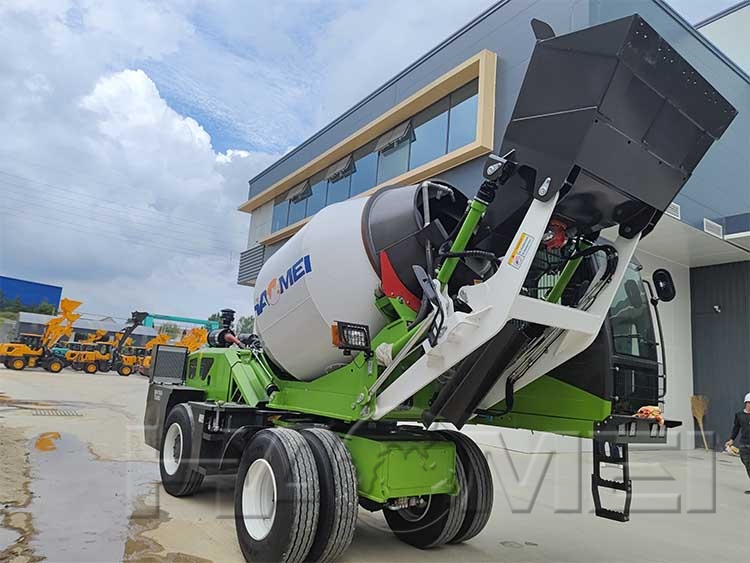
Design Features That Matter on Site
A modern mobile mixer is built around a four-wheel chassis with an articulated or rigid frame, depending on the model. The front loading bucket collects sand, stone, and cement, then transfers the materials into the mixing drum. Many units use a hydraulic bucket system, allowing the operator to control loading from the cab.
The drum is normally designed with helical mixing blades. During rotation, these blades lift and fold the materials repeatedly to help create an even mix. Reversible drum rotation supports both mixing and discharge. The discharge chute is usually adjustable, helping operators direct concrete into footings, forms, slabs, or wheelbarrows.
The operator cab is another important design area. A well-arranged cab should provide clear visibility of the bucket, drum, and travel path. Controls may include hydraulic joysticks, drum rotation switches, water controls, and digital weighing displays. Before hiring, check whether the selected unit has the capacity, turning radius, and discharge height required for the job.
| Main Component | Typical Function | What to Inspect Before Hire |
|---|---|---|
| Loading bucket | Collects and lifts aggregates | Cutting edge wear, hydraulic movement, bucket cracks |
| Mixing drum | Mixes and carries concrete | Blade condition, drum rotation, leaks around seals |
| Water system | Adds measured water to the batch | Tank cleanliness, pump operation, hose condition |
| Hydraulic system | Powers steering, bucket, and drum functions | Oil level, hose damage, cylinder leaks |
| Tires and axle | Supports travel on site terrain | Tire pressure, tread wear, wheel nut condition |
| Operator controls | Controls loading, mixing, and travel | Display readings, switches, emergency stop function |
For smaller repair work, rural construction, and narrow access areas, an HM1.2 Self Mixer may be suitable where maneuverability is more important than high output. Larger slab, foundation, and infrastructure work may require a higher-capacity unit with a larger drum and stronger loading system.
Material Selection and Equipment Advantages
The service life of a concrete mixer depends heavily on the materials used in high-wear areas. The loading bucket cutting edge and drum blades are commonly made from abrasion-resistant steel because they come into direct contact with sand, stone, and cement. These materials help reduce wear caused by repeated loading and mixing.
The drum itself is generally fabricated from structural steel plate. Its thickness and reinforcement arrangement affect resistance to deformation during continuous operation. Weld quality is equally important, particularly around drum supports, bucket arms, chassis joints, and discharge components. A robust frame helps the machine work safely on uneven construction ground.
Hydraulic hoses require abrasion-resistant outer layers and properly crimped fittings. Poor hose protection can lead to leakage, loss of pressure, and unexpected downtime. Sealed bearings, protected electrical connectors, and corrosion-resistant surface coatings also help equipment perform in dusty, wet, or humid environments.
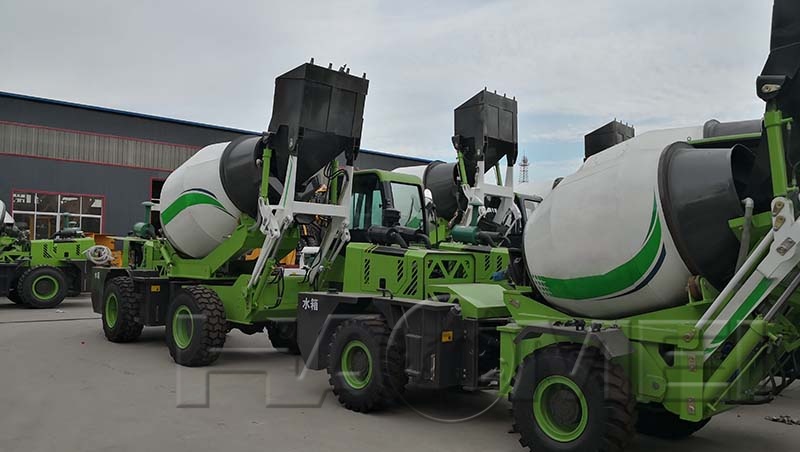
Using one machine for loading, batching, mixing, and delivery offers several operational advantages:
- Fresh concrete can be mixed close to the placement point, reducing the risk of long transport delays.
- The unit can move between separate work zones without waiting for ready-mix deliveries.
- Controlled water addition and weighing systems can support more consistent batch proportions when correctly calibrated.
- Fewer separate machines may be needed on smaller or remote projects.
- The loading bucket can reduce manual handling of aggregates.
Productivity still depends on correct batching practice. Operators should follow the specified mix design, account for moisture in sand and aggregate, and avoid adding extra water simply to improve workability. Excess water can reduce the strength and durability of hardened concrete.
For projects requiring a larger output per batch, a HM3.5 Self Mixer can offer a useful balance between drum capacity, site mobility, and loading efficiency. Confirm local transport limits and ground-bearing conditions before taking any machine onto the work area.
Common Problems and Practical Troubleshooting
Daily inspection helps prevent many avoidable faults. Before starting work, inspect engine fluids, hydraulic oil, tire condition, water supply, drum movement, and safety devices. After each shift, wash the drum, chute, bucket, and discharge area before concrete hardens.
| Problem | Likely Causes | Practical Action |
|---|---|---|
| Drum rotates slowly or does not rotate | Low hydraulic oil, blocked filter, pump fault, damaged motor | Stop work, check oil level and visible leaks, inspect filters according to the service schedule, contact qualified service personnel if the fault remains |
| Bucket lifts weakly | Hydraulic leak, low oil level, overloaded bucket, cylinder issue | Do not exceed rated load, inspect hoses and fittings, remove material buildup, arrange repair for leaking cylinders |
| Concrete discharges poorly | Hardened concrete, incorrect drum direction, damaged chute | Confirm reverse rotation, clean chute and drum promptly, inspect blades for heavy wear |
| Engine overheats | Low coolant, blocked radiator, loose belt, extended high-load operation | Stop in a safe area, allow cooling, inspect coolant and radiator cleanliness, never open a hot cooling system |
| Inaccurate water or aggregate dosing | Dirty sensors, calibration drift, damaged wiring | Clean external sensor areas, compare readings with a known measure, have the system calibrated by trained technicians |
| Hydraulic oil leakage | Worn seal, loose fitting, damaged hose | Depressurize the system before inspection, replace damaged parts with compatible rated components |
Do not continue operating when there is abnormal noise, uncontrolled movement, a damaged brake system, or a hydraulic leak near hot engine components. Isolate the machine, secure the drum and bucket, and use trained technicians for repairs involving pressurized hydraulics, braking systems, or electrical circuits.
When arranging a rental, ask for the operating manual, maintenance records, rated drum capacity, fuel type, and emergency procedures. Confirm that the provider can supply wear parts such as drum blades, hydraulic hoses, filters, seals, and bucket cutting edges. Reliable parts support is especially important where the machine will work continuously or far from a service center.
Original Source: https://www.self-loading-mixer.com/a/self-loading-concrete-mixer-for-hire.html
Tags: Self Loading Concrete Mixer for Hire | Self Loading Mixer
Prev: Mini Self Loading Concrete Mixer
Next: Null
Send us a Message
Category
| HM1.2 Self Mixer |
| HM1.8 Self Mixer |
| HM2.0 Self Mixer |
| HM 2.6 Self Mixer |
| HM3.5 Self Mixer |
| HM4.0 Self Mixer |
| HM 5.5 Self Mixer |
| HM6.5 Self Mixer |
Relate Blogs
Relate Products
CONTACT US
| Haomei Self Loading Mixer Co.,Ltd |
| Tel/Whatsapp: +86-15978414719 |
| Email: feedom@haomei-machinery.com |
| Website: https://www.self-loading-mixer.com |
| Office Add: 1103, No.14 Outer Ring Road, CBD, Zhengzhou, China |


