

Self Loading Mobile Concrete Mixer Price
 2026-08-19
A self-loading mobile concrete mixer combines aggregate loading, weighing, water dosing, mixing, transport, and discharge in one machine. It can reduce dependence on a batching plant or transit-mixer deliveries where sites are remote, access is limited, or daily concrete demand changes frequently.
However, the purchase figure alone does not show the true investment. The right machine must match required concrete output, material handling conditions, service support, and operator capability. A low initial offer can become expensive if the unit has insufficient capacity, unsupported components, or poor parts availability.
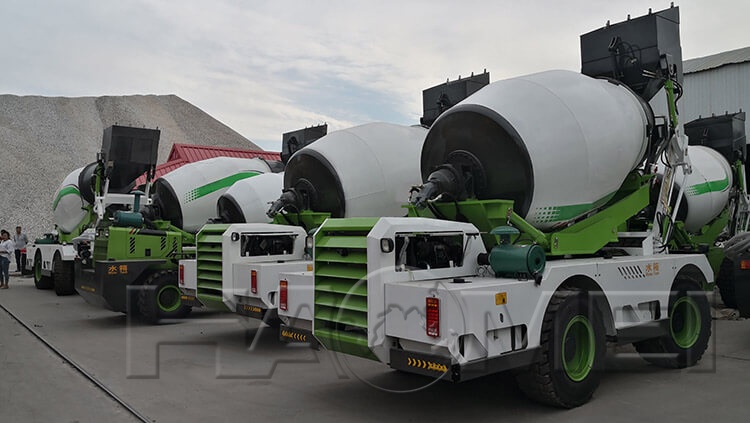
What Determines the Equipment Price?
Manufacturers do not use one universal configuration for these machines. Comparable-looking units may have different engine ratings, drum capacities, hydraulic systems, axle designs, weighing accuracy, cab protection, and emissions certification. Request a written specification sheet before comparing quotations.
| Price driver | What to verify | Effect on investment |
|---|---|---|
| Rated output | Batch yield in cubic meters, not only drum volume | Determines production capability per cycle |
| Engine and emissions | Engine make, rated power, emissions tier or regional approval | Affects import eligibility, fuel use, and service access |
| Weighing system | Aggregate scale, water meter, digital display, calibration procedure | Supports mix consistency and quality records |
| 4WD and steering | Four-wheel drive, crab steering, gradeability, tire type | Important for soft ground, slopes, and confined sites |
| Cab and safety equipment | ROPS/FOPS documentation where applicable, camera, seat belt, lighting | Affects operator protection and site compliance |
| After-sales support | Parts stock, warranty terms, technician response time | Reduces downtime risk |
Capacity naming requires careful review. A "3.5 m3" model can refer to drum geometry, nominal batch volume, or another manufacturer-specific convention. Ask for the guaranteed concrete yield per batch, recommended loading sequence, discharge height, and cycle time under normal conditions. Then compare those figures with your pour schedule.
For smaller repair work, drainage projects, and scattered rural sites, a compact unit such as an HM1.2 Self Mixer may reduce unused concrete and simplify maneuvering. Larger slabs, foundations, and continuous structural pours may require a higher-output option such as an HM3.5 Self Mixer, provided site access and daily material supply can support it.
Calculate Cost Beyond the Purchase Quote
Use a total cost of ownership model instead of comparing machine invoices alone. Evaluate cost per cubic meter over the planned ownership period.
Cost per cubic meter = (Ownership cost + Operating cost + Maintenance cost + Delivery and setup cost) / Concrete produced
Ownership cost includes the delivered machine price, financing interest, insurance, taxes, and expected resale value. Operating cost includes fuel, labor, lubrication, wear parts, water, and material losses. Add mobilization costs if the machine will move between projects.
| Cost item | Questions to include in the quotation review |
|---|---|
| Delivered price | Is ocean freight, inland transport, insurance, duty, and commissioning included? |
| Warranty | What duration applies to the engine, hydraulic pump, drum, and electrical system? |
| Spare parts | Are filters, seals, hoses, blades, sensors, and wear plates stocked locally? |
| Training | Does delivery include operator instruction, daily inspection procedures, and calibration training? |
| Finance | Compare cash discount, loan interest, lease payment, and seasonal utilization assumptions |
| Residual value | Is there a local second-hand market for this model and engine brand? |
Ask suppliers to separate factory price from delivered, commissioned cost. This avoids comparing an ex-works offer with another offer that includes transport, commissioning, spare parts, and warranty support. For imported equipment, confirm customs classification, local road-registration requirements, and whether the engine certification is accepted in the operating country before placing a deposit.
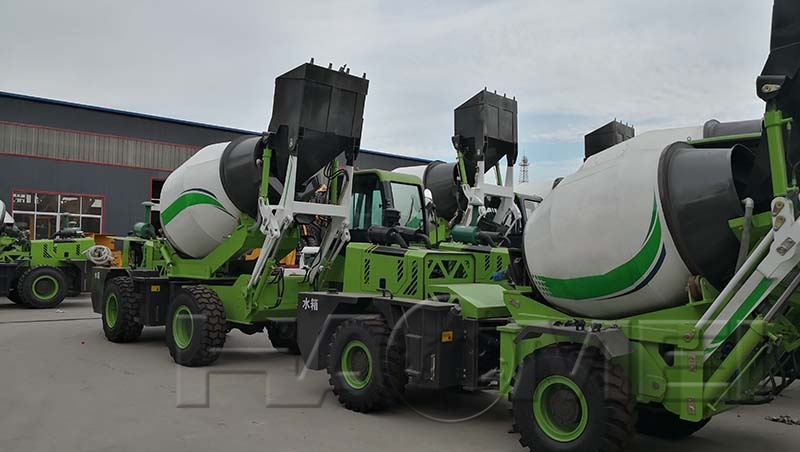
Match Capacity and Features to the Jobsite
Estimate daily demand first. Divide planned daily concrete volume by the expected yield per batch. Then add time for loading, mixing, travel, discharge, washing, refueling, and interruptions. Do not base capacity on an uninterrupted theoretical cycle.
A practical selection checklist includes:
- Confirm the largest daily pour volume and required completion window.
- Measure narrowest access, turning areas, overhead clearance, and ground bearing conditions.
- Check whether aggregate stockpiles can be reached safely by the loading bucket.
- Verify water availability, cement storage, aggregate moisture control, and a washout area.
- Match tire type and drivetrain to mud, rough haul roads, slopes, and paved surfaces.
- Specify a digital batch-record system if quality documentation is required by the contract.
On-site mixing does not remove concrete quality responsibilities. Mix proportions, aggregate moisture, water addition, mixing time, and fresh-concrete testing should follow the project specification. In the United States, ASTM C94/C94M covers ready-mixed concrete, while project specifications may reference ASTM test methods for slump, air content, temperature, and strength specimens. Confirm the governing contract documents and local requirements with the project engineer.
Inspect Safety, Serviceability, and Digital Controls
The operator should have clear visibility to the bucket, travel route, drum discharge area, and personnel working near the machine. A reversing alarm, work lights, camera system, seat belt, emergency stop, guarded moving parts, and stable access steps should be assessed during demonstration.
For U.S. construction sites, OSHA 29 CFR 1926.600 addresses general requirements for motor vehicles and mechanized equipment. Site management should also apply the manufacturer's operating manual, traffic-control plan, lockout procedures during maintenance, and competent operator training requirements. Requirements differ by jurisdiction, so verify local occupational-safety and road-use rules.
Daily checks should cover engine oil, coolant, hydraulic fluid, tire condition, brake function, steering response, lights, horn, water system, drum rotation, bucket linkage, and leakage. After every shift, wash cement residue from the drum, chute, and loading area before it hardens. Cementitious material is alkaline; operators should use appropriate gloves, eye protection, and protective clothing when handling wet concrete or wash water.
Before signing, request these documents: a dimensional drawing, operating weight, axle loads, engine data sheet, hydraulic schematic, electrical schematic, parts catalog, maintenance schedule, warranty statement, and packing list. A supplier that can provide serial-number-based parts support and clear technical documents is usually a lower downtime risk than one offering only a generic brochure.
Original Source: https://www.self-loading-mixer.com/a/self-loading-mobile-concrete-mixer-price.html
Tags: Self Loading Mobile Concrete Mixer Price | Self Loading Mixer
Prev: Self Loading Concrete Mixer For Mining Projects
Next: Self Loading Truck Mixer
Send us a Message
Category
| HM1.2 Self Mixer |
| HM1.8 Self Mixer |
| HM2.0 Self Mixer |
| HM 2.6 Self Mixer |
| HM3.5 Self Mixer |
| HM4.0 Self Mixer |
| HM 5.5 Self Mixer |
| HM6.5 Self Mixer |
Relate Blogs
Relate Products
CONTACT US
| Haomei Self Loading Mixer Co.,Ltd |
| Tel/Whatsapp: +86-15978414719 |
| Email: feedom@haomei-machinery.com |
| Website: https://www.self-loading-mixer.com |
| Office Add: 1103, No.14 Outer Ring Road, CBD, Zhengzhou, China |


