

Self Loading Mixer Rental VS Purchase: What is Best for Contractors
 2026-10-15
For projects such as road construction, rural infrastructure development, building construction, municipal engineering, and the production of precast components, self-loading concrete mixer trucks can handle the entire process—loading aggregates, batching, mixing, transporting, and discharging concrete.
Compared to a setup involving a stationary batching plant paired with a wheel loader and transport trucks, these units offer greater flexibility, making them particularly well-suited for projects with dispersed work sites, fluctuating concrete demand, or those located in remote areas.
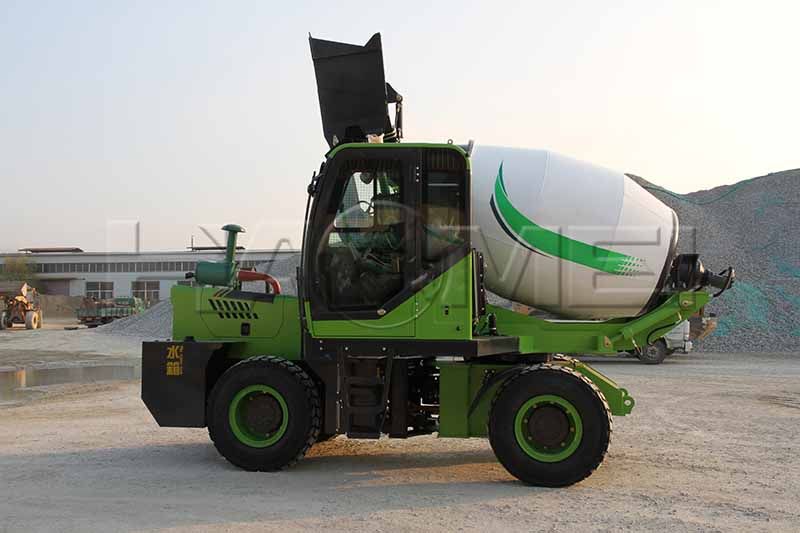
When it comes to equipment acquisition, contractors often face a dilemma: should they rent or purchase a self loaded concrete mixer? There is no one-size-fits-all answer; the decision depends on factors such as project duration, frequency of use, financial standing, and the stability of future project pipelines.
Renting: Ideal for Seasonal and Short-Term Projects
For contractors whose work is seasonal, renting a self-loading concrete mixer is often the more prudent choice. In some regions, for instance, construction activity slows down during the winter, or the rainy season may hinder operations. If a machine is only used intensively for a few months a year, purchasing it outright means incurring ongoing costs—such as depreciation, storage, insurance, maintenance, and repairs—even while the equipment sits idle.
Renting is also well-suited for short-term projects. If a project is scheduled to last only two or three months, or if there is a temporary need to boost concrete supply capacity, renting avoids the need for a large, one-time capital expenditure. Contractors can simply pay rent on a monthly, quarterly, or project-based schedule, and return the equipment once the work is complete—eliminating concerns about idle assets or the difficulties of reselling used machinery.
Another clear advantage of renting is reduced risk. For companies new to self-loading concrete mixers, renting serves as a trial period to determine whether the equipment aligns with their specific operational model. It allows them to verify key factors—such as whether the site access roads can accommodate the vehicle, whether daily concrete demand justifies the equipment, whether operators can master its use, and whether the machine's capacity matches actual production requirements. Without such verification, an impulsive purchase could easily lead to poor equipment utilization.
However, renting does have its limitations. In the long run, the cumulative cost of ongoing rental payments may exceed the price of purchasing the equipment. Furthermore, during peak construction seasons, popular models may be in short supply. Additionally, the condition of the equipment, the speed of maintenance response, and the specific terms of the contract can vary significantly between rental providers.
Contractors should carefully verify details such as the age of the equipment, liability for breakdowns, maintenance turnaround times, and any potential surcharges for exceeding rental periods.
Purchasing: Suitable for businesses with stable order volumes and high usage frequency.
If a company consistently undertakes concrete construction projects and maintains a high monthly equipment utilization rate, purchasing a self-loading concrete mixer truck is generally more cost-effective. Owning the equipment allows for flexible scheduling based on project progress, free from the constraints of rental terms or market availability. During peak construction periods, in particular, owning equipment ensures operational continuity, preventing project delays caused by an inability to secure a rental unit.
Purchasing also helps build long-term assets. For contractors managing multiple construction crews and project sites, a reliable self-loading mixer truck can be rotated between different locations. As equipment utilization increases, the equipment cost per cubic meter of concrete gradually decreases.
Furthermore, when a company owns its equipment, the operators tend to remain consistent, making it easier to standardize driving practices, maintenance, and daily inspections. Long-term use of the same model also facilitates the stocking of common wear-and-tear parts, the establishment of maintenance protocols, and a reduction in breakdowns or safety risks stemming from operator inexperience.
However, the primary challenge with purchasing is the initial capital outlay. Beyond the purchase price, one must account for costs such as insurance, vehicle registration, personnel training, fuel, tires, hydraulic system maintenance, and depreciation. If a company’s cash flow is already tight, purchasing equipment could strain its ability to procure materials, pay labor, or provide upfront project funding. Therefore, rather than focusing solely on the equipment’s price, it is essential to evaluate the overall financial strategy.
How can you make the right decision?
Contractors can assess the situation based on the following factors:
Firstly, consider the project cycle. For short-term projects, renting is the preferred option; for continuous projects with stable timelines, purchasing may be worth considering.
Secondly, look at the number of days the 4x4 self-loading concrete mixer is used per year. If the equipment remains idle for long periods, renting carries less risk; if it is used frequently throughout the year, purchasing is more economical.
Thirdly, evaluate financial capacity. Companies with ample capital and stable orders are well-positioned to purchase; those in an expansion phase—where cash flow flexibility is critical—are better suited for renting or financial leasing.
Fourthly, determine whether market demand has been validated. For companies newly entering the concrete construction sector, it is advisable to rent before buying. Use actual projects to test the equipment’s capacity, fuel consumption, labor requirements, and client demand before committing to a purchase.
Original Source: https://www.self-loading-mixer.com/a/self-loading-mixer-rental-vs-purchase-what-is-best-for-contractors.html
Tags: self loading concrete mixer truck
Prev: Self Loading Mobile Concrete Mixer
Next: Null
Send us a Message
Category
| HM1.2 Self Mixer |
| HM1.8 Self Mixer |
| HM2.0 Self Mixer |
| HM 2.6 Self Mixer |
| HM3.5 Self Mixer |
| HM4.0 Self Mixer |
| HM 5.5 Self Mixer |
| HM6.5 Self Mixer |
Relate Blogs
Relate Products
CONTACT US
| Haomei Self Loading Mixer Co.,Ltd |
| Tel/Whatsapp: +86-15978414719 |
| Email: feedom@haomei-machinery.com |
| Website: https://www.self-loading-mixer.com |
| Office Add: 1103, No.14 Outer Ring Road, CBD, Zhengzhou, China |


